Skip to content
Briefings are running a touch slower this week while we rebuild the foundations.See roadmap
Iran Conflict 2026
24MAY

Trump expects Iran reply; signs nothing

3 min read
14:49UTC

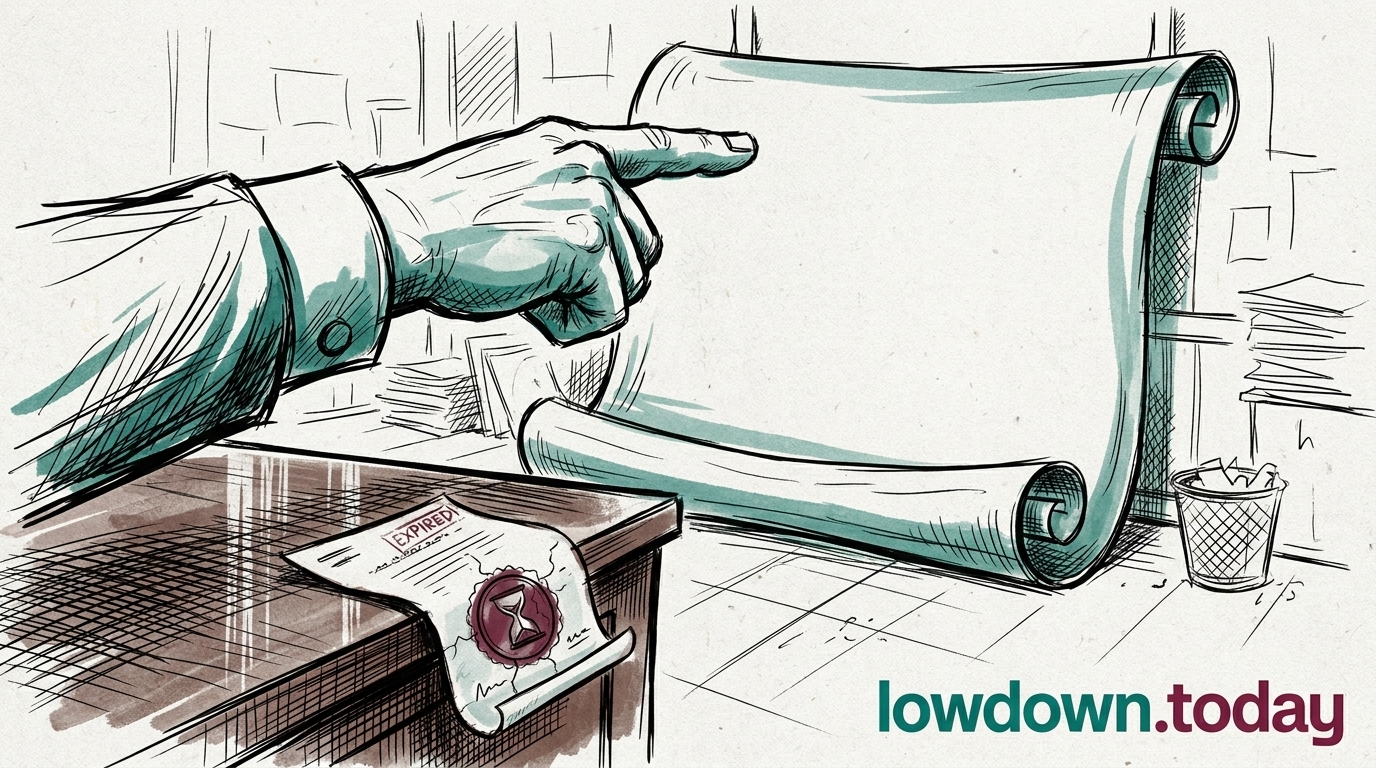
Donald Trump told reporters on Sunday 10 May he expected an Iranian reply to the MOU very soon, while the White House presidential-actions index recorded no signed Iran instruments. Treasury staff did the work instead.

ConflictDeveloping
Key takeaway

Trump expects a reply Tehran has just publicly priced as structurally untradeable.

Donald Trump spent the weekend telling reporters at the White House that he expected an Iran reply "very soon" 1. The White House presidential-actions index records zero signed Iran executive instruments since the war opened. Friday's OFAC SDN action came from Treasury staff under standing IRAN-CON-ARMS-EO authority, not a fresh presidential order. The pattern matches Trump's 8 May posture, where three contradictory positions in one day (offering negotiation, threatening force, claiming the war "militarily won") all coexisted with no signed instrument behind any of them .

Spokesperson Esmaeil Baqaei is fronting Tehran's verbal track, dismissing the missed 9 May reply window. Mohammad Mokhber is fronting the doctrinal track, naming Hormuz a nuclear-equivalent the same day. Trump SAYS, OFAC DOES; Baqaei SAYS, Mokhber DOES. Both governments' verbal tracks describe negotiation while their operational instruments widen the war's commercial and physical perimeter. The proposal Iran failed to answer by Saturday now compresses Tehran's window to 10-12 May, before Trump boards for Beijing and the Xi Jinping summit later this week.

Pakistan's military chief Asim Munir has pledged continued mediation through the Islamabad back-channel, but the Iranian doctrinal statement makes the trade Pakistan is supposed to broker structurally harder. Tehran has now publicly raised the bar on what verification access would have to deliver in return. Trump's verbal pressure operates on the assumption that escalation costs Iran more than holding out; the doctrinal statement is Tehran's reply that Hormuz leverage is worth more than relief from sanctions designations Treasury keeps expanding anyway.

Xi Jinping sits in Beijing with the leverage of MOFCOM's Blocking Rules order , the NFRA yuan-loan halt the Bessent letters triggered , and now the SDN designation of CGSTL on the Chinese commercial space sector. Trump arrives without a signed Iran instrument to trade, which leaves the negotiation reliant on the verbal track at exactly the point where the operational track has done all the talking on both sides.

Deep Analysis

In plain English

When the US president signs an executive order, it becomes official government policy with legal force, creates accountability, and puts things on the record. Trump has been talking about Iran for 71 days: threatening, promising talks, calling strikes a 'love tap', expecting replies 'very soon'. But none of it has been signed. The US government's official Iran sanctions actions in this period came from Treasury staff using old standing powers, not new presidential orders. Iran's government, when deciding whether to reply to the peace proposal, has to judge whether Trump's words carry any binding force. Baqaei stated on 9 May that Iran does not pay attention to deadlines, a response consistent with 71 days of unsigned US statements that could be reversed without legal process.

Deep Analysis
Root Causes

The White House presidential-actions index records zero Iran-related instruments across 71 days because presidential instruments commit the executive branch, constrain the president's own future options, and create congressional notification obligations under the War Powers Act.

Verbal statements and Truth Social posts carry none of those constraints. Trump's Iran management is designed around a maximum-flexibility operating model that his own legal team appears to have decided is best served by keeping all Iran commitments in the verbal domain.

The institutional consequence is that OFAC's 8 May SDN action operated under standing authority accumulated across prior administrations, not a new presidential order. Treasury was not waiting for White House direction; it was using pre-existing legal infrastructure.

This separation of verbal presidential track from institutional operational track allows the government to maintain maximum-pressure sanctions while leaving the president's verbal track available for diplomatic signalling in either direction.

What could happen next?
  • Risk

    Iran's Baqaei explicitly dismissed deadlines as irrelevant. Without a signed US instrument that creates legal obligations, Tehran has no mechanism to assess Washington's credibility and no basis for a written reply that commits Iranian state resources.

    Immediate · 0.81
  • Consequence

    Trump boards for Beijing on or around 14 May. If no MOU reply arrives before departure, the Iran negotiation pauses while Trump pursues the Xi summit, handing Iran a de facto extension of the current blockade status quo.

    Short term · 0.76
  • Meaning

    The verbal-only pattern means all major US Iran commitments, including the Operation EPIC FURY declaration and the 15,000-personnel CENTCOM announcement, remain legally ungrounded and reversible without process.

    Medium term · 0.79
First Reported In

Update #93 · Tanker hits Doha while Qatar mediates

Al Jazeera· 10 May 2026
Read original
Causes and effects
This Event
Trump expects Iran reply; signs nothing
The verbal-versus-kinetic mirror is now explicit on both sides: Trump and Baqaei talk while OFAC and Mokhber act, with the operational pace setting the war's perimeter rather than the negotiating one.
Different Perspectives
Civilians and prisoners inside Iran
Mojtaba Kian was hanged in under 50 days from arrest, the fastest wartime espionage case in Hengaw's record, as Trump announced a peace deal. Amnesty places Iran's 2026 execution count above 200 at its fastest pace in 44 years; the diplomatic track has not altered the internal enforcement tempo.
China
China
Beijing accepted a Pakistani civilian briefing mission on the same day OFAC's GL V expired, keeping itself inside the deal architecture without being a named signatory. How Chinese banks respond to Monday's Hengli dollar-clearing decision is the first real-world test of whether the verbal MOU carries any institutional weight.
Pakistan
Pakistan
Islamabad split its highest-level delegation: army chief Munir to Tehran on the security track, Prime Minister Sharif and Foreign Minister Dar to Beijing before Monday's GL V-driven bank compliance decision. The architecture routes the deal's hardest problem, IRGC buy-in, through the general-officer channel that has extracted every wartime concession.
Israeli government
Israeli government
An unnamed Israeli official told the Times of Israel that Trump privately told Netanyahu the deal will dismantle Iran's nuclear programme and remove all its uranium, terms incompatible with what Tehran and a Reuters source describe. If Netanyahu believes he was promised full dismantlement and the deal delivers less, Israel holds a sabotage veto before any signature.
Iranian Foreign Ministry
Spokesman Esmail Baghaei told state agency IRNA that nuclear issues are 'not in the current negotiations text' and the sequencing is: end the war first, then negotiate nuclear over two months. Baghaei's formulation preserves Khamenei's 21 May uranium-stay directive while letting the civilian diplomacy track continue.
Donald Trump / White House
Trump declared the Iran deal 'largely negotiated' on 23 May via Truth Social and signed nothing; the White House's only paper was a Memorial Day proclamation. The verbal-track method converts maximum political signalling into minimum legal exposure: no congressional notification, no Senate treaty ratification, no instrument for Iran to formally reject.