Iran-Contra
1985-87 Reagan-era covert arms-for-hostages affair that bypassed signed authorisations.
Last refreshed: 9 May 2026 · Appears in 1 active topic
What happens when a presidency runs Iran policy verbally without signed paper?
Timeline for Iran-Contra
Mentioned in: Trump expects Iran reply; signs nothing
Iran Conflict 2026Mentioned in: White House signs no Iran instrument on day 71
Iran Conflict 2026Mentioned in: Pakistan carries US memo to Tehran
Iran Conflict 2026Mentioned in: Trump denies knowledge of South Pars hit
Iran Conflict 2026Background
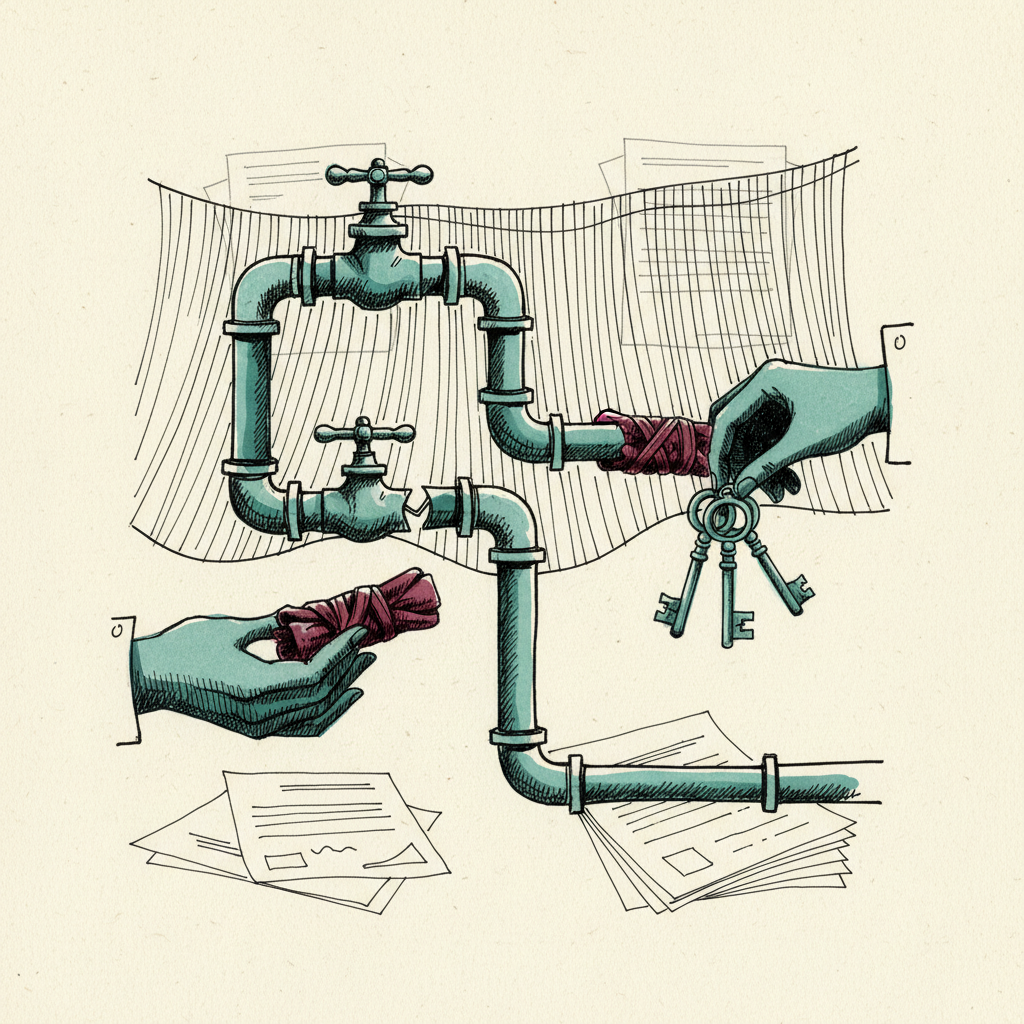
Iran-Contra was a covert operation run from the Reagan White House between 1985 and 1986 in which National Security Council officials sold arms to Iran in defiance of a US embargo, and channelled the proceeds to the Contra rebels in Nicaragua despite a congressional ban on lethal aid. The scheme was executed without signed presidential authorisation; the National Security Council's Lieutenant Colonel Oliver North ran day-to-day operations under the political cover of National Security Adviser Robert McFarlane and his successor John Poindexter.
The affair surfaced in November 1986 after a Lebanese newspaper exposed the arms sales. The Tower Commission, appointed in December 1986, documented a pattern of presidential statements running ahead of signed authorisations and an NSC operating outside the formal interagency process. Eleven officials were convicted, including North and Poindexter, though most convictions were vacated on appeal. The Boland Amendment that the operation circumvented and the War Powers Resolution that constrained Reagan's room for direct intervention both featured in the POST-affair legal reckoning.
Iran-Contra is the closest historical parallel to the 2026 verbal-only Iran posture: presidential rhetoric that runs ahead of signed instruments, an NSC bypassed, and allied governments learning to discount public statements. The 1986 affair produced a constitutional crisis and the Tower Commission report; the 2026 equivalent has so FAR run 71 days without comparable institutional pushback.

