Skip to content
Briefings are running a touch slower this week while we rebuild the foundations.See roadmap
Iran Conflict 2026
21MAY

US Strikes Civilian Bridge; Eight Commuters Killed

2 min read
09:55UTC

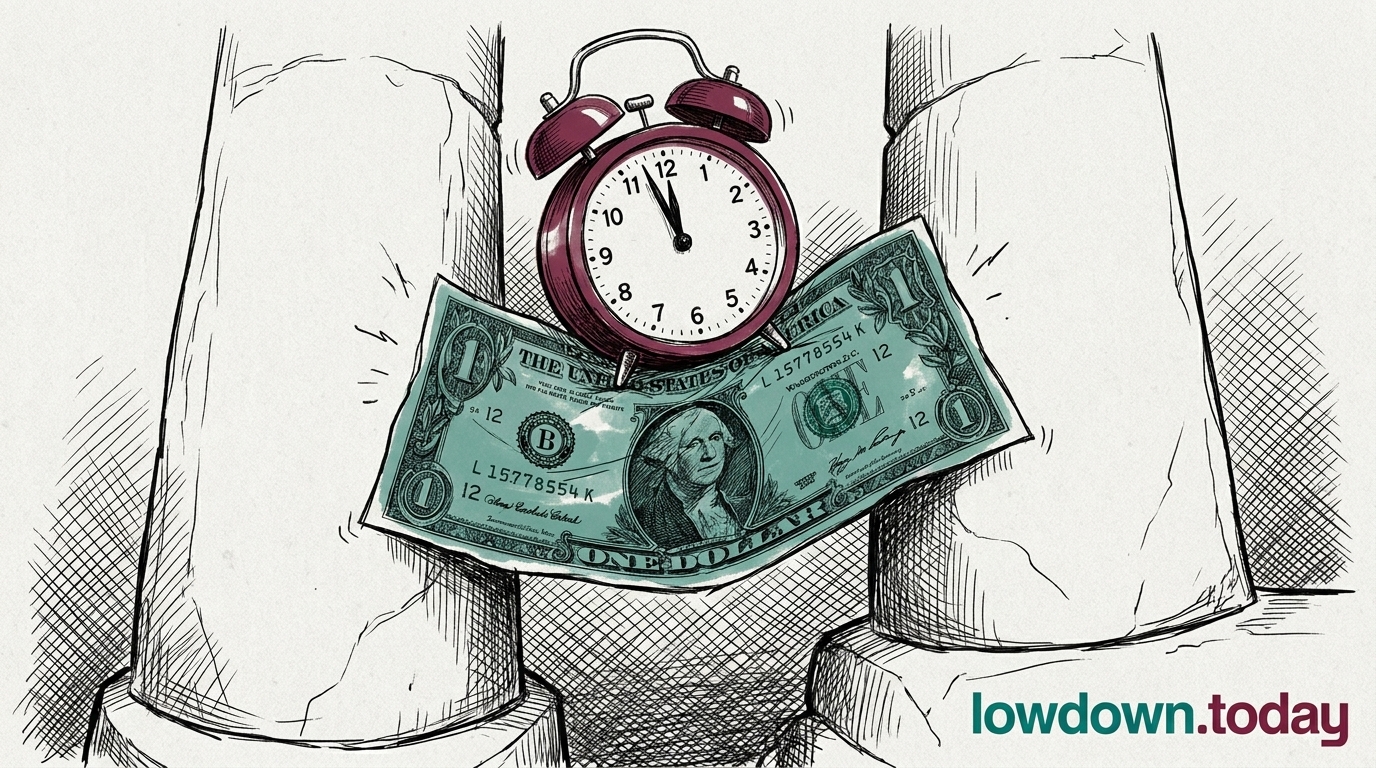
US forces struck the B1 highway bridge between Karaj and Tehran on 3 April, killing eight people and injuring 95. CENTCOM called it a supply route; Iran called it a commuter road.

ConflictDeveloping
Key takeaway

The B1 strike marks the first US attack on civilian commuter transport infrastructure in this campaign.

Eight people were killed and 95 injured when US forces struck the B1 highway bridge between Karaj and Tehran on 3 April, according to Iranian state television. The bridge , the Middle East's tallest at 136 metres, inaugurated earlier in 2026 , carried civilian commuter traffic between Iran's fifth-largest city and the capital.

CENTCOM described the target as a supply line to drone and missile units. That framing sits uneasily alongside the casualty profile: eight dead on a road built for cars, not convoys. Every prior bridge strike in this campaign had targeted military or industrial supply corridors . The B1 carried commuters. The shift is substantive, not semantic.

The strike also lands against a specific backdrop. CENTCOM has reported 12,300+ targets struck since the campaign began , and the classification of each as military infrastructure has progressively widened. A 136-metre commuter bridge between two major cities is a categorically different kind of target from an ammunition depot or missile storage site.

Whether the supply-line designation is operationally accurate or legally sufficient will be contested. What is not contested is the casualty count, reported by Iranian state television and not yet disputed by CENTCOM.

Deep Analysis

In plain English

US forces bombed a major motorway bridge between two Iranian cities. Eight commuters died. The US says the bridge was being used to move military equipment; Iran says it was a civilian road. This is the first time the US has hit a road that ordinary people use to get to work rather than a military facility or industrial site.

Deep Analysis
Root Causes

The B1 bridge sits on a route that also serves Iranian military logistics between Karaj (a major IRGC garrison city) and Tehran. Dual-use infrastructure has always been the hardest IHL category: civilian use does not immunise a target if military use is substantial and the military advantage is proportionate.

The deeper structural cause is the failure of the first 34 days of airstrikes to sever drone and missile resupply to western Iran. Each time CENTCOM claims Iranian strike capability has been "dramatically curtailed", the UAE intercept numbers contradict it. The bridge strike is evidence of target escalation driven by frustrated campaign objectives.

Escalation

Escalatory. The shift from military and industrial targets to civilian commuter infrastructure is a threshold crossing. Iran's response options now include strikes on US-allied civilian infrastructure in the Gulf, which it has previously avoided targeting explicitly. The Kuwaiti desalination plant strike on the same day may already be the reciprocal move.

What could happen next?
  • Consequence

    The IHL proportionality case for the strike is contestable; ICC jurisdiction over non-party nationals remains limited, but UN Special Rapporteur documentation is now likely.

    Short term · High
  • Risk

    Iran may cite the B1 strike to justify reciprocal strikes on Gulf civilian transport infrastructure, widening the target set.

    Immediate · Medium
  • Precedent

    The first US strike on civilian commuter infrastructure in this campaign sets a targeting escalation precedent that is difficult to reverse without formal acknowledgement.

    Long term · High
  • Consequence

    European governments face renewed domestic pressure over their posture of tacit support, particularly from parties with strong IHL compliance positions.

    Short term · Medium
First Reported In

Update #57 · Bridge strike kills eight; Army chief fired

Iranian State Television / IRIB· 3 Apr 2026
Read original
Causes and effects
Different Perspectives
Turkey (Shakarab consideration)
Ankara serves as one of two Western-adjacent Iran back-channels while Turkish national Gholamreza Khani Shakarab faces imminent execution on espionage charges in Iran. President Erdogan cannot deflect the domestic political crisis that a Turkish execution would trigger, which would force suspension of the mediating role.
Germany (Bundestag gap)
Belgium, Germany, Australia, and France committed Hormuz coalition hardware on 18 May. Germany's Bundestag authorisation for the coalition deployment remains pending, creating a constitutional gap between the commitment announced and the parliamentary mandate required to operationalise it.
IEA and oil market analysts
The IEA's $106 May Brent projection met the market in one session on 20 May as Brent fell 5.16% on diplomatic optimism. Goldman Sachs and Morgan Stanley's two-layer premium framework holds: the kinetic component compressed; the structural insurance component tied to Lloyd's ROE remains unresolved.
Hengaw
Hengaw
Documented the dual Kurdish execution at Naqadeh on 21 May, the two Iraqi-national espionage executions on 20 May, and Gholamreza Khani Shakarab's imminent execution risk. The 24-hour cluster covers two executions at one facility, the first foreign-national espionage executions, and a Turkish national whose death would suspend Ankara's mediation.
Lloyd's of London
Lloyd's of London
Hull rates stand at 110-125% of vessel value on the secondary market; the Joint War Committee has conditioned cover reopening on written ROE from the coalition or PGSA. The Majlis rial bill makes any compliant ROE structurally impossible to draft while the PGSA's yuan portal remains its operational mechanism.
United Kingdom and France (Northwood coalition)
The 26-nation coalition paper requires Lloyd's to see written rules of engagement before Hormuz war-risk cover reopens. The Majlis rial bill adds a second governance incompatibility on top of the unpublished PGSA fee schedule; coalition ROE cannot mention rial without conceding Iranian sovereignty over the strait.