Was striking a civilian bridge lawful under the laws of armed conflict?
Timeline for B1 highway bridge
Karaj bridge toll rises to thirteen
Iran Conflict 2026US Strikes Civilian Bridge; Eight Commuters Killed
Iran Conflict 2026Background
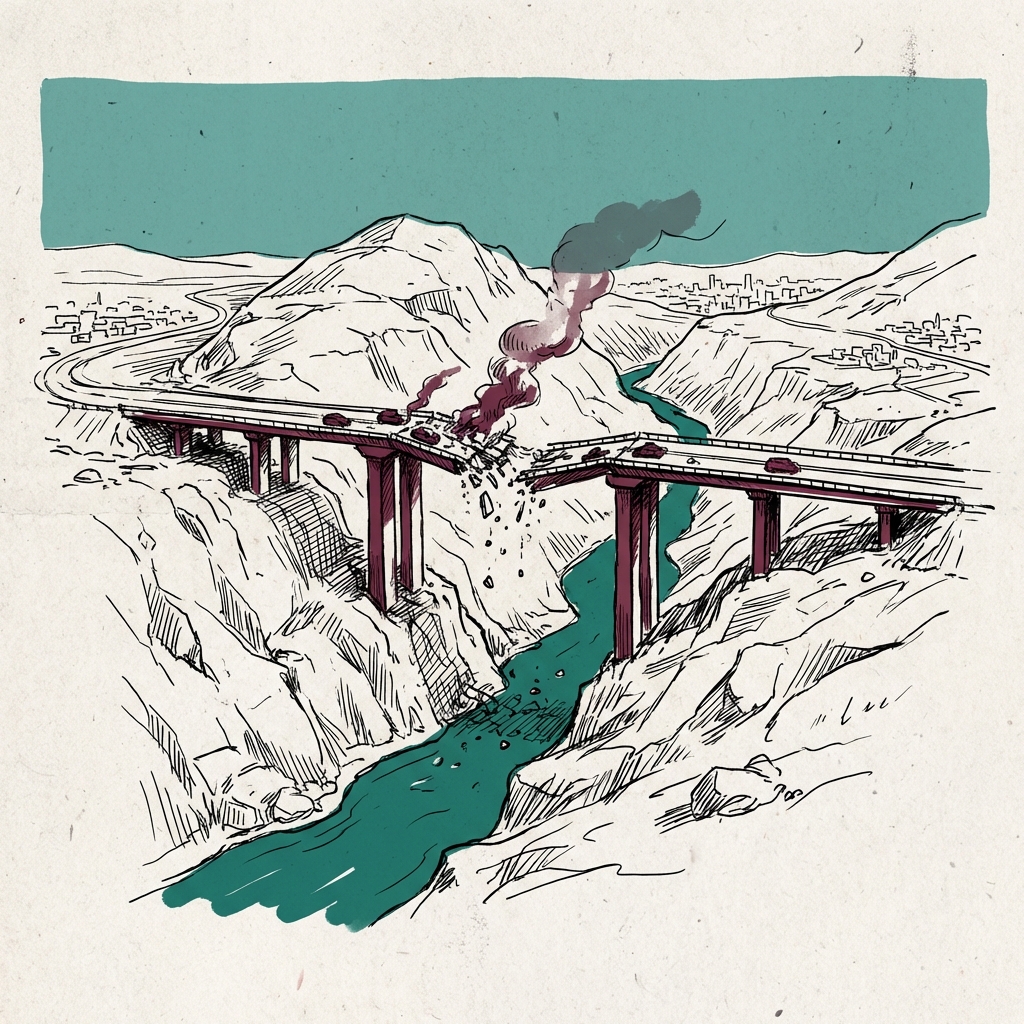
The B1 highway bridge, spanning the gorge between Karaj and Tehran, was struck by US forces on 3 April 2026, killing eight civilians and injuring 95 in what became the first deliberate attack on civilian transport infrastructure in the conflict. Iran's tallest highway bridge at 136 metres, it carried daily commuter and freight traffic serving millions of people in the greater Tehran metropolitan area.
Inaugurated in 2026, the bridge had been under construction for over a decade. CENTCOM justified the strike by characterising the crossing as a supply line to Iranian drone and missile units in the Alborz foothills; Iranian officials and Independent engineers disputed that claim, pointing to its function as a commuter arterial with no military hardening. The attack drew immediate condemnation from UN agencies and humanitarian organisations citing the laws of armed conflict.
The strike expanded the conflict's symbolic boundary. Previous US targeting had focused on military facilities, command nodes, and Energy infrastructure. Attacking a civilian motorway bridge signalled a willingness to degrade Iran's urban connectivity, raising questions about the proportionality standards being applied — and about how Iran would calibrate its retaliatory response to Gulf state infrastructure.
What is the B1 highway bridge?
When was the B1 bridge struck?
Why did the US strike the B1 bridge?
Was the B1 bridge a military target?

