Skip to content
Briefings are running a touch slower this week while we rebuild the foundations.See roadmap
Iran Conflict 2026
21MAY

Hormuz tolls paid in yuan, $2m a ship

4 min read
09:55UTC

Lloyd's List confirmed vessels have paid up to $2 million per ship in Chinese yuan to obtain Persian Gulf Strait Authority transit clearance, the first confirmed payments routing outside the dollar correspondent-banking system OFAC's enforcement architecture relies on.

ConflictDeveloping
Key takeaway

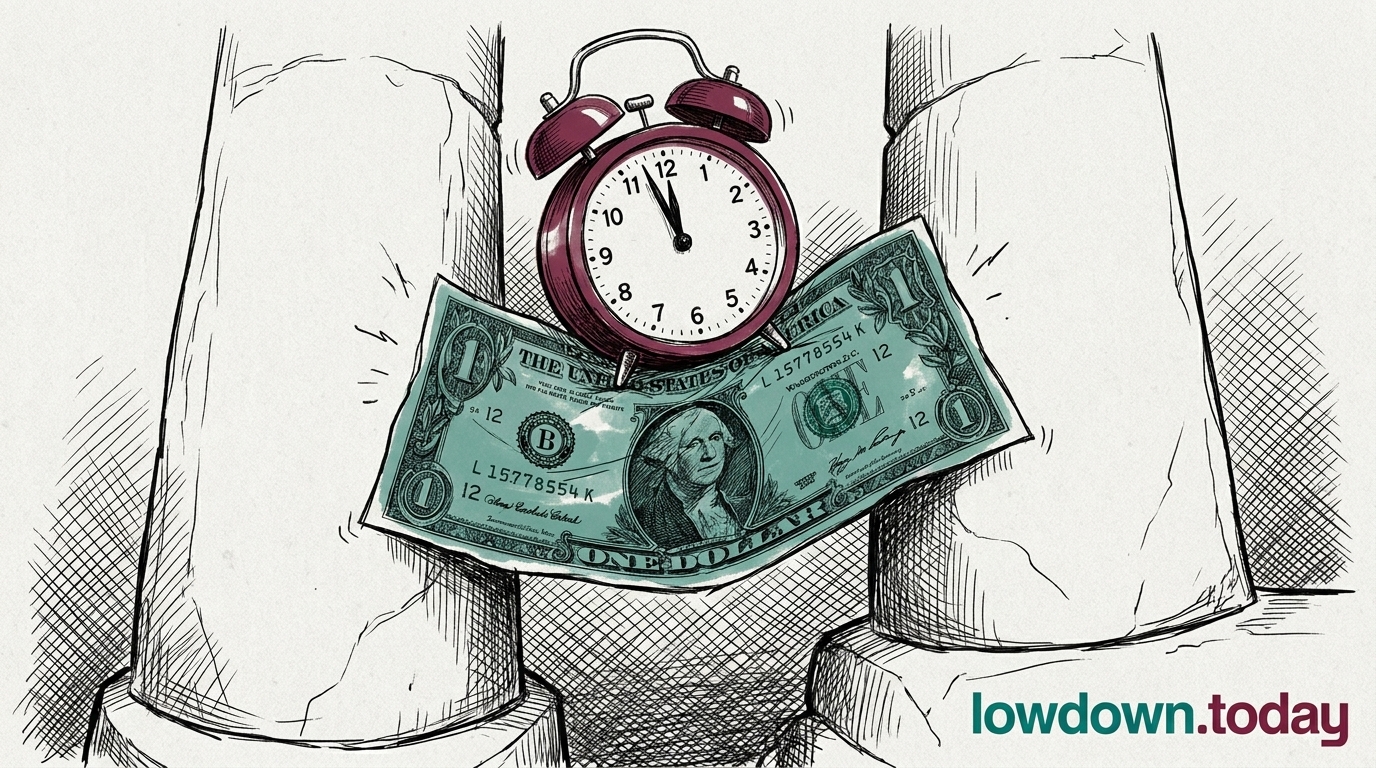
A yuan toll booth at Hormuz collects revenue in a currency OFAC's screening architecture cannot automatically catch.

Lloyd's List confirmed on 7 May that vessels have paid up to $2 million per ship to obtain Persian Gulf Strait Authority (PGSA) transit clearance, with payments settled in Chinese yuan 1. Iran has not published a tariff schedule, and the PGSA registration channel that opened on 6 May still shows zero formal sign-ups from the 2,000-vessel stranded fleet. The toll route is operating in parallel without a public registry: vessels pay quietly, then transit.

The architecture matters more than the figure. OFAC, the US sanctions enforcement office, runs almost entirely on the dollar. A SWIFT message routed through a US correspondent bank trips a screening obligation under executive orders 13902 and 13224, the legal spine of the 1 May Sanctions Bulletin (SB0483) issued alongside General Licence W . The screening fires automatically; the bank has to act or face penalties. A yuan-denominated payment routes around all of it, with no SWIFT trail through New York, no US correspondent bank on the chain, and no automatic OFAC tripwire.

The legal foundation Iran is invoking is the Majlis Hormuz sovereignty law ratified on 2 May and the PGSA structure created on 5 May. Together they convert a maritime chokepoint into a domestic-law toll booth, and the yuan denomination is the architectural choice that lets Iran's PGSA collect outside the dollar system.

The template is a 2022 import. Russian crude buyers settled in yuan through Chinese correspondent banks after the 2022 SWIFT exclusions, exactly to escape the dollar-clearing leg that OFAC sanctions hook into. Iran has now extended that template from commodity sales to maritime access fees, the first known instance of a sanctioned state using yuan-denominated transit revenue at scale. SB0483 was a warning framing rather than a new prohibition; the vessels paying in yuan face secondary-sanctions risk under existing executive orders, but enforcement against a yuan transaction with no US nexus requires OFAC to designate the specific vessel or shipper rather than rely on the automatic correspondent-bank step. That is a measurably slower, more political enforcement path.

A signed MOU would unwind the PGSA collection inside a month. That ties the precedent's durability to the 9 May reply window: every day the toll collects in yuan is a day the dollar enforcement architecture falls one notch shorter, and a day the yuan-routing template hardens into a usable model for the next sanctioned state to copy.

Deep Analysis

In plain English

Ships passing through the Strait of Hormuz are being charged up to $2 million each to get through, paid in Chinese yuan rather than US dollars. That currency choice is deliberate: the US sanctions enforcement system works by monitoring dollar payments through American banks. Pay in yuan through Chinese banks, and that monitoring system cannot automatically catch it. Iran has essentially found a payment route that the US cannot block the way it normally would. A signed peace deal would end the toll system; until then, the toll keeps collecting.

Deep Analysis
Root Causes

OFAC's Iran sanctions architecture was designed for a dollar-centric global financial system in which every significant cross-border payment eventually routes through a US correspondent bank. The 2022 Russian SWIFT exclusion was the proof-of-concept that demonstrated dollar-clearing avoidance at scale.

The IRGC's finance operation observed the Russian crude routing model for three years before the 2026 conflict opened. Iran chose yuan to exploit the same structural gap: sanctions enforcement requires a US-nexus transaction in the payment chain, and a yuan toll settled through Chinese correspondent banks provides none.

What could happen next?
  • Precedent

    The yuan-denominated PGSA toll is the first confirmed instance of a sanctioned state using yuan-denominated transit revenue at scale; if it persists, it becomes the model for any future sanctioned chokepoint controller.

    Long term · 0.8
  • Risk

    OFAC's only available response, individually designating each vessel or operator, is measurably slower than the automatic correspondent-bank tripwire, creating a window in which the toll collects with near-impunity.

    Immediate · 0.85
  • Opportunity

    A signed MOU would unwind the PGSA collection within the 30-day Hormuz reopening timeline, extinguishing the yuan-routing precedent before it fully hardens into a copyable model.

    Short term · 0.65
First Reported In

Update #91 · MOU in Tehran, missiles in the strait

AGBI· 8 May 2026
Read original
Different Perspectives
Turkey (Shakarab consideration)
Ankara serves as one of two Western-adjacent Iran back-channels while Turkish national Gholamreza Khani Shakarab faces imminent execution on espionage charges in Iran. President Erdogan cannot deflect the domestic political crisis that a Turkish execution would trigger, which would force suspension of the mediating role.
Germany (Bundestag gap)
Belgium, Germany, Australia, and France committed Hormuz coalition hardware on 18 May. Germany's Bundestag authorisation for the coalition deployment remains pending, creating a constitutional gap between the commitment announced and the parliamentary mandate required to operationalise it.
IEA and oil market analysts
The IEA's $106 May Brent projection met the market in one session on 20 May as Brent fell 5.16% on diplomatic optimism. Goldman Sachs and Morgan Stanley's two-layer premium framework holds: the kinetic component compressed; the structural insurance component tied to Lloyd's ROE remains unresolved.
Hengaw
Hengaw
Documented the dual Kurdish execution at Naqadeh on 21 May, the two Iraqi-national espionage executions on 20 May, and Gholamreza Khani Shakarab's imminent execution risk. The 24-hour cluster covers two executions at one facility, the first foreign-national espionage executions, and a Turkish national whose death would suspend Ankara's mediation.
Lloyd's of London
Lloyd's of London
Hull rates stand at 110-125% of vessel value on the secondary market; the Joint War Committee has conditioned cover reopening on written ROE from the coalition or PGSA. The Majlis rial bill makes any compliant ROE structurally impossible to draft while the PGSA's yuan portal remains its operational mechanism.
United Kingdom and France (Northwood coalition)
The 26-nation coalition paper requires Lloyd's to see written rules of engagement before Hormuz war-risk cover reopens. The Majlis rial bill adds a second governance incompatibility on top of the unpublished PGSA fee schedule; coalition ROE cannot mention rial without conceding Iranian sovereignty over the strait.