Skip to content
You can now search across every topic, entity and event.What's new
Iran Conflict 2026
18MAY

Dark tankers hug Oman past Hormuz

4 min read
14:44UTC

On 22 June CENTCOM counted 55 merchant ships transiting Hormuz while Kpler tracked only 12, a 43-ship gap analyst Behrouz Bakhtiari attributed to AIS-dark vessels hugging the Omani shore.

ConflictAssessed
Key takeaway

A 43-ship CENTCOM-Kpler gap exposed a dark Omani-shore corridor, breaking the link between transits and supply.

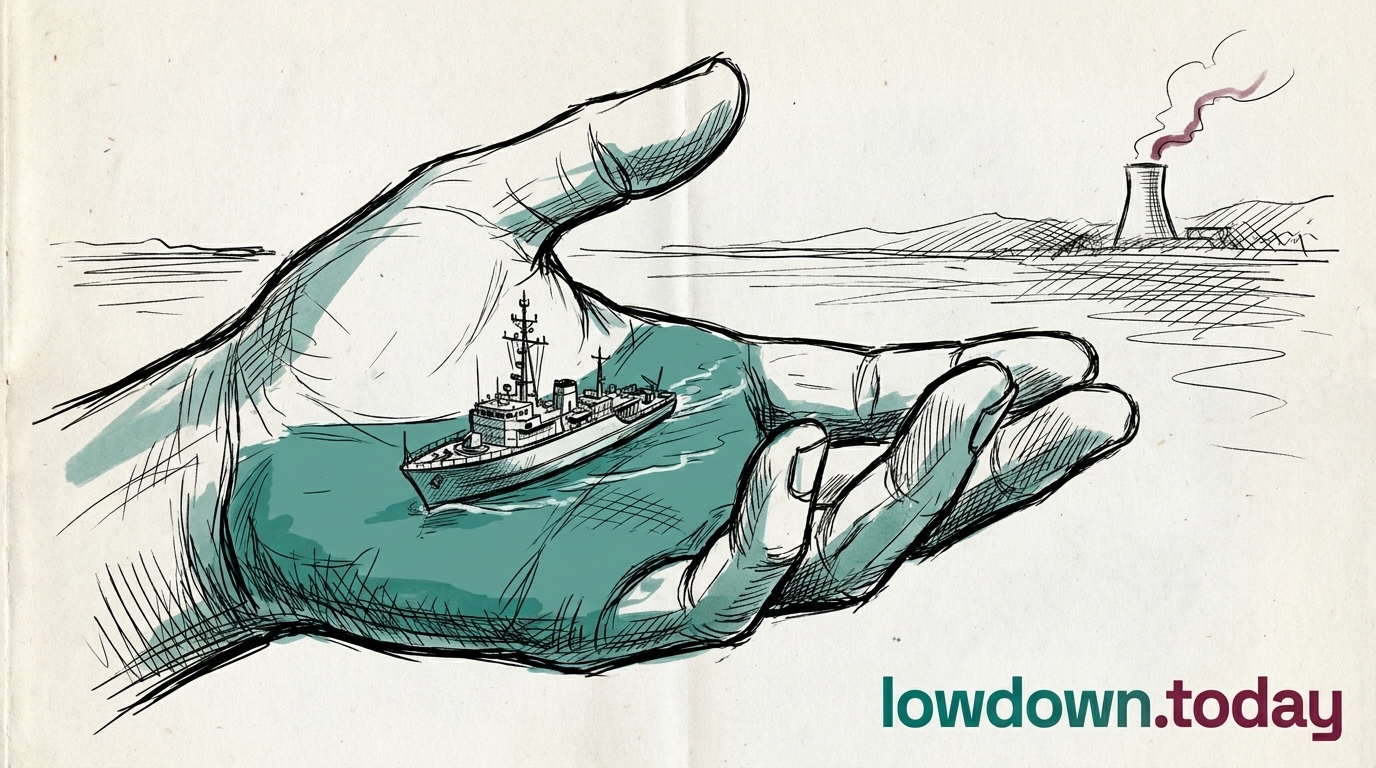
On 22 June CENTCOM, the US military command covering The Gulf, counted 55 merchant ships transiting the Strait of Hormuz while Kpler, the Paris-based cargo tracker, logged only 12 1. A 43-ship gap between a military count and a commercial tracker is too large to be measurement error. Kpler reads transits from the AIS transponders ships are meant to broadcast; CENTCOM counts hulls it can see. Supply-chain analyst Behrouz Bakhtiari attributed the gap to AIS-dark vessels routing along the Omani shoreline, transiting independently of both the framework and IRGC enforcement 2.

That is a third operating mode for the strait, neither open nor closed, that no prior update has named. It sits underneath the headline status the screens chase: the IRGC says shut, CENTCOM counts movement, and a dark corridor runs between the two. About 515 vessels stayed anchored region-wide on 22 June, most of them waiting for the insured route rather than the strait itself, while low-volume dark transits continue 3.

For the freight desk this complicates the read on the forward curve. If barrels move dark, the insured and flagged spot premium the TD3C spot rate captures overstates the real supply loss, because the cargo crossing the Omani shore pays no war-risk freight and shows up in no benchmark. No price instrument captures a compliance-blind corridor cleanly, so it sits underneath the headline transit count as a structural variable. The closure politics belong to Iran-conflict-2026; the flow implication, that the visible count and the true volume have come apart, is the trade here.

Deep Analysis

In plain English

Two organisations counted how many ships crossed the Strait of Hormuz on 22 June and got very different answers. The US military said 55 ships crossed. Kpler, a company that tracks ship movements using GPS signals, counted only 12. The gap of 43 ships is not a mistake: it likely reflects ships that had switched off their GPS signals and navigated quietly along the Omani coastline to avoid being noticed by either Iranian patrols or Western tracking. This matters because shipping costs are very high right now due to the danger in Hormuz. If a significant number of ships are actually moving through quietly, with lower costs and no insurance, then the official freight prices are exaggerating how bad the supply situation is. The real supply loss may be smaller than the freight market implies, which is why the oil price barely reacted to the re-closure on 21 June: some oil was still getting through via the back door.

What could happen next?
  • Consequence

    If the 43-ship CENTCOM-Kpler gap reflects genuine dark-corridor flow, the TD3C spot premium embeds a supply-loss fear that overstates actual disruption, creating a potential correction risk when the backlog releases and the premium compresses faster than fundamentals warrant.

    Short term · Suggested
  • Risk

    Vessels transiting the dark corridor are operating without Western P&I cover, creating accumulated liability exposure on any incident. A single significant casualty (collision, fire, hull loss) in the Omani coastal zone would create a major underwriting event and could accelerate shadow-fleet insurance costs.

    Medium term · Suggested
  • Precedent

    The dark corridor's operationalisation as a third Hormuz mode independent of both MOU frameworks and IRGC enforcement creates a precedent for future Hormuz crises: informal bypass routing can sustain partial flow even during formal closures, limiting the maximum supply-disruption potential that any closure can achieve.

    Long term · Assessed
First Reported In

Update #10 · Hormuz opened on paper, freight said no

Al Jazeera· 22 Jun 2026
Read original
Different Perspectives
Oil traders
Oil traders
Sent Brent down 2.29 per cent to $98.38 a barrel on reports that mediation was reviving, moving the price on CENTCOM's quiet night rather than on Trump's same-day promise of a bigger operation with no deadline attached.
Iran
Iran
An Iranian official called the same mediation account completely misleading, denying it received any US proposal via Baghdad on the same day Iraq denied delivering one, leaving neither denial able to settle what actually passed between the two capitals.
Iraq
Iraq
Called groundless the New York Times account that its prime minister carried a US ceasefire proposal to Tehran, a denial that also protects Baghdad's effort to avoid becoming a party to a war fought by aircraft it does not control.
OHCHR
OHCHR
Recorded 17 civilian seafarer deaths since the war began, a population neither the Pentagon nor Iran's Health Ministry counts in its own tally, and called for urgent action on 6,000 crew stranded across roughly 400 vessels in the Strait of Hormuz.
Houthis
Houthis
Enforced the blockade on Saudi-linked shipping it declared on 20 July by hitting the NCC Masa and then an Aramco facility at Jazan, moving from radio warnings to strikes on land after four days without a confirmed hit.
Saudi Arabia
Saudi Arabia
Struck Houthi military sites near Hodeidah the same day the NCC Masa was hit, while its coalition spokesman insisted Hodeidah, Ras Issa and Salif all remain open to navigation. The distinction protects the ports Yemen's population depends on for food and fuel even while punishing the group behind the tanker strike.