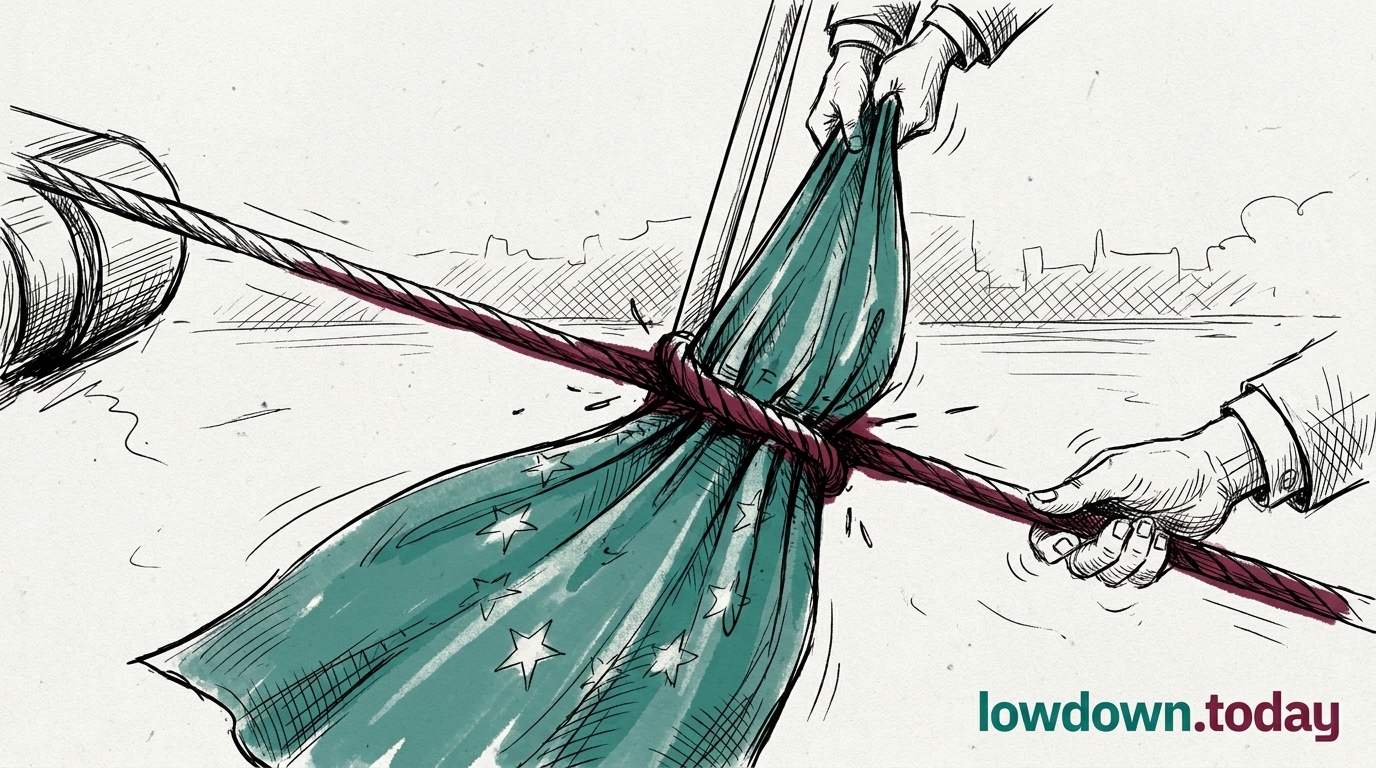
EU ambassadors froze the $44.10 Russia oil price cap until 23 July on 15 July, a one-week stopgap that sidestepped the automatic six-monthly formula revision1. Foreign ministers had failed two days earlier to agree either the 21st sanctions package or a durable freeze duration, with the Commission's freeze-to-January-2027 line and a Greece-Cyprus-Malta three-month compromise both collapsing2. The cap is the G7 mechanism that bars Western shippers and insurers from carrying Russian crude sold above the ceiling.
The formula lift the freeze avoided pointed to roughly $58/bbl, not the ~$75 the desk had carried since mid-June, because the 22-week calculation window that closed in mid-June had already banked the war's price surge3. Read $58 as a cap-formula ceiling, distinct from Brent's own ~$87 war-premium SPOT; conflating the two overstates the windfall the EU was staring down. At $58 rather than $75, the auto-lift the freeze headed off would have handed Russia far less than the desk had priced.
With the cap frozen rather than lifted, Urals P&L still runs off the Brent-Urals basis, not the ceiling. Kaja Kallas's hoped-for round of 250 individual designations stayed unconfirmed, and the wider package stays blocked on the LNG phase-out and Raiffeisen-access disputes, with Greece resisting the freeze duration on shipowner-registry grounds4. The same argument returns on 23 July, so the fight is deferred, not settled.





