Skip to content
You can now search across every topic, entity and event.What's new
European Tech Sovereignty
27MAY

EU cap fight turns on months, not price

2 min read
15:19UTC

EU foreign ministers vote on 13 July on the 21st sanctions package, two days before a deadline that would auto-lift the $44.10 Russian oil cap; Greece, Cyprus and Malta want a shorter freeze than Brussels.

TechnologyDeveloping
Key takeaway

EU ministers vote 13 July on whether to freeze the Russian oil cap three months or to January 2027.

EU foreign ministers are set to vote on the bloc's 21st sanctions package on 13 July, two days before a 15 July deadline that would otherwise auto-lift the $44.10 cap on Russian oil. The Kyiv Independent reported the schedule, citing EU diplomats. 1 The cap bars Western insurers and shippers from servicing Russian crude sold above the set ceiling; letting it lapse would remove that ceiling and loosen the constraint on Moscow's barrels.

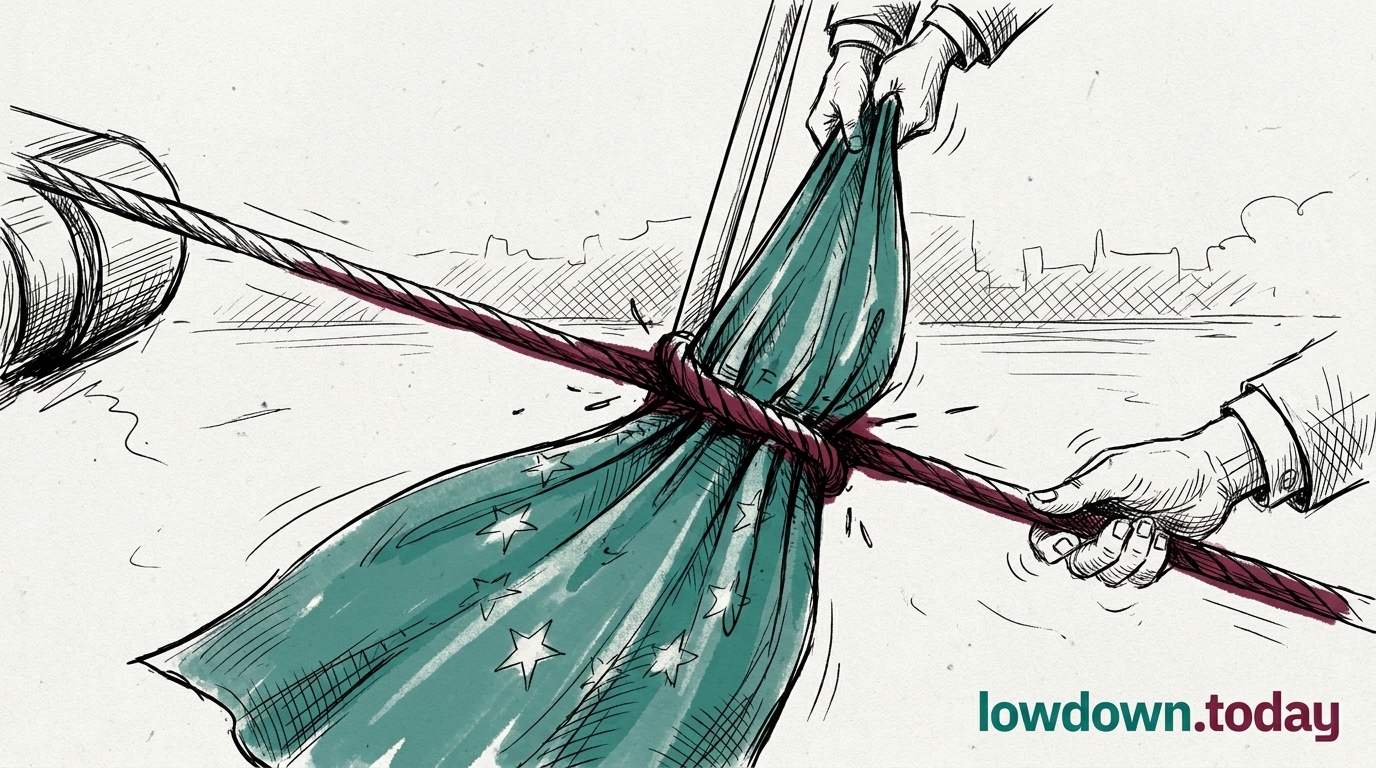
The package advances the proposal the Commission tabled in late June , but the fight has narrowed to duration. Greece, backed by Cyprus and Malta, is pushing a three-month freeze to be revisited in the autumn, against The Commission's plan to hold the cap to January 2027 . Both sides accept the level; they disagree only on how long to hold it.

A freeze to January 2027 locks the cap through the first quarter of next year; the three-month version reopens it for review around October. That is a materially shorter runway for any Urals-linked hedge than the desk has been pricing, and the outcome lands inside a week. Whichever way the vote goes, it resets how long traders can rely on the cap rather than the physical market to bound Russian barrels.

Deep Analysis

In plain English

The EU has capped the price other countries can pay for Russian oil at $44.10 a barrel since early 2026, to limit how much Moscow earns from oil exports. That cap is due to lift automatically on 15 July unless EU foreign ministers vote to freeze it first, and they are now set to vote on 13 July. Greece, Cyprus and Malta, all major shipping nations, want a shorter three-month freeze reviewed again in the autumn rather than dropping the cap itself. The European Commission wants the freeze locked until January 2027 instead. Whichever wins shapes how confidently traders can plan around Russian oil for the rest of the year.

Deep Analysis
Root Causes

Greece's and Malta's shipping registries carry a combined 37% of world merchant tonnage, roughly 20% Greek-flagged and 17% Maltese-flagged. Much of that fleet earns revenue carrying cargo, including sanctioned barrels, that a stricter or longer freeze could put at commercial risk.

That fleet economics, more than any view on Russia policy, explains why Athens and Valletta keep pushing the shorter compromise: a freeze reopened in the autumn gives their registries and insurers more frequent chances to reprice risk than one locked to January 2027.

What could happen next?
  • Precedent

    If Greece, Cyprus and Malta again force a shorter compromise, as they did on the 20th package's maritime ban, it confirms shipping-registry economics as a structural veto point on EU energy sanctions rather than a one-off objection.

First Reported In

Update #14 · Brent-WTI blows out as the hike lands priced

Kyiv Independent· 6 Jul 2026
Read original
Different Perspectives
Trump administration
Washington defends the MATCH Act as closing a loophole that lets ASML's DUV tools reach Chinese fabs indirectly, dismissing the Dutch Cabinet's June complaint of being treated with disregard. Officials expect the bill's progress through Congress to keep the DUV cross-subsidy question live regardless of ASML's Q2 numbers.
Bruegel
Bruegel
Brussels-based economists argue this week's deliverables, specialist fab aid and a digital euro that restricts no US firm, prove Europe's sovereignty agenda advances only where it meets no American resistance. They expect the leading-edge fabrication gap and dependence on US frontier AI models to persist absent a policy that directly confronts a named US interest.
German federal government
Berlin welcomes the €659m tranche funding jobs across North Rhine-Westphalia, Schleswig-Holstein, Hesse and Bavaria, on top of the ESMC Dresden fab already under construction on TSMC-shipped tooling. Officials treat power and analogue capacity as the achievable near-term win while Dresden remains Germany's only bet on leading-edge logic.
House of Commons Science, Innovation and Technology Committee
The committee's 7 July report found the UK has "no coherent strategic framework" for sovereign technology and warns it "risks being cut off at whim", citing the June order that barred foreign access to Anthropic's Fable 5 and Mythos 5 as the trigger case. It expects no domestic hyperscaler or foundry response before the gap widens further.
European Commission
European Commission
The Commission cleared €659m in German state aid on 14 July, taking cumulative Chips Act support to roughly €14.2bn, and let the digital-euro mandate reach trilogue after ECON's floor-vote shortcut was overturned. Brussels presents both as sovereignty delivered, without addressing that neither funds leading-edge logic fabrication.
ASML
ASML
ASML raised FY2026 guidance to €43-45bn on 15 July and, for the first time since Q1, dropped the export-control hedge from its release even with the MATCH Act live in Congress. Fouquet frames the order book, 86 systems against 67 in Q1, as strong enough to outrun the DUV dispute rather than evidence it has cooled.
