Skip to content
You can now search across every topic, entity and event.What's new
European Tech Sovereignty
27MAY

EU targets shadow fleet's service layer

2 min read
15:19UTC

The EU's draft 21st sanctions package would, for the first time, target the bunkering and ship-to-ship services behind Russia's shadow fleet and freeze the $44.10 oil price cap to January 2027.

TechnologyDeveloping
Key takeaway

The EU's 21st package would hit shadow-fleet support services and freeze the $44.10 cap, squeezing Urals without new OFAC action.

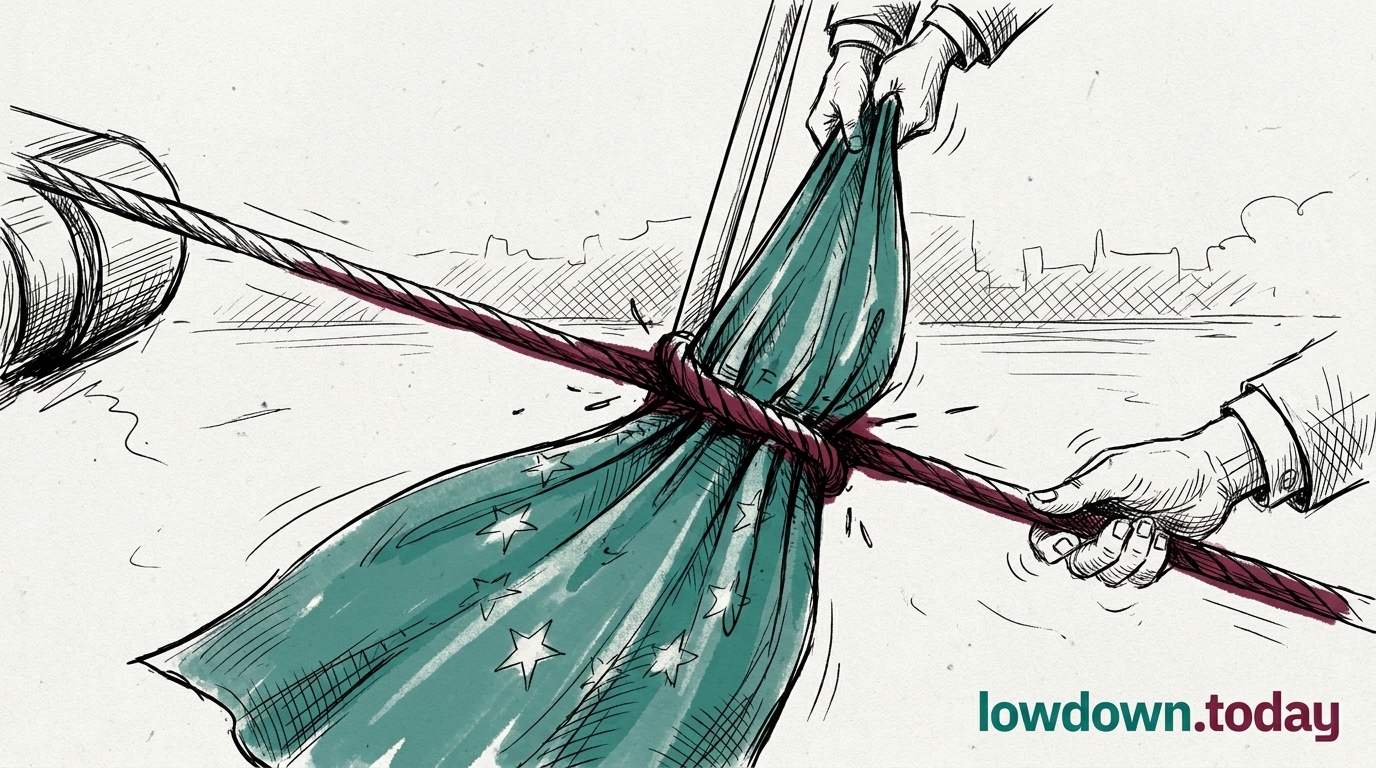
The European Commission's draft 21st sanctions package would, for the first time, target the service layer behind Russia's shadow fleet, the bunkering, ship-to-ship (STS) transfer and port services that keep sanctioned tankers moving, alongside about 30 more vessel listings 1. It also freezes the $44.10 price cap, the G7 and EU ceiling on the price at which Russian seaborne crude can be lawfully shipped using Western services, to January 2027, blocking the upward adjustment toward roughly $75 that a falling Brent would otherwise trigger .

The package still needs member-state unanimity and heads to a mid-July vote before the 15 July auto-lift. Its support-vessel target hits a gap earlier rounds left open: listing shadow vessels did little while their bunkering and STS providers stayed in business, so designating the service layer attacks the same logistics chain from the supply side .

For Russian-barrel economics, a frozen cap plus a squeezed service layer keeps downward pressure on Urals, Russia's main export grade, without a single new designation from OFAC, the US sanctions enforcer .

Deep Analysis

In plain English

Russia keeps exporting oil despite Western sanctions using a shadow fleet: a large group of tankers, mostly older vessels, that operate outside the normal Western-insured shipping system. Earlier EU sanctions packages listed specific shadow-fleet tankers, but that approach left a gap: the services that keep those tankers running (bunkering with fuel to keep them going, ship-to-ship transfers where crude is moved between vessels at sea to obscure its origin, and port services in friendly ports) remained undesignated and continued operating freely. The EU Commission's draft 21st package proposes plugging that gap by sanctioning the service providers themselves. It also proposes roughly 30 additional vessel listings. Separately, the package proposes freezing the Russia oil price cap at $44.10 per barrel until January 2027. Under the current formula, the cap would automatically adjust upward toward roughly $75 on 15 July 2027 as the six-month Urals crude average has risen. A freeze blocks that adjustment, keeping the ceiling lower and limiting Russia's oil revenue. The package still needs unanimous approval from all EU member states at a mid-July vote; it has not yet been adopted.

What could happen next?
  • Consequence

    If adopted before 15 July, the $44.10 price-cap freeze blocks the automatic adjustment toward $75, limiting Russia's oil revenue per barrel on any cargo using Western services to a level below Russia's $59 federal budget benchmark (ID:4565).

    Immediate · Assessed
  • Risk

    If EU member-state unanimity fails at the mid-July vote, the $44.10 cap auto-lifts toward $75, easing Russia's fiscal constraint and partially offsetting the revenue pressure that market price alone has been carrying (ID:4565).

    Short term · Reported
  • Precedent

    First-ever EU designation of shadow-fleet bunkering and STS service providers, if adopted, shifts the enforcement model from listing ships to targeting the logistics layer, following the North Korea sanctions escalation path.

    Medium term · Assessed
  • Risk

    Greek and Maltese shipping interests face direct commercial exposure to support-vessel designations; their governments' past resistance to maritime-services provisions creates the primary unanimity risk for the package's core innovation.

    Short term · Reported
First Reported In

Update #12 · ISAB Priolo dodges the cliff

Baker McKenzie· 30 Jun 2026
Read original
Different Perspectives
Trump administration
Washington defends the MATCH Act as closing a loophole that lets ASML's DUV tools reach Chinese fabs indirectly, dismissing the Dutch Cabinet's June complaint of being treated with disregard. Officials expect the bill's progress through Congress to keep the DUV cross-subsidy question live regardless of ASML's Q2 numbers.
Bruegel
Bruegel
Brussels-based economists argue this week's deliverables, specialist fab aid and a digital euro that restricts no US firm, prove Europe's sovereignty agenda advances only where it meets no American resistance. They expect the leading-edge fabrication gap and dependence on US frontier AI models to persist absent a policy that directly confronts a named US interest.
German federal government
Berlin welcomes the €659m tranche funding jobs across North Rhine-Westphalia, Schleswig-Holstein, Hesse and Bavaria, on top of the ESMC Dresden fab already under construction on TSMC-shipped tooling. Officials treat power and analogue capacity as the achievable near-term win while Dresden remains Germany's only bet on leading-edge logic.
House of Commons Science, Innovation and Technology Committee
The committee's 7 July report found the UK has "no coherent strategic framework" for sovereign technology and warns it "risks being cut off at whim", citing the June order that barred foreign access to Anthropic's Fable 5 and Mythos 5 as the trigger case. It expects no domestic hyperscaler or foundry response before the gap widens further.
European Commission
European Commission
The Commission cleared €659m in German state aid on 14 July, taking cumulative Chips Act support to roughly €14.2bn, and let the digital-euro mandate reach trilogue after ECON's floor-vote shortcut was overturned. Brussels presents both as sovereignty delivered, without addressing that neither funds leading-edge logic fabrication.
ASML
ASML
ASML raised FY2026 guidance to €43-45bn on 15 July and, for the first time since Q1, dropped the export-control hedge from its release even with the MATCH Act live in Congress. Fouquet frames the order book, 86 systems against 67 in Q1, as strong enough to outrun the DUV dispute rather than evidence it has cooled.
