Skip to content
You can now search across every topic, entity and event.What's new
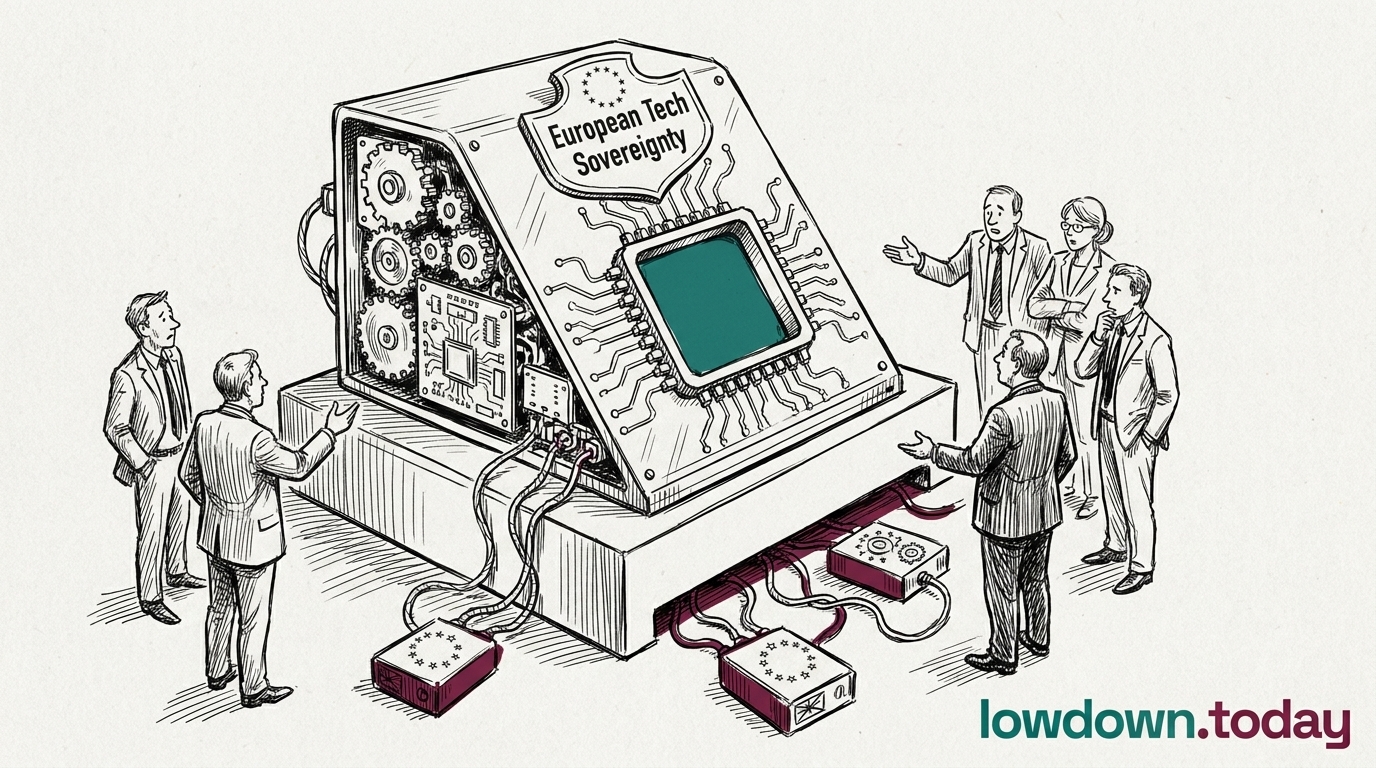
European Tech Sovereignty
23APR

Iran defers nuclear talks to phase two

3 min read
09:21UTC

Baghaei confirmed the nuclear file has been split off into a separate 60-day second phase that starts only once a war-ending memorandum is signed. The hardest question is being deferred, not solved.

TechnologyDeveloping
Key takeaway

Iran has deferred the nuclear file to a 60-day second phase that starts only after a signed ceasefire.

Iran's Foreign Ministry spokesman Esmaeil Baghaei confirmed on 24-25 May that nuclear questions have been moved into a separate 60-day second phase, one that begins only after any war-ending memorandum is signed 1. Tehran insists the nuclear track cannot open until the first phase, covering the Strait of Hormuz and frozen assets, is resolved.

This is a development in a known dispute, not a fresh one. Accounts of the deal's nuclear terms had been contradictory across the parties , and Baghaei's confirmation resolves part of that confusion by naming the structure: the nuclear file is sequenced behind the ceasefire, not bundled into it. What is newly on the record is the architecture, a time-boxed second stage, rather than the existence of a nuclear disagreement.

The phasing makes diplomatic sense and reflects a constraint inside Tehran. Supreme Leader Mojtaba Khamenei has directed that Iran's enriched uranium stay in the country , which is incompatible with the verification regime Washington would seek. Deferring that fight to a separate 60-day window lets a war-ending agreement close without first cracking the question that has defied negotiators for a decade.

Deferral shrinks the negotiation, not the problem. US positions on enrichment caps and verification have not been made public, and the 60-day clock would start only after the harder sequencing fight over the strait and the frozen assets is already settled. A second phase that opens with no agreed verifier, no IAEA re-access date, and no destination for Iran's enriched stock could stall exactly where the 2015 deal's successors did.

Deep Analysis

In plain English

Iran confirmed on 24-25 May that discussions about its nuclear programme have been pushed into a separate, later stage of any peace agreement. The plan has two parts. Part one is ending the war: reopening the Strait of Hormuz, lifting the US naval blockade, and releasing frozen Iranian money. Part two, starting only after part one is signed, would be 60 days of nuclear talks. But Iran's supreme leader has already said Iran's stockpile of enriched uranium must stay in the country, which is the main thing the US wants removed. The nuclear inspection agency, the International Atomic Energy Agency (IAEA), was expelled from Iran in April, so there is no one in place to verify whether Iran makes any nuclear changes. The 60-day window exists on paper, but the tools needed to make it work are not yet in place.

Deep Analysis
Root Causes

The 60-day nuclear deferral is structurally forced by the IAEA access gap created by the Majlis vote of 11 April 2026. Iran cannot credibly offer nuclear concessions for Phase 1 because there is no inspection regime through which any concession could be verified. The deferral to Phase 2 is not primarily a diplomatic choice; it is a verification impossibility that both sides are papering over by agreeing to solve it later.

Khamenei's 21 May uranium-stay directive compounds the problem: even if Phase 2 begins, the Supreme Leader has publicly instructed that the enriched uranium stockpile must remain in Iran, removing the one confidence-building measure the Axios MOU draft described as a Phase 2 deliverable.

What could happen next?
  • Risk

    If Phase 1 is signed and the blockade lifts, Iran retains full enrichment capacity for at least 60 days with no IAEA inspection access, creating a window during which any covert enrichment acceleration would be undetectable.

    Short term · Assessed
  • Consequence

    Khamenei's 21 May uranium-stay directive, combined with the 60-day deferral, means the IAEA will need to be restored to full access before Phase 2 can begin, a political precondition neither the Axios MOU draft nor Baghaei's statement has addressed.

    Short term · Assessed
  • Precedent

    A signed war-ending MOU that explicitly defers nuclear questions would mark the first time the US has agreed in writing that a non-nuclear war with Iran can be terminated without simultaneous nuclear concessions, a structural precedent for any future Iranian nuclear negotiation.

    Long term · Assessed
First Reported In

Update #107 · Two markets, two prices on one Iran deal

Al Jazeera· 25 May 2026
Read original
Different Perspectives
United States (Google/Alphabet)
Alphabet lost its final Android appeal on 2 July with no further court to hear it, a result its Computer and Communications Industry Association allies frame as precedent, not deterrence, since the €4.1bn fine changed nothing about Google's Play Store terms across eight years of litigation.
UK Department for Science, Innovation and Technology
DSIT opened its £96m second Sovereign AI wave on 3 July, switching from April's equity stakes to fixed-price contracts because Britain has no domestic hyperscaler or Bpifrance-style lender to fund capacity another way. It is betting on buying outcomes it controls alone rather than joining an EU-wide framework.
German federal government
Berlin backed both German deliverables this week, Infineon's fab and Aleph Alpha's merger, but is finding one far harder to close than the other. It wants enforceable protective rights inside Cohere's cap table before the merger closes, a legal instrument the Bundeskartellamt has no filing to review yet.
European Commission
European Commission
The Commission banked a clean CJEU win on the eight-year Android case on 2 July, removing Google's last comparator argument before President von der Leyen rules on the far larger DMA self-preferencing fine due 27 July. Brussels treats Infineon's early Dresden delivery as proof the Chips Act mechanism works, at the node Europe already led.
Bruegel (EU industry sceptics)
Bruegel economist Mario Mariniello argued the EU sovereignty package mimics US and Chinese strategy while EU cloud providers hold roughly 15% of their home market; using nationality as a proxy for security without fixing the underlying capital and energy gaps that drive the dependency creates €86bn of migration cost without the security benefit it is sold as delivering.
France
France
France published a joint sovereignty definition with Germany at VivaTech and mobilised €13bn under Tibi Phase 3, placing SAP's partnership with Mistral as the working proof that a German enterprise-software giant running a French sovereign model inside public administration is what digital sovereignty looks like in practice.
