Skip to content
You can now search across every topic, entity and event.What's new
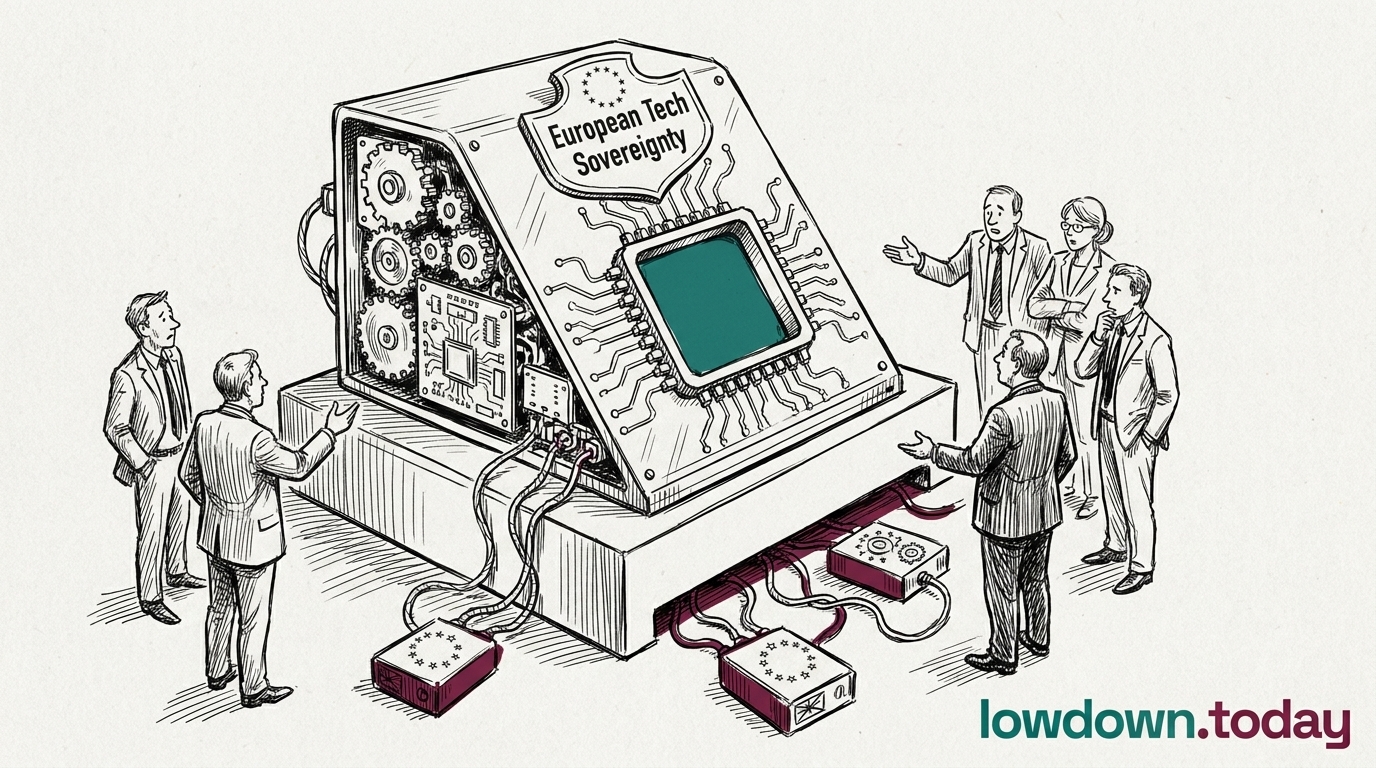
European Tech Sovereignty
23APR

Hegseth threatens Iran strikes in Singapore

2 min read
09:21UTC

US Defence Secretary Pete Hegseth told the Shangri-La Dialogue on Saturday 30 May the US was 'more than capable' of resuming Iran strikes, tying Hormuz to Taiwan; China sent only scholars for the second year running.

TechnologyDeveloping
Key takeaway

Washington ran diplomacy and military threat in parallel at Singapore; China stayed out of the Iran conversation.

Pete Hegseth, the US defence secretary, told the Shangri-La Dialogue in Singapore on Saturday 30 May that the United States was "more than capable" of resuming strikes on Iran and that its munition stocks were "more than suited" to it 1. The Shangri-La Dialogue is Asia's premier annual security summit, where defence ministers across the Indo-Pacific gather each year.

Hegseth tied Hormuz to Taiwan as linked Indo-Pacific concerns and said Trump was "being patient". His speech ran while Trump held the Situation Room meeting in Washington, and the timing read as a coordinated diplomacy-or-force message to allies.

China sent only scholars to the dialogue for the second year running, with no defence minister, and its delegation addressed multilateralism and Taiwan without mentioning Iran 2. Beijing chose a visible non-alignment signal at the moment Washington named it the pacing threat and threatened renewed Iran strikes in the same hall.

That posture is consistent with Trump barring China as a custodian for Iran's enriched uranium on Wednesday 27 May , and with Chinese internet hardware now capping Iran's connectivity . Beijing keeps its economic leverage over Iran while declining the diplomatic exposure of defending it.

Deep Analysis

In plain English

The Shangri-La Dialogue is an annual security summit in Singapore where defence ministers from across Asia and beyond discuss military threats and alliances. It is one of the most watched forums for reading US intentions in Asia. US Defence Secretary Hegseth said the US could restart bombing Iran and had the weapons to do it. This was deliberate: Trump was holding his Situation Room meeting in Washington at the same time, so the two messages arrived simultaneously. Washington wanted allies and enemies alike to hear both: 'we are negotiating, but we can also bomb.' China sent only academics, not its defence minister, for the second year in a row. That means Beijing chose not to engage with Hegseth's framing directly. China imports roughly half its oil through the Strait of Hormuz, so it has a significant stake in how this ends, but it is signalling it will not take a public position on the Iran conflict.

Deep Analysis
Root Causes

China's Shangri-La downgrade since 2025 tracks the Trump administration's designation of Beijing as the 'pacing threat', which has made senior attendance politically costly: a defence minister at the forum must respond to questions, and any response on Iran or Taiwan becomes attributed policy. Scholars can probe and listen without generating attributed positions.

The Iran-specific silence reflects China's bilateral leverage calculation. Beijing holds transit agreements with Tehran and has deployed internet infrastructure in Iran. Public Shangri-La statements on Iran would require China to choose between its relationship with Tehran and its desire to avoid secondary US sanctions, a choice Beijing refuses to make publicly.

What could happen next?
  • Consequence

    China's deliberate Iran silence at Shangri-La confirms that Washington cannot use Beijing as a pressure vector on Tehran through multilateral forums; any Chinese influence must operate through bilateral channels.

  • Risk

    Hegseth's Taiwan-Hormuz linkage, if adopted as US doctrine, raises the cost for China of any future Hormuz transit deal that bypasses CENTCOM's blockade.

First Reported In

Update #113 · Trump signs nothing as a Hellfire hits a hull

Al Jazeera· 31 May 2026
Read original
Different Perspectives
United States (Google/Alphabet)
Alphabet lost its final Android appeal on 2 July with no further court to hear it, a result its Computer and Communications Industry Association allies frame as precedent, not deterrence, since the €4.1bn fine changed nothing about Google's Play Store terms across eight years of litigation.
UK Department for Science, Innovation and Technology
DSIT opened its £96m second Sovereign AI wave on 3 July, switching from April's equity stakes to fixed-price contracts because Britain has no domestic hyperscaler or Bpifrance-style lender to fund capacity another way. It is betting on buying outcomes it controls alone rather than joining an EU-wide framework.
German federal government
Berlin backed both German deliverables this week, Infineon's fab and Aleph Alpha's merger, but is finding one far harder to close than the other. It wants enforceable protective rights inside Cohere's cap table before the merger closes, a legal instrument the Bundeskartellamt has no filing to review yet.
European Commission
European Commission
The Commission banked a clean CJEU win on the eight-year Android case on 2 July, removing Google's last comparator argument before President von der Leyen rules on the far larger DMA self-preferencing fine due 27 July. Brussels treats Infineon's early Dresden delivery as proof the Chips Act mechanism works, at the node Europe already led.
Bruegel (EU industry sceptics)
Bruegel economist Mario Mariniello argued the EU sovereignty package mimics US and Chinese strategy while EU cloud providers hold roughly 15% of their home market; using nationality as a proxy for security without fixing the underlying capital and energy gaps that drive the dependency creates €86bn of migration cost without the security benefit it is sold as delivering.
France
France
France published a joint sovereignty definition with Germany at VivaTech and mobilised €13bn under Tibi Phase 3, placing SAP's partnership with Mistral as the working proof that a German enterprise-software giant running a French sovereign model inside public administration is what digital sovereignty looks like in practice.
