Skip to content
You can now search across every topic, entity and event.What's new
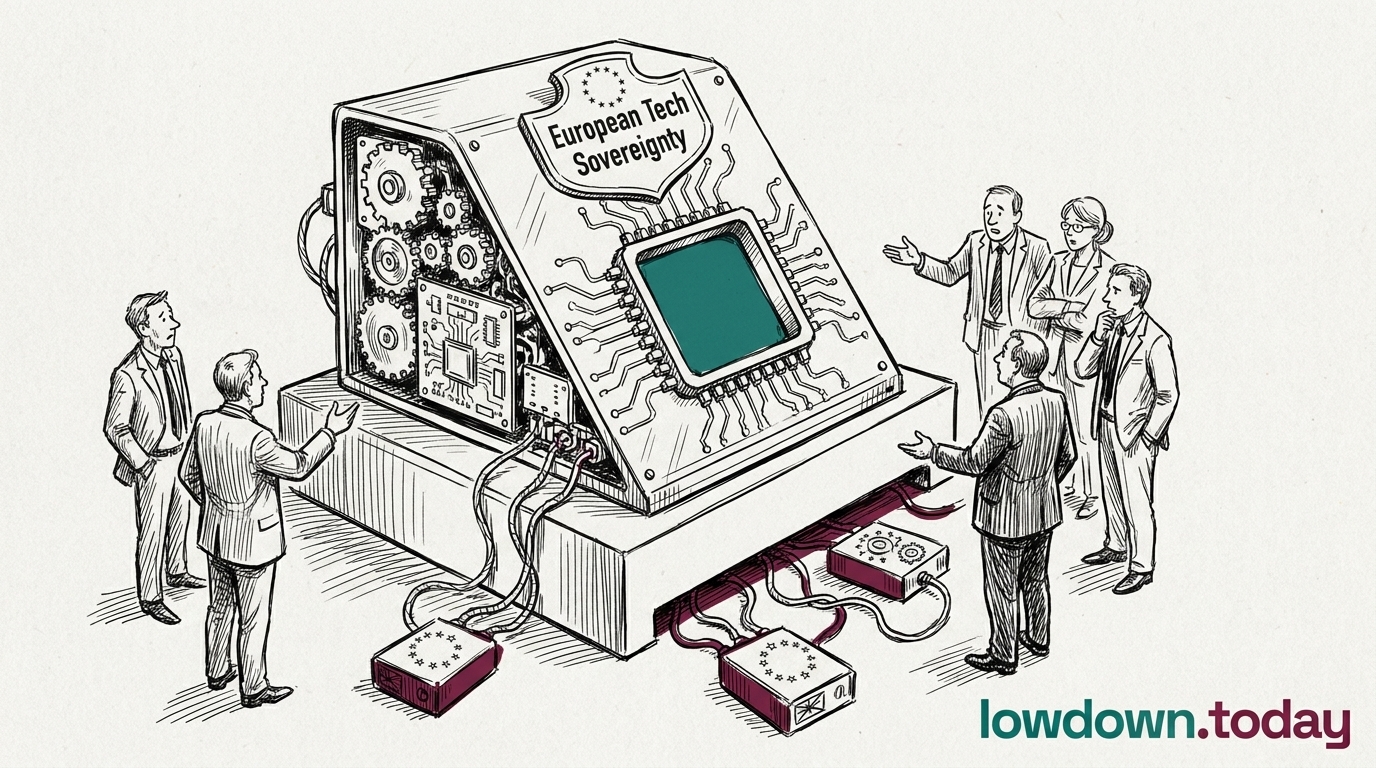
European Tech Sovereignty
23APR

Brent $108 as CENTCOM seizes more tankers

3 min read
09:21UTC

Brent crude rose to $108.11 on Monday across the same two-session window that produced Araghchi's three-capital diplomatic circuit. CENTCOM's cumulative vessel-intercept count reached 38, including the LPG SEVAN seized in the Arabian Sea.

TechnologyDeveloping
Key takeaway

Brent at $108 and 38 CENTCOM intercepts price the war ahead of the talks; markets read no-deal.

Brent Crude rose from $105.33 on Saturday 25 April to $108.11 on Monday 27 April 1, a 2.64 per cent move higher across the same two-session window in which Abbas Araghchi met Sultan Haitham in Muscat and Vladimir Putin in St Petersburg. Brent is the North Sea benchmark used to price roughly two-thirds of internationally traded crude; the contract had been trading inside a $96-108 band since the ceasefire extension last week. Monday's close put it at the top of that band on the most active negotiating day of the war so far.

United States Central Command, the Pentagon's combatant command for the Middle East and Arabian Sea, reached a cumulative blockade-phase intercept count of 38 vessels on Monday, up five from the prior two-session readout , the highest two-session pace in available CENTCOM tallies for the conflict 2. The LPG SEVAN, an Iranian-flagged liquefied petroleum gas carrier, was seized in the Arabian Sea on 25 April and folded into the count CENTCOM announced on Monday. The seizure expands the kinetic profile beyond crude tankers to LPG carriers, a category the blockade had not visibly touched before.

The price action contradicts the negotiating optics. Brent at the top of its trading range during the most public diplomatic window of the war tells traders what Tehran's offer cannot: the apparatus to receive the offer does not appear to exist before Friday's legal expiry, and the wind-down on the only signed paper of the war runs to 24 May. Markets discount probability-weighted outcomes; the rise is consistent with shippers and refiners pricing the next two dated triggers as binding rather than performative. P&I insurers (the protection-and-indemnity mutuals that cover third-party liability for tanker traffic) hold Hormuz exposure at war-rate premia and have not adjusted on the diplomatic news.

For UK drivers, $108 Brent translates to forecourt diesel and petrol stabilising roughly a tenth above March levels on the four-to-six-week pass-through pipeline through the Antwerp-Rotterdam-Amsterdam refining complex. Operation Epic Fury is running its blockade and the price screen is reading the result: the diplomacy is not yet inside the price.

Deep Analysis

In plain English

Oil prices went up while Iran's foreign minister was travelling to meet world leaders with a peace offer. The market does not believe the offer will lead to a deal. The US Navy seized five more ships in two days, including a gas tanker. For UK drivers, the oil price at this level means petrol and diesel prices will stay 8-12 per cent above March prices through May.

What could happen next?
  • Consequence

    CENTCOM reaching 38 cumulative intercepts, with five in 48 hours, sets the operational precedent that the blockade actively widens even during diplomatic peaks, removing any market expectation that talks pause kinetic activity.

  • Risk

    The LPG SEVAN seizure raises South Asian and East African LPG supply exposure; India, Pakistan and Bangladesh source residential cooking fuel via Gulf LPG exporters whose shipping routes now pass through CENTCOM's intercept zone.

First Reported In

Update #82 · Iran writes Phase 1; Washington still has no pen

Trading Economics· 28 Apr 2026
Read original
Different Perspectives
United States (Google/Alphabet)
Alphabet lost its final Android appeal on 2 July with no further court to hear it, a result its Computer and Communications Industry Association allies frame as precedent, not deterrence, since the €4.1bn fine changed nothing about Google's Play Store terms across eight years of litigation.
UK Department for Science, Innovation and Technology
DSIT opened its £96m second Sovereign AI wave on 3 July, switching from April's equity stakes to fixed-price contracts because Britain has no domestic hyperscaler or Bpifrance-style lender to fund capacity another way. It is betting on buying outcomes it controls alone rather than joining an EU-wide framework.
German federal government
Berlin backed both German deliverables this week, Infineon's fab and Aleph Alpha's merger, but is finding one far harder to close than the other. It wants enforceable protective rights inside Cohere's cap table before the merger closes, a legal instrument the Bundeskartellamt has no filing to review yet.
European Commission
European Commission
The Commission banked a clean CJEU win on the eight-year Android case on 2 July, removing Google's last comparator argument before President von der Leyen rules on the far larger DMA self-preferencing fine due 27 July. Brussels treats Infineon's early Dresden delivery as proof the Chips Act mechanism works, at the node Europe already led.
Bruegel (EU industry sceptics)
Bruegel economist Mario Mariniello argued the EU sovereignty package mimics US and Chinese strategy while EU cloud providers hold roughly 15% of their home market; using nationality as a proxy for security without fixing the underlying capital and energy gaps that drive the dependency creates €86bn of migration cost without the security benefit it is sold as delivering.
France
France
France published a joint sovereignty definition with Germany at VivaTech and mobilised €13bn under Tibi Phase 3, placing SAP's partnership with Mistral as the working proof that a German enterprise-software giant running a French sovereign model inside public administration is what digital sovereignty looks like in practice.
