Skip to content
You can now search across every topic, entity and event.What's new
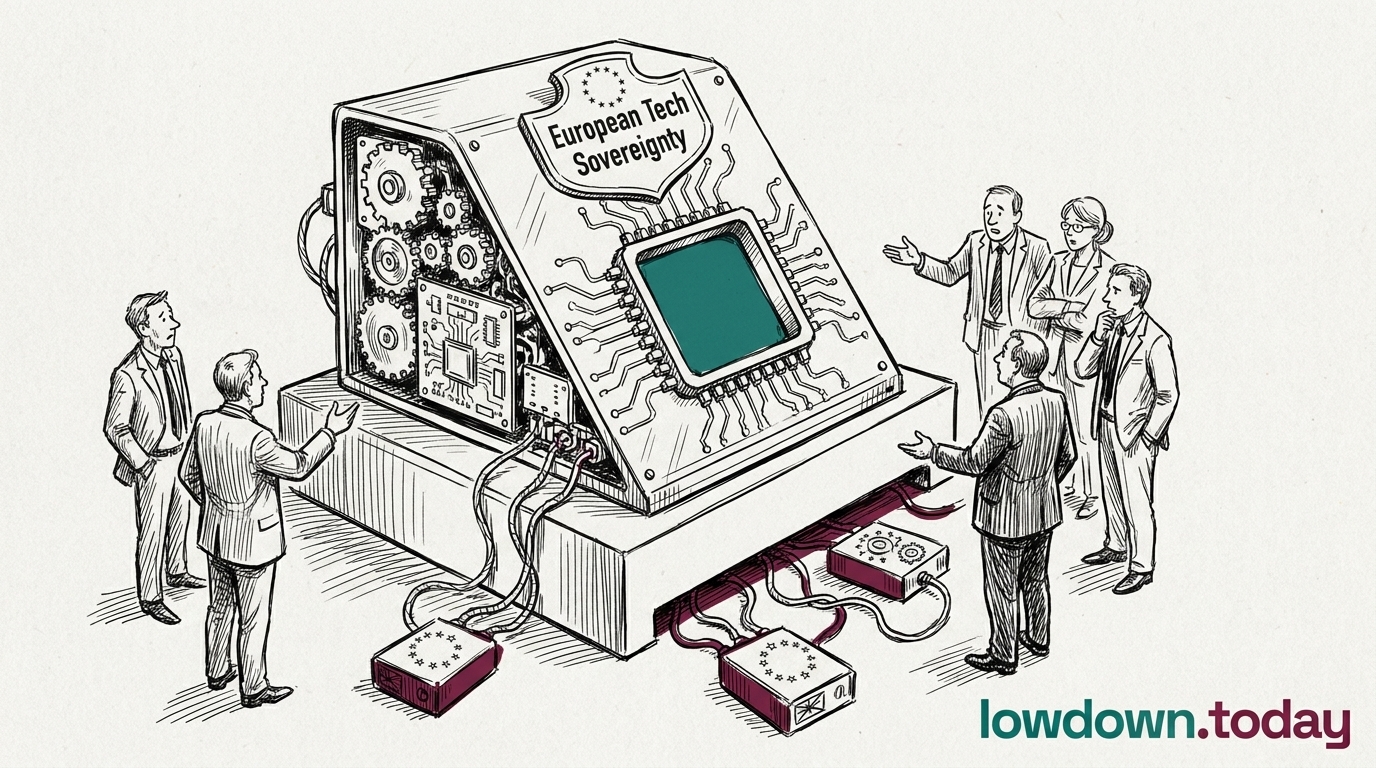
European Tech Sovereignty
23APR

Baqaei rejects uranium handover on sacred ground

3 min read
09:21UTC

Iran's foreign ministry spokesperson called the country's enriched uranium 'as sacred as Iranian soil' and rejected Donald Trump's claim that a handover had been agreed.

TechnologyDeveloping
Key takeaway

Iran has framed its enriched uranium as national soil, which is the negotiating floor a handover cannot cross.

On 19 April Iran foreign ministry spokesperson Ismail Baqaei called the country's enriched uranium "as sacred as Iranian soil" and rejected Donald Trump's uranium-handover claim . The gap between the US position and Iran's offer is now being negotiated against a stockpile Iran frames in territorial register rather than technical.

The soil metaphor carries specific domestic weight. Iranian political rhetoric reserves "as sacred as Iranian soil" for claims to disputed territory in the Shatt al-Arab and Abu Musa, not for commodity stockpiles. Applying the same language to enriched material pulls uranium into the constitutional category Tehran does not trade. Supreme Leader Mojtaba Khamenei's position that nuclear weapons are non-negotiable (recorded in writing the previous week) is what makes Baqaei's framing consistent rather than a freelance.

For the diplomatic track Baqaei's framing closes a procedural door on handover. Trump had claimed on 17 April that Iran had agreed to a uranium transfer; that claim cannot now survive without the foreign ministry walking back the soil language, which binds the 221-0 Majlis vote against IAEA cooperation . A foreign minister who signs a handover on a stockpile described this way in public is signing his own dismissal.

A counter-view from non-proliferation analysts at the Washington Institute is that Iranian rhetoric routinely rejects transfers before negotiating them, and the soil language is a bargaining floor rather than a bright line. That reading is defensible; it also underestimates how tightly Khamenei's written position constrains Iran's negotiating team once it is deployed in public.


Deep Analysis

In plain English

Iran's foreign ministry spokesman said on 19 April that Iran's enriched uranium was 'as sacred as Iranian soil' and rejected President Trump's claim that Iran had agreed to hand over its uranium stockpile. Iran's position in talks is to pause uranium enrichment for 3-5 years. The US wants a 20-year pause. The gap is made harder to bridge by two facts: nobody can currently verify how much enriched uranium Iran actually has or whether it is still being produced, because UN inspectors were expelled from Iran in an overwhelming parliamentary vote on 11 April. And Iran's Supreme Leader has separately said nuclear weapons are non-negotiable, though Iran also claims it is not trying to build them. These statements coexist because the physical capability that would resolve the question is hidden from view.

Deep Analysis
Root Causes

The uranium-as-sacred-soil framing Baqaei deployed on 19 April taps a domestic political narrative built over 20 years of US and Israeli pressure: enrichment as national sovereignty, not weapons ambition. That narrative is structurally load-bearing inside Iranian domestic politics; any foreign minister who concedes enrichment rights faces a Majlis that has already voted 221-0 to expel inspectors as a sovereignty assertion.

Trump's uranium-handover claim, denied by Baqaei within hours, collapsed because it assumed Iran's civilian foreign ministry could deliver a concession on fissile material that the Guard Corps-aligned hardliner bloc in the Majlis would not ratify. The gap between what Araghchi's ministry can offer and what the Majlis will accept is structurally wider after 52 days of war than it was before.

What could happen next?
  • Consequence

    The 20-year versus 3-5 year gap remains structurally unbridgeable until inspectors re-enter Fordow and establish a verified baseline for any pause.

First Reported In

Update #74 · Two unsigned rulebooks collide at Hormuz

American Nuclear Society (relay of IAEA Director General report)· 20 Apr 2026
Read original
Causes and effects
This Event
Baqaei rejects uranium handover on sacred ground
Tehran's negotiating floor has moved from technical to territorial. An enrichment stockpile framed as equivalent to national soil cannot be bargained as feedstock without collapsing the domestic politics that bind it.
Different Perspectives
Trump administration
Washington defends the MATCH Act as closing a loophole that lets ASML's DUV tools reach Chinese fabs indirectly, dismissing the Dutch Cabinet's June complaint of being treated with disregard. Officials expect the bill's progress through Congress to keep the DUV cross-subsidy question live regardless of ASML's Q2 numbers.
Bruegel
Bruegel
Brussels-based economists argue this week's deliverables, specialist fab aid and a digital euro that restricts no US firm, prove Europe's sovereignty agenda advances only where it meets no American resistance. They expect the leading-edge fabrication gap and dependence on US frontier AI models to persist absent a policy that directly confronts a named US interest.
German federal government
Berlin welcomes the €659m tranche funding jobs across North Rhine-Westphalia, Schleswig-Holstein, Hesse and Bavaria, on top of the ESMC Dresden fab already under construction on TSMC-shipped tooling. Officials treat power and analogue capacity as the achievable near-term win while Dresden remains Germany's only bet on leading-edge logic.
House of Commons Science, Innovation and Technology Committee
The committee's 7 July report found the UK has "no coherent strategic framework" for sovereign technology and warns it "risks being cut off at whim", citing the June order that barred foreign access to Anthropic's Fable 5 and Mythos 5 as the trigger case. It expects no domestic hyperscaler or foundry response before the gap widens further.
European Commission
European Commission
The Commission cleared €659m in German state aid on 14 July, taking cumulative Chips Act support to roughly €14.2bn, and let the digital-euro mandate reach trilogue after ECON's floor-vote shortcut was overturned. Brussels presents both as sovereignty delivered, without addressing that neither funds leading-edge logic fabrication.
ASML
ASML
ASML raised FY2026 guidance to €43-45bn on 15 July and, for the first time since Q1, dropped the export-control hedge from its release even with the MATCH Act live in Congress. Fouquet frames the order book, 86 systems against 67 in Q1, as strong enough to outrun the DUV dispute rather than evidence it has cooled.



