Skip to content
You can now search across every topic, entity and event.What's new
European Tech Sovereignty
8SEP

Qatar caps Iran's $12bn cash demand

4 min read
15:06UTC

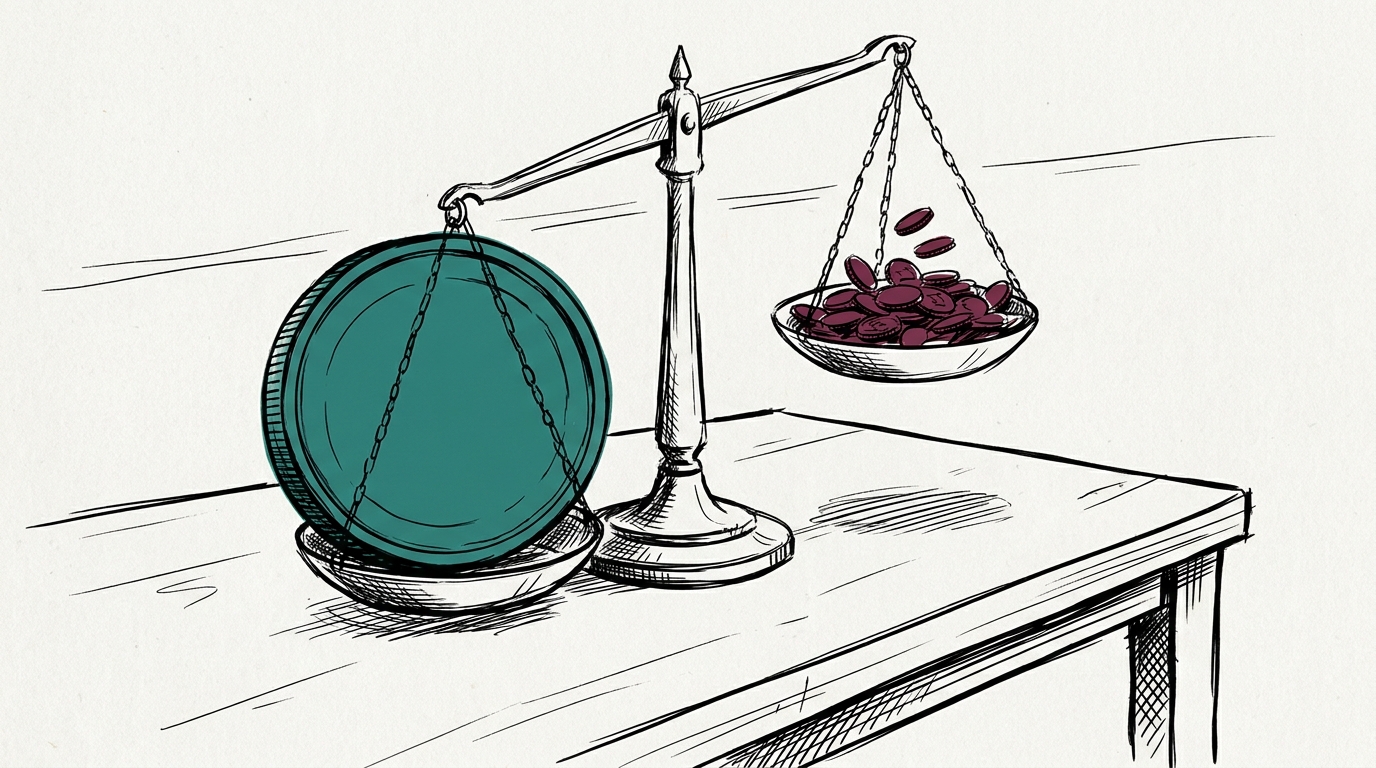
A delegation led by Parliament Speaker Mohammad Bagher Ghalibaf went to Doha and came home with a refusal; Qatar offered $6bn against Iran's $12bn precondition, and could not lawfully go higher.

TechnologyDeveloping
Key takeaway

Iran's upfront cash demand is blocked by sanctions law, not negotiation, so the deal stalls even if signed.

A delegation led by Iranian Parliament Speaker Mohammad Bagher Ghalibaf visited Doha and was refused its central demand 1. Ghalibaf is the speaker of Iran's Majlis, its Parliament, and a former IRGC aerospace commander. Iran has set the release of $12bn in Qatar-held frozen assets as an unconditional precondition for any memorandum; Qatar offered $6bn, half the sum, and only under strict restrictions.

Doha cannot split the difference even if it wanted to. Qatar holds the money as an intermediary and cannot lawfully release more than US Treasury sanctions permit. The Office of Foreign Assets Control (OFAC), the Treasury bureau that administers Iran sanctions, licences how much of these frozen assets can move, and its existing structure caps Qatar below the $12bn Iran wants. The precondition is therefore unmeetable by the party holding the cash, independent of whether Donald Trump ever signs anything.

This is the same $24bn frozen-asset structure Ghalibaf's war cabinet flew home with from Doha in late May , now narrowed to a first-tranche fight. Marco Rubio's 2 June testimony fixed the surrounding US terms, that Hormuz reopens first and a reopening by itself unlocks no sanctions relief , which is why no amount of talks moves the ceiling. A signed memorandum would hit the same wall on the morning Iran asked for its money.


Deep Analysis

In plain English

When the Iran conflict began, Iran had about $6 billion in cash sitting in accounts in Qatar that it could not access because of US sanctions. Qatar cannot release that money without permission from the US Treasury's sanctions office (called OFAC). Iran sent a delegation to Doha led by the speaker of its parliament, Mohammad Bagher Ghalibaf, demanding that all $12 billion it claims in Qatar-held frozen assets be released unconditionally before any negotiations can proceed. Qatar said it could only offer $6 billion, and only under strict rules set by the US. Qatar's refusal is a legal constraint, not a choice: the US Treasury has set a maximum for what can be released under existing permissions, and Qatar would be breaking US sanctions law if it paid more. Iran knows this. The $12bn demand is effectively a demand that Washington change its rules first, and the US Secretary of State testified on 2 June that there will be no sanctions relief until after a full deal is signed and Hormuz is reopened.

Deep Analysis
Root Causes

Three structural forces produced this specific impasse. First, OFAC's Licence L-2 ceiling from the 2023 prisoner exchange set a bureaucratic precedent that $6bn is the permissible release quantum for a non-comprehensive Iran sanctions arrangement. Qatar cannot exceed it without a new OFAC instrument, which Rubio's 2 June testimony explicitly blocked by confirming no sanctions relief would accompany Hormuz reopening.

Second, Ghalibaf's role as delegation leader signals the IRGC bloc's ownership of the demand. Ghalibaf is not a foreign-ministry interlocutor; he is the Majlis speaker and a career IRGC officer.

His presence in Doha signals that the $12bn demand comes from the IRGC-aligned faction that controls the state budget and domestic hard-currency allocation, not from Araghchi's civilian diplomatic track. Ghalibaf controls the Majlis bloc that voted 221-0 to suspend IAEA access; his presence in Doha signals that the $12bn demand belongs to the IRGC budget orbit, not the civilian diplomatic track.

Third, OFAC's 2 June designation of four Iranian crypto exchanges, which handled over half of Iran's 2025 digital-asset inflows, closed the parallel stablecoin route the Central Bank had used to partially offset the frozen-asset gap. With the rial at a record low and the crypto rails severed, Iran's incentive to hold the $12bn line intensified rather than moderated.

What could happen next?
  • Consequence

    Ghalibaf left Doha empty-handed on 3 June, meaning the IRGC-aligned bloc has no new hard-currency source and the rial's record-low pressure continues without relief.

  • Risk

    If OFAC does not revise the licence ceiling, the $6bn gap functions as a structural veto on any comprehensive deal that includes Iran's precondition, independent of what both sides negotiate on other terms.

First Reported In

Update #117 · Iran's drone finds Kuwait's arrivals hall

Iran International· 4 Jun 2026
Read original
Different Perspectives
Poland
Poland
Poland leads a self-announced AI Gigafactory consortium with a EUR 100 million phase-one commitment, matched by Czechia and joined by Hungary at EUR 25 million. EuroHPC has confirmed no consortium for the call closing 12 November, so the bloc exists only in national announcements so far.
UK Government (DCMS)
Secretary of State Lisa Nandy told the Commons on 3 September she has inherited the sovereign AI brief from Liz Kendall, but gave no assessment, figure or date on frontier-model access. It is the first public claim of ownership since DSIT's abolition, without the substance the committee asked for.
ASML
ASML
ASML CEO Christophe Fouquet credited Intel Foundry, not a European fab, with shipping the first high-volume logic product made on High-NA EUV, the tool only ASML builds. Europe holds the chokepoint tool; the company that spent it into volume production first is American.
Luxembourg
Luxembourg
Luxembourg joined Mistral's Series D as a new investor on 8 September, the same government that co-funds EuroHPC's MeluXina-AI supercomputer. One small member state now funds the sovereign compute Mistral may need and holds equity in the company using it.
Samsung Electronics
Samsung Electronics
Samsung led Mistral's Series D on 8 September and the same day expanded its ASML collaboration on next-generation lithography. One Korean company now sits atop Europe's largest AI funding round and inside its most sensitive chip-tooling relationship.
Mistral AI
Mistral AI
Mistral closed a EUR 3 billion Series D above a EUR 21 billion valuation on 8 September, with Samsung leading and Luxembourg joining as a new state investor. The company markets itself as Europe's non-American AI option even as the round's lead capital comes from South Korea and two US private-equity firms.