Skip to content
You can now search across every topic, entity and event.What's new
European Tech Sovereignty
8SEP

IRGC media: opacity is the deterrent

3 min read
15:06UTC

Tasnim News Agency, tied to the IRGC, argued that nuclear ambiguity prevents American action and that letting inspectors in would only benefit the enemy, reframing the standoff as deliberate deterrence.

TechnologyDeveloping
Key takeaway

IRGC-linked media cast nuclear opacity as a deterrent, signalling Iran has no intention of opening its bombed sites.

The Islamic Revolutionary Guard Corps (IRGC)-affiliated Tasnim News Agency published a doctrinal framing on 23-24 June explaining why Iran would not grant IAEA inspectors access to war-damaged nuclear sites. Nuclear ambiguity "prevents American actions", it wrote, and lifting it through inspector access "will only benefit the enemy" 1. The IRGC is Iran's ideological military force and the real holder of the nuclear file, above the civilian foreign ministry that spokesman Baghaei represents.

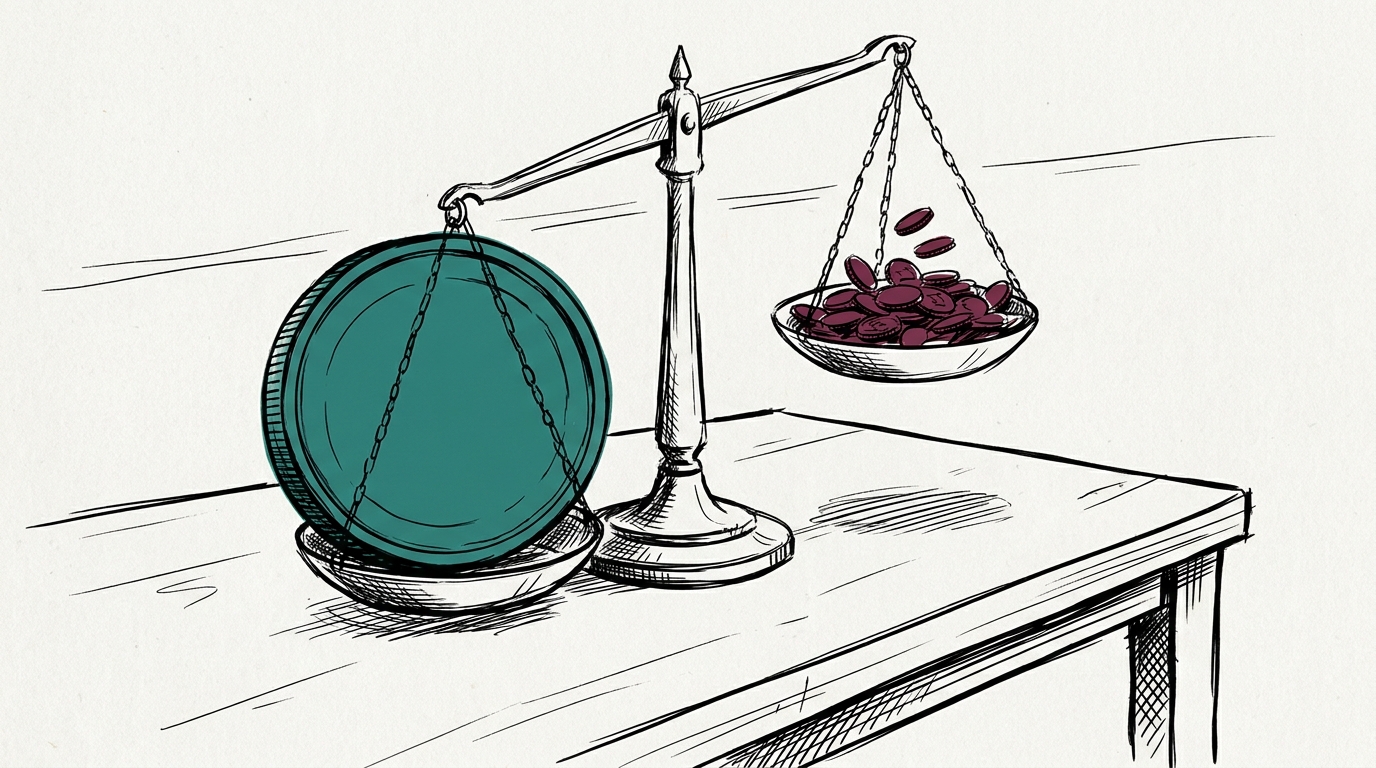
The statement matters because it moves the argument off procedure. Where Baghaei had framed the refusal as the absence of a protocol , Tasnim frames it as design: the unverified stockpile is a strategic asset, and opacity over it is the point.

The logic echoes Israel's own decades-long policy of nuclear opacity, deterrence through uncertainty rather than declared capability. The IRGC is signalling it has learned that an unaccounted stockpile becomes most useful the moment a strike is contemplated. The MOU required IAEA-supervised destruction of that material, a demand Khamenei had already called excessive . Tasnim makes explicit what General License X assumed but the IRGC will not grant.

Deep Analysis

In plain English

The IRGC is Iran's powerful ideological military force. An IRGC-linked news outlet called Tasnim published a piece on 23-24 June explaining why Iran refuses to let United Nations nuclear inspectors into the sites that were bombed during the conflict. The reason given was that uncertainty about Iran's nuclear capabilities protects the country by making the United States less willing to attack again. In simple terms: if the US does not know exactly what nuclear material Iran has or where it is, that uncertainty itself acts as a shield. Letting inspectors in would remove that shield. This framing turns the inspection refusal from a procedural delay into a deliberate military strategy, making it much harder for Iran's civilian government to offer inspector access as part of a future deal without the IRGC seeing it as a surrender of a key deterrent.

Deep Analysis
Root Causes

The IRGC's decision to articulate the opacity doctrine publicly through Tasnim on 23-24 June reflects a specific power-balance calculation inside the Iranian state. President Pezeshkian's civilian government and Foreign Minister Araghchi negotiated the Islamabad MOU on the assumption that IAEA access to damaged sites was a negotiable concession.

The Tasnim publication is the IRGC overriding that civilian framing by stating, in public, that inspection access is not a procedural question to be traded but a strategic asset to be withheld.

Supreme Leader Mojtaba Khamenei's 18 June message called full IAEA access an 'excessive demand', but left the civilian government free to negotiate its scope. Tasnim's 23-24 June framing removes that flexibility: it names the IRGC as the doctrine's author and positions the 440.9 kg HEU stockpile as an active deterrent, not a liability to be surrendered under a compliance schedule.

Escalation

The Tasnim doctrine publication escalates the inspection standoff from a procedural dispute to a stated IRGC strategic position. Prior to 23 June, both sides could negotiate around the gap using the MOU's vague inspection language. After the publication, any Iranian offer of inspector access carries IRGC-imposed domestic costs that Pezeshkian's government cannot override.

What could happen next?
  • Precedent

    An IRGC-aligned outlet publicly naming nuclear ambiguity as deterrent doctrine; not a compliance gap; sets an internal Iranian precedent that any inspection offer by the civilian government can be framed as IRGC defeat, constraining Pezeshkian and Araghchi's negotiating room for the 60-day MOU window.

  • Risk

    If IAEA inspectors do eventually access the bombed sites and find the 440.9 kg stockpile significantly reduced or dispersed, the opacity doctrine will have served its purpose: the material will have been moved during the inspection blackout, and the IRGC will have used the doctrine's public articulation to prevent any verification in the interim.

First Reported In

Update #137 · Iran and Oman claim the strait; US says no

Times of Israel· 24 Jun 2026
Read original
Different Perspectives
Poland
Poland
Poland leads a self-announced AI Gigafactory consortium with a EUR 100 million phase-one commitment, matched by Czechia and joined by Hungary at EUR 25 million. EuroHPC has confirmed no consortium for the call closing 12 November, so the bloc exists only in national announcements so far.
UK Government (DCMS)
Secretary of State Lisa Nandy told the Commons on 3 September she has inherited the sovereign AI brief from Liz Kendall, but gave no assessment, figure or date on frontier-model access. It is the first public claim of ownership since DSIT's abolition, without the substance the committee asked for.
ASML
ASML
ASML CEO Christophe Fouquet credited Intel Foundry, not a European fab, with shipping the first high-volume logic product made on High-NA EUV, the tool only ASML builds. Europe holds the chokepoint tool; the company that spent it into volume production first is American.
Luxembourg
Luxembourg
Luxembourg joined Mistral's Series D as a new investor on 8 September, the same government that co-funds EuroHPC's MeluXina-AI supercomputer. One small member state now funds the sovereign compute Mistral may need and holds equity in the company using it.
Samsung Electronics
Samsung Electronics
Samsung led Mistral's Series D on 8 September and the same day expanded its ASML collaboration on next-generation lithography. One Korean company now sits atop Europe's largest AI funding round and inside its most sensitive chip-tooling relationship.
Mistral AI
Mistral AI
Mistral closed a EUR 3 billion Series D above a EUR 21 billion valuation on 8 September, with Samsung leading and Luxembourg joining as a new state investor. The company markets itself as Europe's non-American AI option even as the round's lead capital comes from South Korea and two US private-equity firms.
