Skip to content
You can now search across every topic, entity and event.What's new
European Tech Sovereignty
8SEP

Deal bans the Hormuz toll, licenses its replacement

3 min read
15:06UTC

The published memorandum bans tolls on Hormuz passage, then invokes UNCLOS Article 26(2) to recast the IRGC's toll body as an Iran-Oman provider of maritime services, with a charge-free window of only 60 days.

TechnologyDeveloping
Key takeaway

Iran agreed to drop the toll for 60 days and kept the legal machinery to switch it back on.

The Islamabad Memorandum of Understanding (MoU) text, published 17 June, bans "tolls" on Strait of Hormuz passage, then invokes the UN Convention on the Law of the Sea (UNCLOS), Article 26(2), to recast the charges as "maritime navigation services" 1. That article forbids fees on innocent passage but permits charges for specific services rendered to a ship, so a renamed toll becomes lawful revenue. Management is handed jointly to Iran and Oman, and the charge-free window runs 60 days only.

The body collecting the money does not go away. The Persian Gulf Strait Authority (PGSA), the body Iran's Revolutionary Guard (IRGC) created on 5 May that levied up to $2 million per tanker , is not dissolved under the deal. It survives under a quieter label, the 60-day clock counting down to the charge's return. Iran asserted Hormuz sovereignty and collected paid passage as early as 15 June, foreshadowing the framing the text now formalises .

Iran's foreign minister Abbas Araghchi put it plainly: "Charges for services provided will be collected," naming navigation, environmental protection and insurance. Counting from a signing date of roughly 15-16 June, the fees could resume as early as mid-August. The party with the largest exposure to those fees, Saudi Arabia, holds no seat in the Iran-Oman mechanism that will set them.


Deep Analysis

In plain English

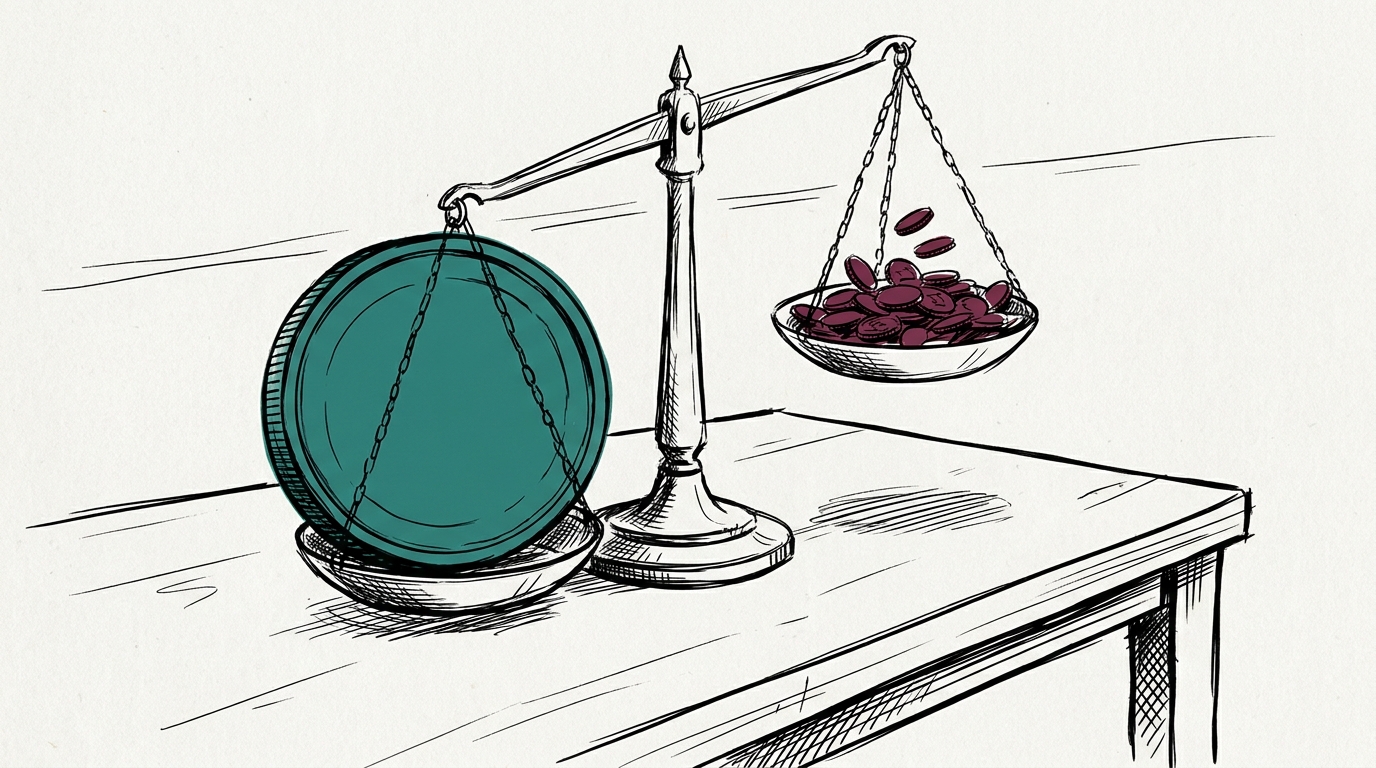
The ceasefire deal said Iran would stop charging ships to pass through the Strait of Hormuz. But it only said so for 60 days. After that, Iran can restart the charges under a different name. Instead of calling them 'tolls' , a word the deal bans , Iran will call them 'maritime navigation services fees', citing a section of international maritime law. Think of it as a motorway toll renamed a 'road maintenance contribution.' The underlying charge is the same; the label has changed. The legal argument is questionable, but Iran has 60 days before it matters. By then, the deal will either be extended or collapsed on other grounds.

What could happen next?
  • Precedent

    The UNCLOS Article 26(2) rebranding, if unchallenged, sets a template for any state controlling a maritime chokepoint to levy transit charges under a services-fee framing that avoids the political label of 'toll.'

    Medium term · Reported
  • Risk

    Saudi Arabia's four idle supergiant fields face annual fee liability of up to $2 billion once the 60-day window closes, with no voice in the fee-setting mechanism. Riyadh's 26-day public silence on the MOU may break as the mid-August charge-resumption date approaches.

    Medium term · Reported
  • Opportunity

    The 60-day grace period gives shipping companies, P&I clubs, and international maritime lawyers a window to file UNCLOS arbitration claims testing the services-fee framing before charges resume.

    Medium term · Suggested
First Reported In

Update #131 · Iran deal's first death tests the text

Al Jazeera· 18 Jun 2026
Read original
Different Perspectives
Poland
Poland
Poland leads a self-announced AI Gigafactory consortium with a EUR 100 million phase-one commitment, matched by Czechia and joined by Hungary at EUR 25 million. EuroHPC has confirmed no consortium for the call closing 12 November, so the bloc exists only in national announcements so far.
UK Government (DCMS)
Secretary of State Lisa Nandy told the Commons on 3 September she has inherited the sovereign AI brief from Liz Kendall, but gave no assessment, figure or date on frontier-model access. It is the first public claim of ownership since DSIT's abolition, without the substance the committee asked for.
ASML
ASML
ASML CEO Christophe Fouquet credited Intel Foundry, not a European fab, with shipping the first high-volume logic product made on High-NA EUV, the tool only ASML builds. Europe holds the chokepoint tool; the company that spent it into volume production first is American.
Luxembourg
Luxembourg
Luxembourg joined Mistral's Series D as a new investor on 8 September, the same government that co-funds EuroHPC's MeluXina-AI supercomputer. One small member state now funds the sovereign compute Mistral may need and holds equity in the company using it.
Samsung Electronics
Samsung Electronics
Samsung led Mistral's Series D on 8 September and the same day expanded its ASML collaboration on next-generation lithography. One Korean company now sits atop Europe's largest AI funding round and inside its most sensitive chip-tooling relationship.
Mistral AI
Mistral AI
Mistral closed a EUR 3 billion Series D above a EUR 21 billion valuation on 8 September, with Samsung leading and Luxembourg joining as a new state investor. The company markets itself as Europe's non-American AI option even as the round's lead capital comes from South Korea and two US private-equity firms.