Skip to content
You can now search across every topic, entity and event.What's new
European Oil Markets
18JUN

Iran publishes mine charts converting Hormuz reopening into IRGC corridor

2 min read
12:45UTC
EconomicDeveloping
Key takeaway

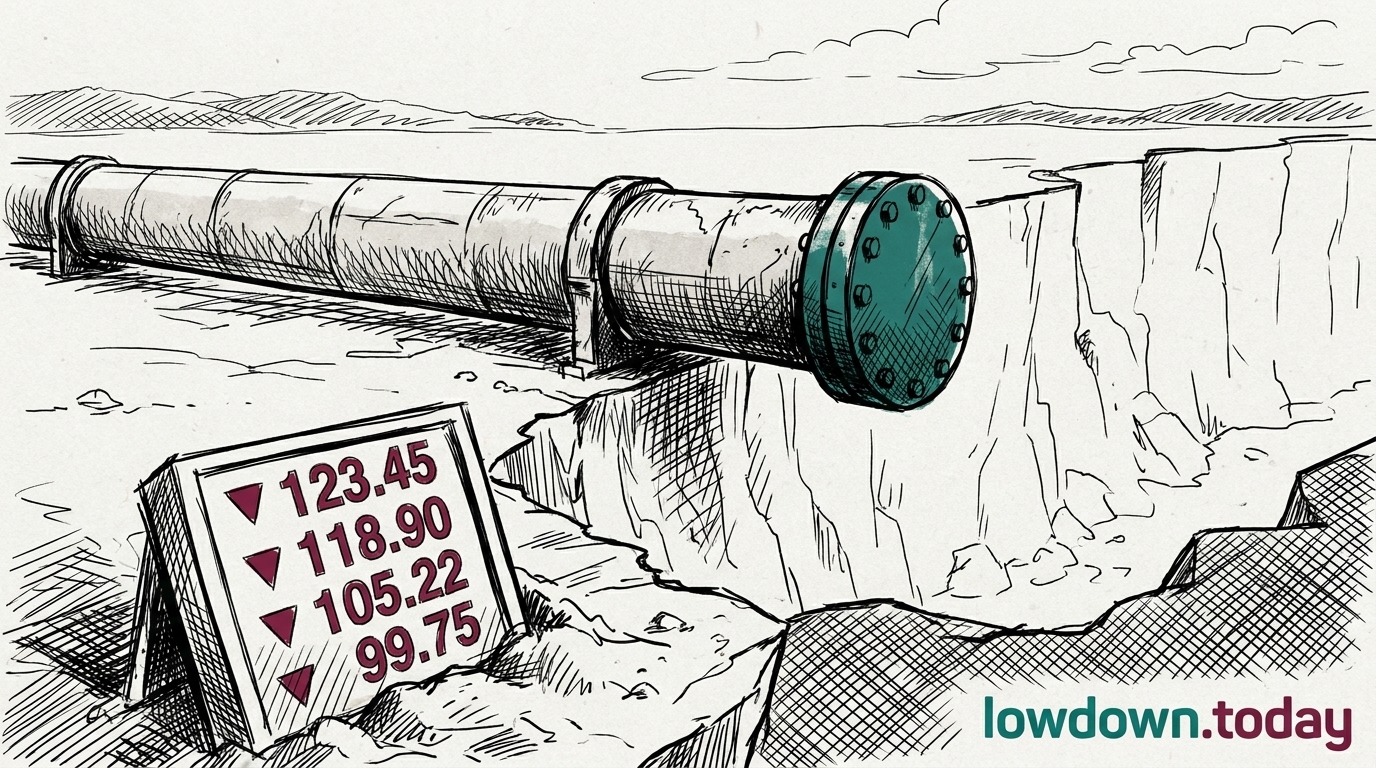
Hormuz reopening produced 4 ships and mine charts, not free passage

Donald Trump promised a 'COMPLETE, IMMEDIATE, and SAFE OPENING' of the Strait of Hormuz. On ceasefire Day 1, Kpler counted four bulk carriers transiting the strait. Zero crude tankers. Zero LNG carriers. More than 800 vessels remain stuck in the Persian Gulf 1.

The pre-war baseline was 135 transits per day. Iran's toll system, legislated in late March , had lifted traffic to 20 per day across 11 flag states by 5 April . The ceasefire cut that to four. Fewer ships crossed on Day 1 than on any day of the blockade.

ISNA and Tasnim, both linked to the IRGC, published maritime charts on 9 April showing a 'danger zone' over the main Traffic Separation Scheme lanes, dated from 28 February to 9 April 2. The charts direct all vessels to corridors near Larak Island under IRGC naval control 3. The implication: the main shipping lanes are mined. The mines, real or implied, force all traffic through Iran-controlled corridors.

Trump's two-week pause promised SAFE passage. The IRGC's charts promise the opposite: passage is SAFE only where Iran says it is.


Deep Analysis

In plain English

Trump said the strait was reopening. On Day 1, four cargo ships got through, zero oil tankers. Iran published charts showing the main shipping lanes are too dangerous and ships must use routes Iran controls. Eight hundred ships are stuck waiting. The reopening gives Iran more control, not less.

Deep Analysis
Root Causes

Iran's toll legislation in late March codified the blockade before any ceasefire. The mine charts are the physical enforcement layer of a legal framework already in place.

First Reported In

Update #63 · Ceasefire redistributes the war, not ends it

ISNA / Tasnim· 9 Apr 2026
Read original
Different Perspectives
Gulf oil producer
Gulf oil producer
Secured OPEC's confirmed 188,000 b/d September increment with the next meeting set for 6 September, but the Secretariat's own 2 August release says nothing about the fourth quarter. Output guidance beyond September remains undisclosed even as delegate sourcing keeps filling that gap.
Money manager positioned in WTI
Added 21,402 lots to a 108,307 net long in NYMEX WTI in the week to 28 July, against just 1,485 added to Brent's 15,740, a roughly fourteen-to-one split. Conviction sits in the American benchmark even as the European diesel story sets the record.
Indian refiner buying Urals
Bought Russian crude at a discount that narrowed to $1-2 a barrel in the week to 29 July from over $10, as Hormuz risk pushed it toward Urals. If that risk eases with the strike now called off, the discount it is currently enjoying could re-widen just as fast.
Russian diesel exporter
Novak tied any lifting of the diesel export ban, due to lapse 31 July, to an unspecified market recovery with no date, and pushed the gasoline ban to end-2026. An open-ended constraint suits an exporter benefiting from the record European crack it feeds.
War-risk underwriter
Withdrew war-risk cover for Saudi-linked hulls on 24 July and has not reinstated it, holding Bab el-Mandeb tanker transits near 7.5 a day. A cancelled strike does not by itself trigger the committee review needed to re-accept the class.
Northwest European refiner
Sources only 17% of diesel imports from Saudi Red Sea ports against the Mediterranean's 24%, so the ARA crack at $85.86 trails the Med print by $5.81. Lower Red Sea exposure is cushioning it against the rerouting cost, not eliminating it.



