Skip to content
You can now search across every topic, entity and event.What's new
European Oil Markets
15JUN

Rubio signals end of Russian oil waivers

2 min read
11:33UTC

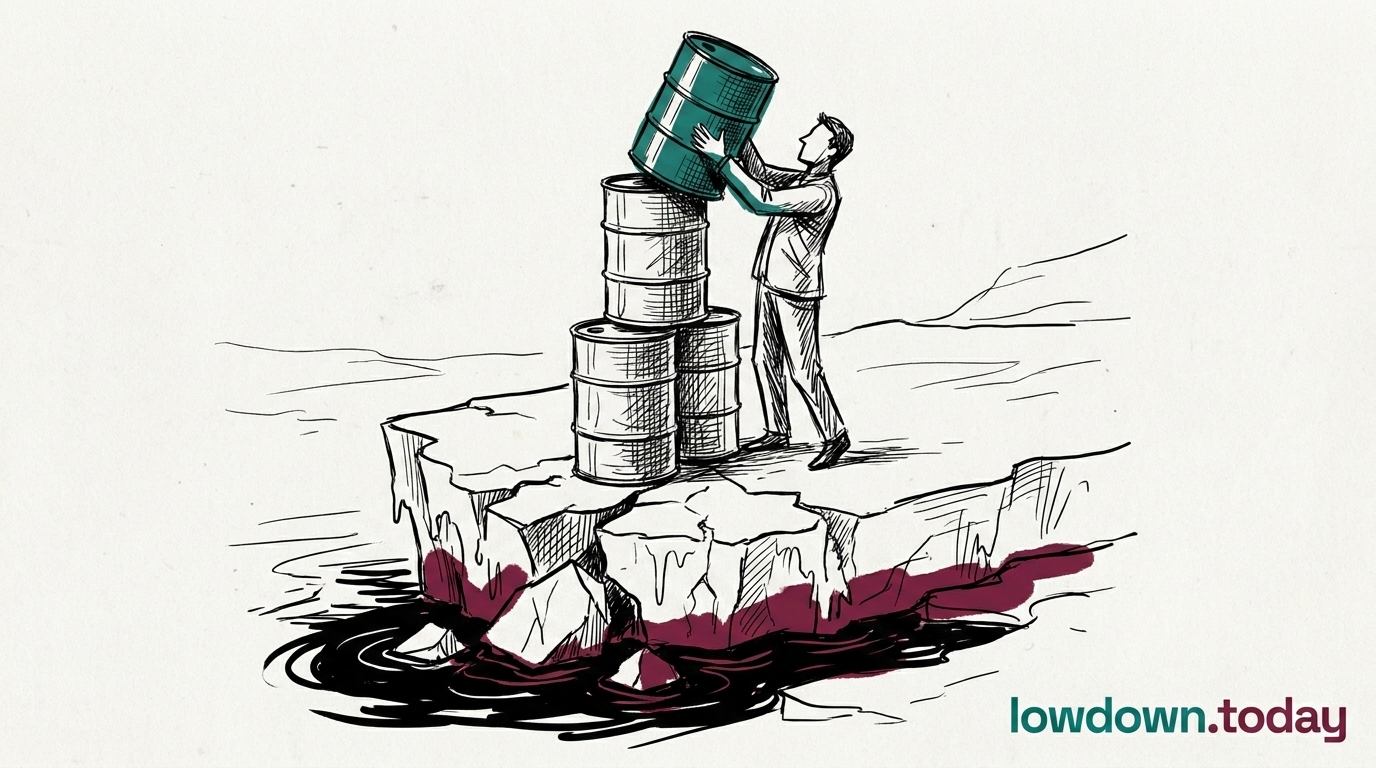
Secretary of State Marco Rubio said the US wants to end Russian oil waivers as soon as possible, breaking a monthly roll routine and sharpening the 17 June expiry of General License 134C with no successor announced.

EconomicDeveloping
Key takeaway

Rubio's routine-break converts the 17 June waiver expiry from a rollover into a genuine cliff for Indian buyers.

Marco Rubio, the US Secretary of State, said Washington wants to end Russian oil waivers "as soon as we possibly can" 1. The remark targets General License 134C, the OFAC authorisation covering vessel services for Russian oil shipments, which expires on 17 June with no GL 134D announced. OFAC is the US Treasury's sanctions enforcement office; a general license is the carve-out that lets specific transactions continue despite sanctions.

The waivers had rolled over monthly since March, which had trained the market to treat each expiry as a formality. Rubio's wording breaks that routine. When the senior US diplomat says the goal is to end the cover rather than extend it, the 17 June date stops being a rollover and becomes a genuine cliff, repricing the risk for everyone holding Russian-linked cargo.

India carries the most exposure as the primary off-take for discounted Russian crude under this cover. Lose the waiver on 17 June and Indian refiners face the choice of finding compliant alternatives at higher cost or risking secondary sanctions. Rubio's statement sharpens the 17 June cliff the prior briefing had already flagged , turning a quiet administrative deadline into the single largest sanctions hinge on the calendar.


Deep Analysis

In plain English

Deputy Prime Minister Alexander Novak publicly admitted on 4 June that Ukrainian drone strikes are reducing Russia's oil production, Moscow's first official acknowledgement. He specifically named the Yaroslavl refinery north-east of Moscow, a facility processing 300,000 barrels of oil per day that was struck in May. Russia has already banned exports of jet fuel until November 2026 and petrol since April. Ukraine's own energy strike teams assess total Russian refinery capacity knocked offline at up to 700kbd, suggesting Novak's single-refinery figure may be only a partial picture of the damage.

Deep Analysis
Root Causes

The political significance of Novak's admission lies in the structural choice it reveals. Russian domestic fuel supply has been under strain since the April gasoline export ban; acknowledging drone damage while banning exports simultaneously allows the Kremlin to attribute fuel tightness to external attack rather than sanctions-driven refinery underinvestment.

The admission is both factually accurate and politically useful: it shifts blame for consumer fuel scarcity while potentially justifying further export restrictions as 'defensive' rather than revenue-protecting. Novak's specific naming of Yaroslavl, a refinery whose operator Lukoil is already on the OFAC SDN list, adds a layer of signalling to Western audiences about the domestic consequences of sanctions enforcement.

What could happen next?
  • Consequence

    Novak's admission validates the UK's RUSI-assessed $1.2-1.4bn annual flow of third-country Russian-crude distillates, but also raises the risk that the source supply those distillates depend on is declining, undermining the policy rationale for the UK's May sanctions easement.

  • Risk

    If Ukrainian strikes have taken 600-700kbd of Russian refinery capacity offline rather than Yaroslavl's 300kbd alone, Russian crude available-for-export rises while domestic products tighten, a bullish crude signal for Europe's Urals-dependent refiners.

First Reported In

Update #6 · OPEC's quota is fiction at a 37-year low

OilPrice.com· 8 Jun 2026
Read original
Causes and effects
This Event
Rubio signals end of Russian oil waivers
Indian refiners are the primary off-take for Russian crude under the waiver, so a routine-break by the top US diplomat puts their purchase cover at risk overnight and reprices a date the market had treated as a formality.
Different Perspectives
Money managers
Money managers
Managed money rebuilt a dual crude net-long in the week to 9 June at entries $5-6 above the 12 June close; the 20 June print will show whether the flush ran. The RBOB long (+64,125 contracts) adds crack-compression exposure if crude overshoots lower before the product position unwinds.
OPEC+ / Saudi Arabia
OPEC's June MOMR cut 2026 demand growth to 970kbd for a third successive month; the 7 June ministerial added a third 188kbd July increment into a 37-year output low. Saudi Arabia's $108-111 fiscal breakeven sits above both the current Brent screen and the EIA's $79 2027 forecast, meaning Riyadh absorbs revenue pain to hold market share.
United States / OFAC
OFAC's 11 June issuance of GL 55F for Sakhalin-2 while declining to publish GL 134D signals a deliberate commodity-class split: gas licences for allied energy dependencies renewed; crude-vessel services allowed to run to lapse. Secretary Rubio's earlier statement (ID:4009) set the political intention; GL 55F confirms the architecture rather than contradicting it.
European Commission
European Commission
Brussels proposed the 21st package on 9 June to lock the $44.10 cap before the 15 July formula review auto-lifts it; Malta and Greece's block on the maritime-services ban risks delaying adoption past that deadline. A failed freeze converts the EU's primary revenue constraint on Russian oil into a decorative mechanism for H2 2026.
Russia
Russia
GL 134C's lapse on 17 June removes Western insurance cover from the fraction of Russian seaborne crude still routed through European P&I clubs, tightening placement at commercial terms. A 15 July cap review lifting the ceiling from $44.10 toward ~$75 would restore ~$93 million per day in export earnings at 3mbd, partly offsetting the vessel-services squeeze.
European Commission / EU energy regulators
The EU 21st sanctions package, announced 26 May, targets shadow-fleet tankers and banks but has not accelerated a resolution of the ISAB ownership question. A 27 June GL 131F lapse without OFAC issuing a transaction licence creates a supply-security problem for Med products that Brussels cannot solve unilaterally.



