Skip to content
You can now search across every topic, entity and event.What's new
European Oil Markets
15JUN

Japan crude imports crashed 66% in April

3 min read
11:33UTC

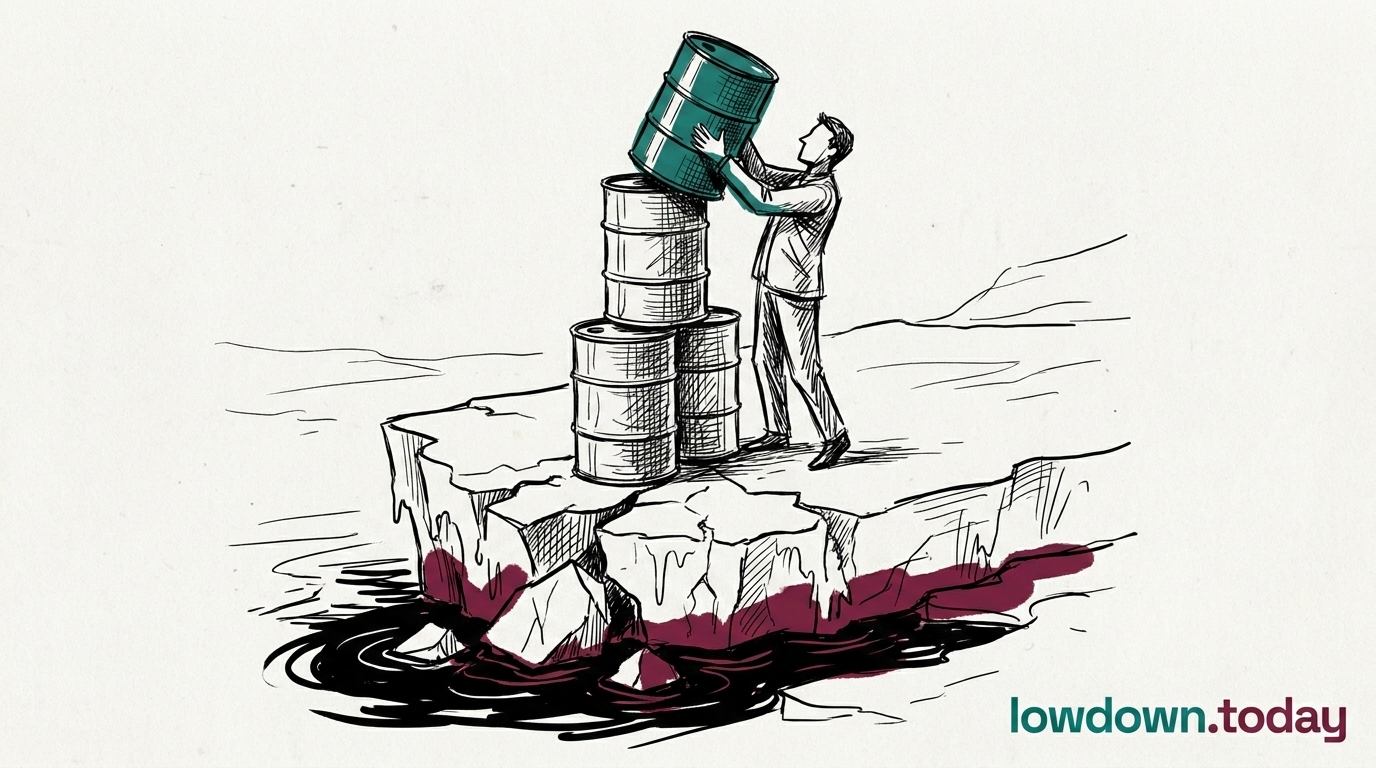
Japan's crude imports fell 66% in April 2026, the sharpest monthly fall on record, while Middle East crude to both Japan and South Korea simultaneously hit record lows. Neither buyer redirected supply; both withdrew to storage.

EconomicDeveloping
Key takeaway

Japan's 66% April collapse and South Korea's record-low confirm the Northeast Asian buyers withdrew to storage rather than redirecting supply.

Japan crude imports fell 66% in April 2026, the sharpest monthly decline on record 1, while Middle East crude to both Japan and South Korea hit record lows in the same Hormuz disruption window 2. The figures answer a question the freight market had got wrong: East Asian buyers did not compete for non-Hormuz barrels, they stopped buying and drew on strategic storage instead.

That distinction matters for the East-West arb. TD3C (the benchmark VLCC, or Very Large Crude Carrier, route from the Middle East Gulf to China) hit WS458.75 on 11 May when the market priced both a Hormuz risk premium and anticipated rerouting competition . Record-low Middle East imports to Japan and South Korea confirm the rerouting never materialised; neither buyer chased Cape-routed or Atlantic-basin alternatives.

Strategic reserves can sustain storage draws for months at typical run rates, but the buffer narrows the longer the disruption persists. A return to seaborne buying by Japan and South Korea would coincide with China's re-entry and stack the East-West freight pressure all at once.

The combined absence of Japan, South Korea and China means the three largest Middle East crude destinations are simultaneously off the spot market. That is the physical demand picture beneath the EFS compression: Dubai weakens because no one is lifting, not because supply rose or Hormuz reopened on the 23 May memorandum .


Deep Analysis

In plain English

Japan and South Korea import almost all their crude oil from Middle Eastern countries that ship through the Strait of Hormuz. When the blockade closed that route, both countries stopped ordering new tanker shipments and instead started using the emergency oil stocks they hold for exactly this situation. Japan's imports fell by nearly two-thirds in April, the sharpest monthly drop ever recorded. South Korea hit an all-time low for Middle Eastern crude arrivals at the same time. Neither country tried to find oil from elsewhere, because their stored reserves were enough to keep refineries running, and buying replacement barrels via alternative routes would have cost significantly more.

Deep Analysis
Root Causes

Japan and South Korea source roughly 80-85% of their crude from Middle Eastern producers that load via Hormuz. Neither country has invested in significant Cape-routing flexibility or Atlantic-basin supplier relationships at the scale needed to substitute for Middle East volumes over weeks rather than months. The 66% import drop reflects the physical geography of the import complex, not a deliberate demand management decision.

Strategic petroleum reserves for both countries are sized on IEA emergency protocols (90 days of net import cover for Japan, 100+ days for South Korea). At the April import run rate, both countries had sufficient buffer to absorb the disruption, which is why neither competed aggressively in the spot market for non-Hormuz barrels: the cost-benefit of paying Cape-route premiums when storage is available was negative.

What could happen next?
  • Consequence

    Japan and South Korea running on storage removes two of the largest VLCC demand anchors on the ME-Northeast Asia route, keeping TD3C suppressed alongside the China demand withdrawal.

  • Risk

    If the Hormuz disruption extends beyond Japan's designed 90-day SPR buffer, Japan faces a forced re-entry into a constrained spot market at elevated premiums with limited Cape-route flexibility.

First Reported In

Update #4 · EFS compression is a China hole, not Hormuz

OilPrice.com· 1 Jun 2026
Read original
Causes and effects
This Event
Japan crude imports crashed 66% in April
With China at 6.78 mbd alongside, the three largest Middle East crude destinations are off the spot market at once, hollowing out East-West VLCC demand.
Different Perspectives
Money managers
Money managers
Managed money rebuilt a dual crude net-long in the week to 9 June at entries $5-6 above the 12 June close; the 20 June print will show whether the flush ran. The RBOB long (+64,125 contracts) adds crack-compression exposure if crude overshoots lower before the product position unwinds.
OPEC+ / Saudi Arabia
OPEC's June MOMR cut 2026 demand growth to 970kbd for a third successive month; the 7 June ministerial added a third 188kbd July increment into a 37-year output low. Saudi Arabia's $108-111 fiscal breakeven sits above both the current Brent screen and the EIA's $79 2027 forecast, meaning Riyadh absorbs revenue pain to hold market share.
United States / OFAC
OFAC's 11 June issuance of GL 55F for Sakhalin-2 while declining to publish GL 134D signals a deliberate commodity-class split: gas licences for allied energy dependencies renewed; crude-vessel services allowed to run to lapse. Secretary Rubio's earlier statement (ID:4009) set the political intention; GL 55F confirms the architecture rather than contradicting it.
European Commission
European Commission
Brussels proposed the 21st package on 9 June to lock the $44.10 cap before the 15 July formula review auto-lifts it; Malta and Greece's block on the maritime-services ban risks delaying adoption past that deadline. A failed freeze converts the EU's primary revenue constraint on Russian oil into a decorative mechanism for H2 2026.
Russia
Russia
GL 134C's lapse on 17 June removes Western insurance cover from the fraction of Russian seaborne crude still routed through European P&I clubs, tightening placement at commercial terms. A 15 July cap review lifting the ceiling from $44.10 toward ~$75 would restore ~$93 million per day in export earnings at 3mbd, partly offsetting the vessel-services squeeze.
European Commission / EU energy regulators
The EU 21st sanctions package, announced 26 May, targets shadow-fleet tankers and banks but has not accelerated a resolution of the ISAB ownership question. A 27 June GL 131F lapse without OFAC issuing a transaction licence creates a supply-security problem for Med products that Brussels cannot solve unilaterally.



