Skip to content
You can now search across every topic, entity and event.What's new
European Oil Markets
4JUN

Trump uranium claim denied same day

3 min read
10:20UTC

Trump told reporters on 17 April that Iran had 'agreed to everything', including handing over its enriched uranium. Tehran denied it within hours.

EconomicDeveloping
Key takeaway

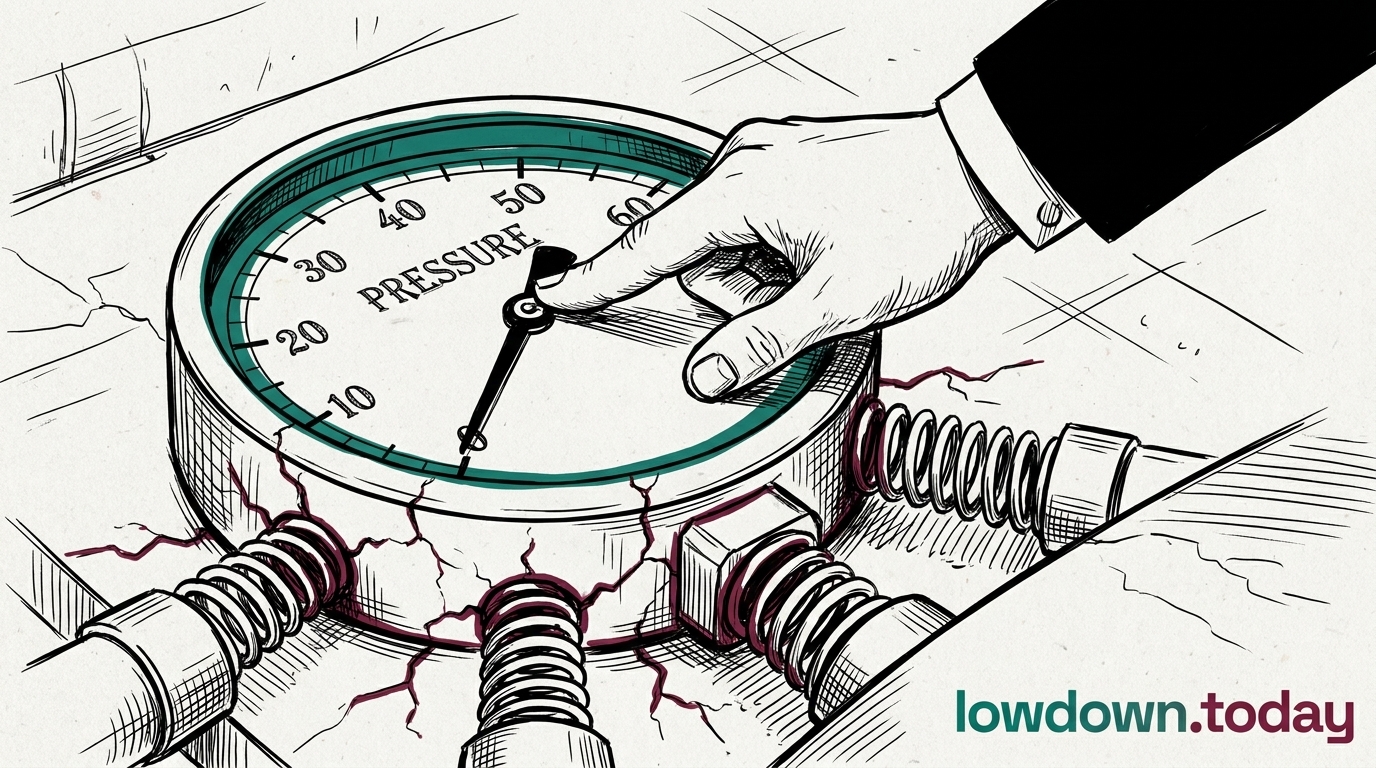
Trump has claimed Iranian agreement four times in 49 days; Iran has denied each one the same afternoon.

Donald Trump told reporters on 17-18 April that Iran had "agreed to everything", including handing over its enriched uranium stockpile to the United States, and said a deal could be "finalised in the next day or two". Asked whether he might fly to Islamabad to seal it, he said "I may" 1. Iran's Foreign Ministry spokesperson responded within hours: "Iran's enriched uranium is not going to be transferred anywhere."

Abbas Araghchi had previously confirmed, in the 13 April CBS interview, that Iran cannot currently enrich uranium at any surviving facility because of strike damage at Natanz, Esfahan and Fordow. The stockpile being discussed is materiel from destroyed plants, not the output of an operational programme. Mojtaba Khamenei's written position that nuclear weapons are "a matter of life and not a matter for negotiation" remains the institutional ceiling any civilian negotiator would have to break through; an uranium handover would breach that position on the most sensitive materiel Iran still possesses.

This is the fourth instance in 49 days of Trump claiming Iranian agreement only for Iran to deny it within hours. Day 3: enrichment ban (denied, with Khamenei's written statement the doctrinal cover). Day 40: Hormuz reopening (did not reopen). Day 48: war "very close to over" . Day 49: uranium transfer (denied same day). Tasnim News Agency's "psychological operations" framing now applies to US presidential statements at the level of doctrine, not rhetoric, and the Brent market is discounting each claim faster: the swing from the 17 April opening lasted hours, not days.


Deep Analysis

In plain English

Trump said Iran agreed to hand over its enriched uranium to the United States. Iran said the opposite, within hours. This is the fourth time Trump has claimed Iran agreed to something and Iran denied it on the same day. The uranium stockpile in question comes from nuclear plants that US and Israeli strikes already destroyed; Iran cannot currently produce fresh enriched uranium because those facilities no longer function.

What could happen next?
  • Meaning

    Four claim-and-deny cycles in 49 days have compressed the market's credibility discount on Trump's Iran statements: the 9.07% Brent swing on the Hormuz opening claim recovered in hours, not the days the earlier cycles produced.

    Short term · Assessed
  • Meaning

    Tasnim News Agency's classification of US presidential claims as 'psychological operations' signals Iran has institutionally moved Trump's statements from the 'diplomacy' category to the 'hostile messaging' category inside its state media processing.

    Short term · Assessed
  • Meaning

    The residual uranium stockpile (from destroyed facilities, not an operational programme) has no military value to Iran after the strikes; its transfer would be symbolic rather than substantive, making it a test of face-saving choreography rather than a genuine disarmament step.

    Short term · Assessed
First Reported In

Update #72 · Hormuz opens and closes in 24 hours

The Hill· 18 Apr 2026
Read original
Different Perspectives
Kuwait
Kuwait
Kuwait absorbed the Iranian strike that knocked generating units offline at a combined power-and-desalination plant on 17 July, the event that finally moved freight and insurance in lockstep with Brent. The strike hit essential civilian infrastructure, not a trading desk's benchmark.
Asian buyers (Singapore)
Singapore's middle distillates rose 12% month-to-date to 8.91m barrels and fuel oil passed 19m barrels on a 105% net-import surge, buyers retaining barrels as the East-West arbitrage window narrows. Cargoes are being stockpiled ahead of further Hormuz-driven freight repricing rather than released west.
Austria (Coreper holdout)
Vienna is blocking the same package over roughly EUR 2bn of frozen Russian assets earmarked for Raiffeisen, a domestic banking dispute with no connection to the oil cap racing toward its 23 July expiry. The linkage forces the whole package to wait on a bilateral compensation fight.
Greece (Coreper holdout)
Athens is holding the 21st sanctions package at the 22 July Coreper vote over Russian LNG re-export rights, a condition unrelated to the oil price cap itself, leaving the $44.10 freeze one day from expiry without a deal. Greece's own tanker registry gives it a direct stake in how any shadow-fleet measures are drafted.
Marine underwriters (Gulf war-risk)
Hull war-risk cover for Hormuz transits widened to a 3-10% band on 17 July with 5% the emerging norm, up from a 3-4% baseline set in late June, the first repricing in six weeks to track a flat-price move rather than lag it. Cover resets on actuarial evidence of loss, not on diplomatic or price signals.
Money managers (CFTC-tracked)
The CFTC's week-to-14-July snapshot, released 17 July, showed WTI managed-money net long collapsing 69% to 19,783 contracts and a standalone 60,141-contract net short on Brent Last Day (NYMEX). Both readings predate the Kuwait strike and the 20 July escalation, so any covering since is not yet visible in public data.