Skip to content
You can now search across every topic, entity and event.What's new
European Oil Markets
4JUN

Rubio rejected on Monday, paper Thursday

4 min read
10:20UTC

Marco Rubio told Fox News on Monday 4 May the United States would never accept paying Iran a toll for Hormuz; the document delivered to Tehran 72 hours later proposes the sequencing he rejected.

EconomicDeveloping
Key takeaway

Rubio's 4 May rejection and the 7 May paper contradict each other and the paper landed anyway.

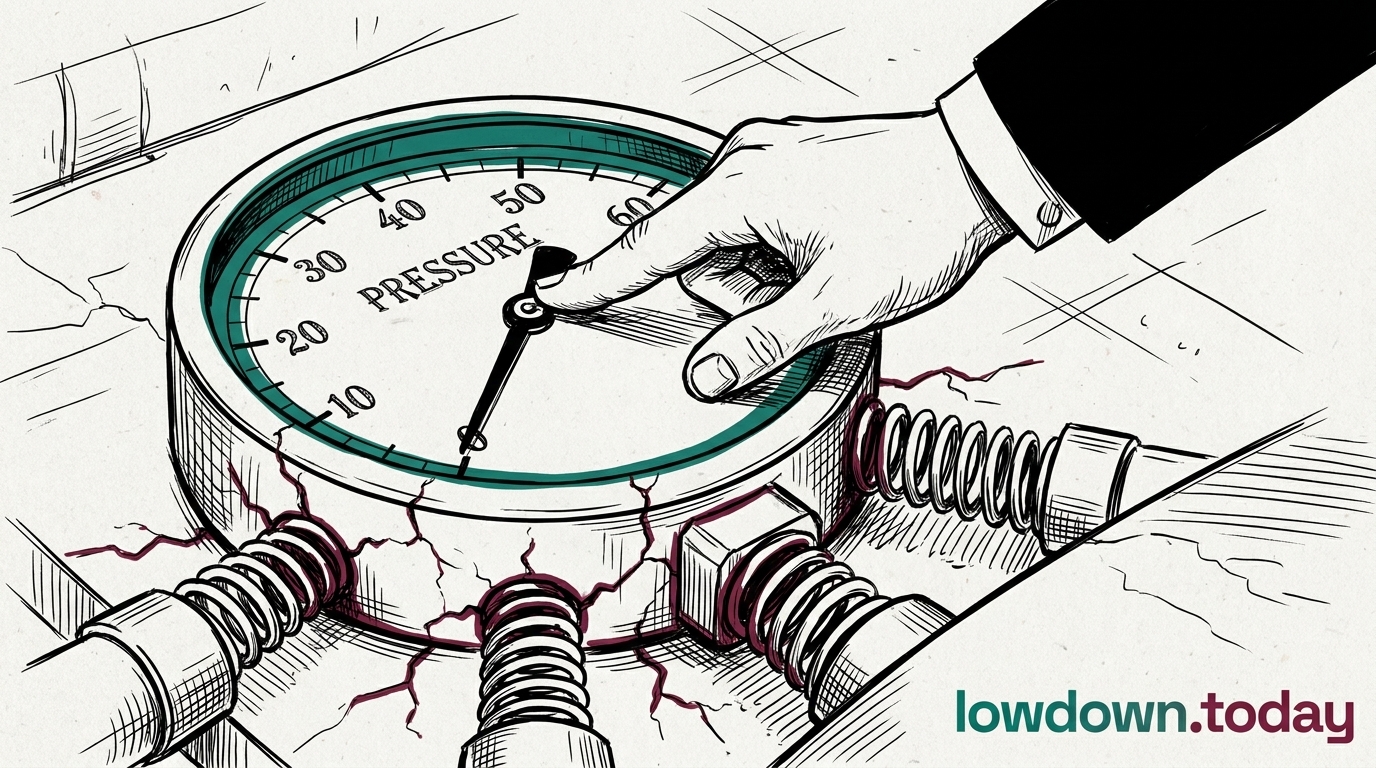
Marco Rubio told Fox News on Monday 4 May that "under no circumstances will US accept paying Iran a toll to transit Hormuz", then on Tuesday 5 May declared Operation EPIC FURY concluded and shifted to a memorandum of understanding (MOU) framing for future negotiations 1. The one-page MOU that reached Tehran on 7 May proposes the exact structure Rubio rejected on television: Hormuz-first, with the nuclear file deferred. Pakistan delivered the document three days after the Fox News interview.

Andreas Krieg, a King's College London analyst quoted by Al Jazeera, called the sequencing "a concession to Tehran", framing Washington's acceptance of phased Hormuz reopening as recognition that simultaneous resolution of war, strait and nuclear was not feasible 2. Krieg's observation describes the negotiating asymmetry directly. Abbas Araghchi's 14-point text on 1 May had asked for precisely this sequencing; Trump's verbal Truth Social rejection followed within hours ; the document now in Tehran adopts it.

Rubio's 4 May statement set the United States's published red line at refusing the toll. His 5 May declaration that EPIC FURY was over closed the kinetic chapter. The MOU's delivery on 7 May then walked the published red line back, in writing, without a public reversal. The Pakistani channel performs the deniability: Trump retains room to walk back from the paper if Tehran's reply does not produce terms Washington can sell at home, while Rubio's televised position remains on the record for that purpose.

The asymmetry between Iran's 14-point comprehensive negotiating text and the US one-page document is itself informative. Iran's text was a position with sequencing demands; the US paper is operationally a term sheet. Washington has pre-positioned a document Beijing can endorse without Tehran having to ratify the terms first, with the 14-15 May Trump-Xi summit as the audience. The Krieg framing is the sharpest external read of the substance: a US administration whose Secretary of State publicly rejected the toll on Monday delivered a paper accepting the surrounding sequencing on Thursday.


Deep Analysis

In plain English

Three days before a diplomatic document was delivered to Iran, the US Secretary of State Marco Rubio told Fox News that America would under no circumstances pay Iran a fee to use the Strait of Hormuz. The document delivered on Thursday proposed exactly the kind of arrangement Rubio had just rejected on television: the war ends, the US naval blockade lifts, the strait reopens, and the question of Iran's nuclear programme gets discussed separately later. This matters because it shows the gap between what the US government says publicly and what it is willing to offer in a private negotiation. The Pakistani go-between allows both sides to negotiate terms they cannot officially admit to in public. The oil price fell sharply when news of the document emerged, because markets read the contradiction as a sign that Washington was more flexible than its public statements suggested.

Deep Analysis
Root Causes

The gap between Rubio's 4 May statement and the 7 May paper reflects a structural feature of Trump's second-term foreign policy: decisions are made on the president's timeline and communicated publicly as categorical, then operationalised through back-channels that can diverge from the public statement without formal retraction.

The zero-signed-instruments pattern across 67 days of conflict (the White House presidential-actions index recorded no Iran executive instruments from 28 February through 6 May) is the same pattern applied to the MOU: the administration moves through informal instruments that preserve the option of reversal.

Rubio's role as Secretary of State compounds the structural problem. His Fox News statement was not a minor spokesman quote but a named senior official position. For the MOU to land on the terms described, Rubio either participated in the decision to deliver it or was overridden by the president's channel through Dar.

Either reading creates a public-private contradiction that Tehran can exploit in its reply, because Iran's acceptance of the paper's terms would implicitly ratify the structure Rubio rejected on television.

What could happen next?
  • Risk

    Iran's negotiating team can point to the Rubio-paper contradiction as evidence that US public positions are maximalist opening bids, weakening Washington's credibility on any subsequent red lines it states publicly before a final agreement.

    Short term · 0.8
  • Consequence

    Republican senators demanding a formal Iran AUMF, including Murkowski's 11 May deadline, gain leverage from the contradiction: the paper's existence without a formal executive instrument means the administration is making binding commitments without congressional knowledge.

    Immediate · 0.75
  • Precedent

    If the MOU leads to a deal, Rubio's Fox News position becomes the documented template for how the Trump administration uses public statements as tactical cover rather than actual policy floors.

    Medium term · 0.65
First Reported In

Update #90 · Pakistan carries paper; Brent below $100

Al Jazeera· 7 May 2026
Read original
Causes and effects
This Event
Rubio rejected on Monday, paper Thursday
Position vs paper: the Secretary of State's televised rejection and the MOU's text contradict each other, and the paper went anyway.
Different Perspectives
Kuwait
Kuwait
Kuwait absorbed the Iranian strike that knocked generating units offline at a combined power-and-desalination plant on 17 July, the event that finally moved freight and insurance in lockstep with Brent. The strike hit essential civilian infrastructure, not a trading desk's benchmark.
Asian buyers (Singapore)
Singapore's middle distillates rose 12% month-to-date to 8.91m barrels and fuel oil passed 19m barrels on a 105% net-import surge, buyers retaining barrels as the East-West arbitrage window narrows. Cargoes are being stockpiled ahead of further Hormuz-driven freight repricing rather than released west.
Austria (Coreper holdout)
Vienna is blocking the same package over roughly EUR 2bn of frozen Russian assets earmarked for Raiffeisen, a domestic banking dispute with no connection to the oil cap racing toward its 23 July expiry. The linkage forces the whole package to wait on a bilateral compensation fight.
Greece (Coreper holdout)
Athens is holding the 21st sanctions package at the 22 July Coreper vote over Russian LNG re-export rights, a condition unrelated to the oil price cap itself, leaving the $44.10 freeze one day from expiry without a deal. Greece's own tanker registry gives it a direct stake in how any shadow-fleet measures are drafted.
Marine underwriters (Gulf war-risk)
Hull war-risk cover for Hormuz transits widened to a 3-10% band on 17 July with 5% the emerging norm, up from a 3-4% baseline set in late June, the first repricing in six weeks to track a flat-price move rather than lag it. Cover resets on actuarial evidence of loss, not on diplomatic or price signals.
Money managers (CFTC-tracked)
The CFTC's week-to-14-July snapshot, released 17 July, showed WTI managed-money net long collapsing 69% to 19,783 contracts and a standalone 60,141-contract net short on Brent Last Day (NYMEX). Both readings predate the Kuwait strike and the 20 July escalation, so any covering since is not yet visible in public data.