Skip to content
You can now search across every topic, entity and event.What's new
European Oil Markets
4JUN

Half of Iran's missiles survive, WSJ reports

2 min read
10:20UTC

The Wall Street Journal, citing US intelligence officials, reported on 10 April that Iran has preserved roughly half its ballistic missile and attack-drone stockpile. Defence Secretary Pete Hegseth called the programme 'functionally destroyed' a fortnight earlier.

EconomicDeveloping
Key takeaway

Washington's spies believe Iran can still hurt things; Washington's ministers do not say so.

The Wall Street Journal, citing US intelligence officials, reported on 10 April that Tehran has preserved roughly half its ballistic missile and attack-drone stockpile and retains "thousands of ballistic missiles" 1. Defence Secretary Pete Hegseth had told reporters in late March that Iran's missile and drone programmes were "functionally destroyed", and Benjamin Netanyahu said last month that Iran had "no ability" to rebuild.

More than half of Iran's missile launchers have been destroyed, damaged, or buried by US and Israeli strikes, the same officials say, but Tehran can still repair them or dig the buried ones out. US intelligence believes Iran can reconstitute significant strike capability on a timeline measured in months, not years. This is single-provenance US-intelligence reporting relayed through one American paper.

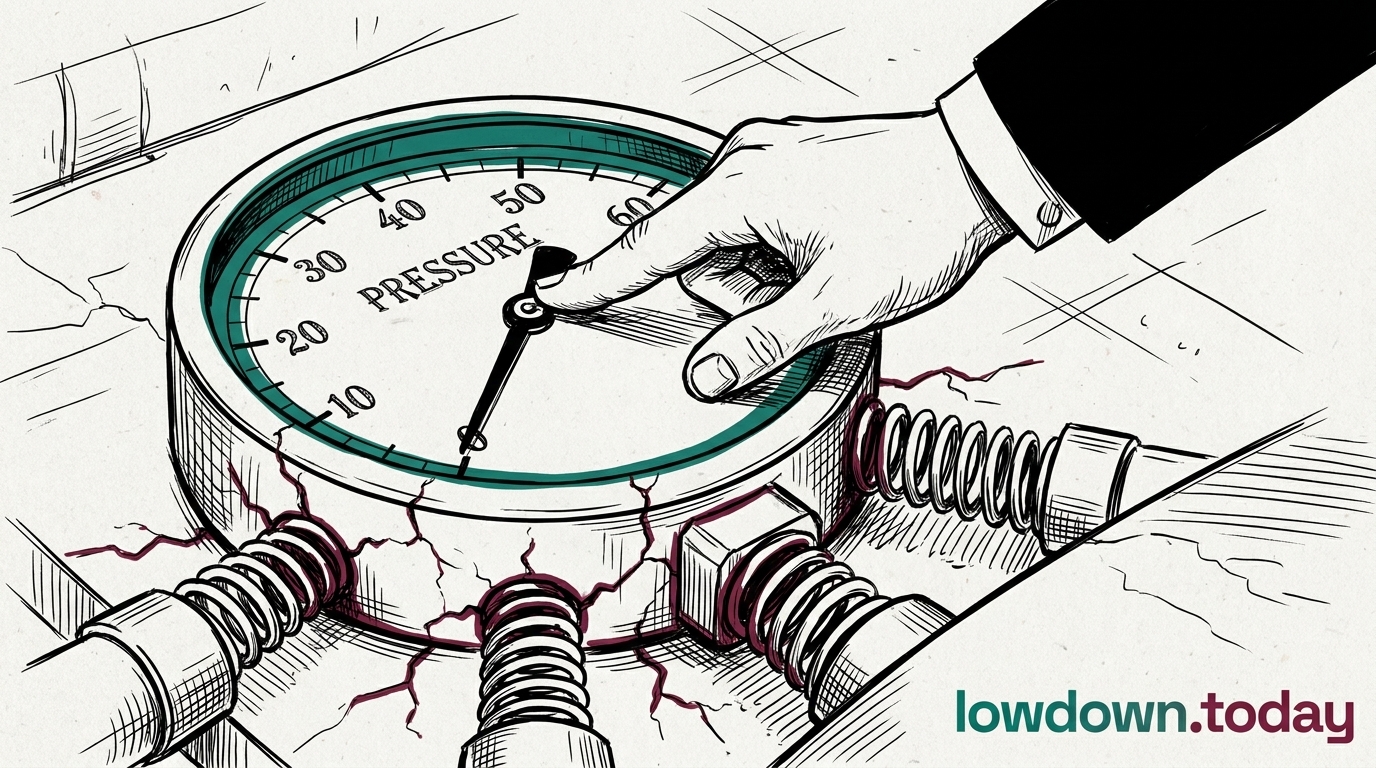
The assessment arrives in the same week Washington has issued zero formal Iran presidential instruments across the full war and during the diplomatic window opened at Islamabad . Every declaration of completion in this war has been followed within days by an intelligence assessment that quietly contradicts it: Trump's "nuclear objective attained", Hegseth's "functionally destroyed", Netanyahu's "no ability". The public claim shrinks; the private estimate catches up.


Deep Analysis

In plain English

Defence Secretary Hegseth said Iran's missiles were 'functionally destroyed'. Israel's Netanyahu said Iran had 'no ability to rebuild'. The US intelligence community — the same officials whose analysis underlies both those claims — now says Iran has kept roughly half its missiles. This does not mean the strikes failed entirely: more than half of Iran's launch platforms (the vehicles and fixed sites from which missiles are fired) have been damaged or destroyed. But the missiles themselves, buried in dispersed underground sites, survived in much larger numbers than the public statements suggested.

Deep Analysis
Root Causes

Iran's missile survivability reflects two design choices made over 15 years of sanctions pressure. The IRGC Aerospace Force built geographically-dispersed underground storage — the buried launchers US officials acknowledge can be excavated — specifically anticipating an air campaign that could not sustain ground-level destruction of hardened sites.

The second factor is the Decentralised Mosaic Defence doctrine itself: by devolving launch authority to autonomous provincial units, Iran reduced the command-and-control concentration that would make a decapitation strike operationally effective. A 50% launcher loss with dispersed warhead survival is a designed outcome, not a failure.

First Reported In

Update #65 · Iran lost its own minefield

Haaretz· 11 Apr 2026
Read original
Causes and effects
This Event
Half of Iran's missiles survive, WSJ reports
The rhetoric-versus-reality gap is becoming the war's most consistent pattern, and every future strike calculus must assume Iranian retaliation capability rather than a degraded one.
Different Perspectives
Kuwait
Kuwait
Kuwait absorbed the Iranian strike that knocked generating units offline at a combined power-and-desalination plant on 17 July, the event that finally moved freight and insurance in lockstep with Brent. The strike hit essential civilian infrastructure, not a trading desk's benchmark.
Asian buyers (Singapore)
Singapore's middle distillates rose 12% month-to-date to 8.91m barrels and fuel oil passed 19m barrels on a 105% net-import surge, buyers retaining barrels as the East-West arbitrage window narrows. Cargoes are being stockpiled ahead of further Hormuz-driven freight repricing rather than released west.
Austria (Coreper holdout)
Vienna is blocking the same package over roughly EUR 2bn of frozen Russian assets earmarked for Raiffeisen, a domestic banking dispute with no connection to the oil cap racing toward its 23 July expiry. The linkage forces the whole package to wait on a bilateral compensation fight.
Greece (Coreper holdout)
Athens is holding the 21st sanctions package at the 22 July Coreper vote over Russian LNG re-export rights, a condition unrelated to the oil price cap itself, leaving the $44.10 freeze one day from expiry without a deal. Greece's own tanker registry gives it a direct stake in how any shadow-fleet measures are drafted.
Marine underwriters (Gulf war-risk)
Hull war-risk cover for Hormuz transits widened to a 3-10% band on 17 July with 5% the emerging norm, up from a 3-4% baseline set in late June, the first repricing in six weeks to track a flat-price move rather than lag it. Cover resets on actuarial evidence of loss, not on diplomatic or price signals.
Money managers (CFTC-tracked)
The CFTC's week-to-14-July snapshot, released 17 July, showed WTI managed-money net long collapsing 69% to 19,783 contracts and a standalone 60,141-contract net short on Brent Last Day (NYMEX). Both readings predate the Kuwait strike and the 20 July escalation, so any covering since is not yet visible in public data.