Skip to content
Briefings are running a touch slower this week while we rebuild the foundations.See roadmap
European Oil Markets
4JUN

EU gasoil imports crash to 695kbd

3 min read
10:20UTC

Argus reported on 24 April that EU gasoil imports ran 695kbd, down 38% month-on-month and the lowest since its tracking began in 2016, with the ICE Gasoil crack near $54 as Brent fell.

EconomicDeveloping
Key takeaway

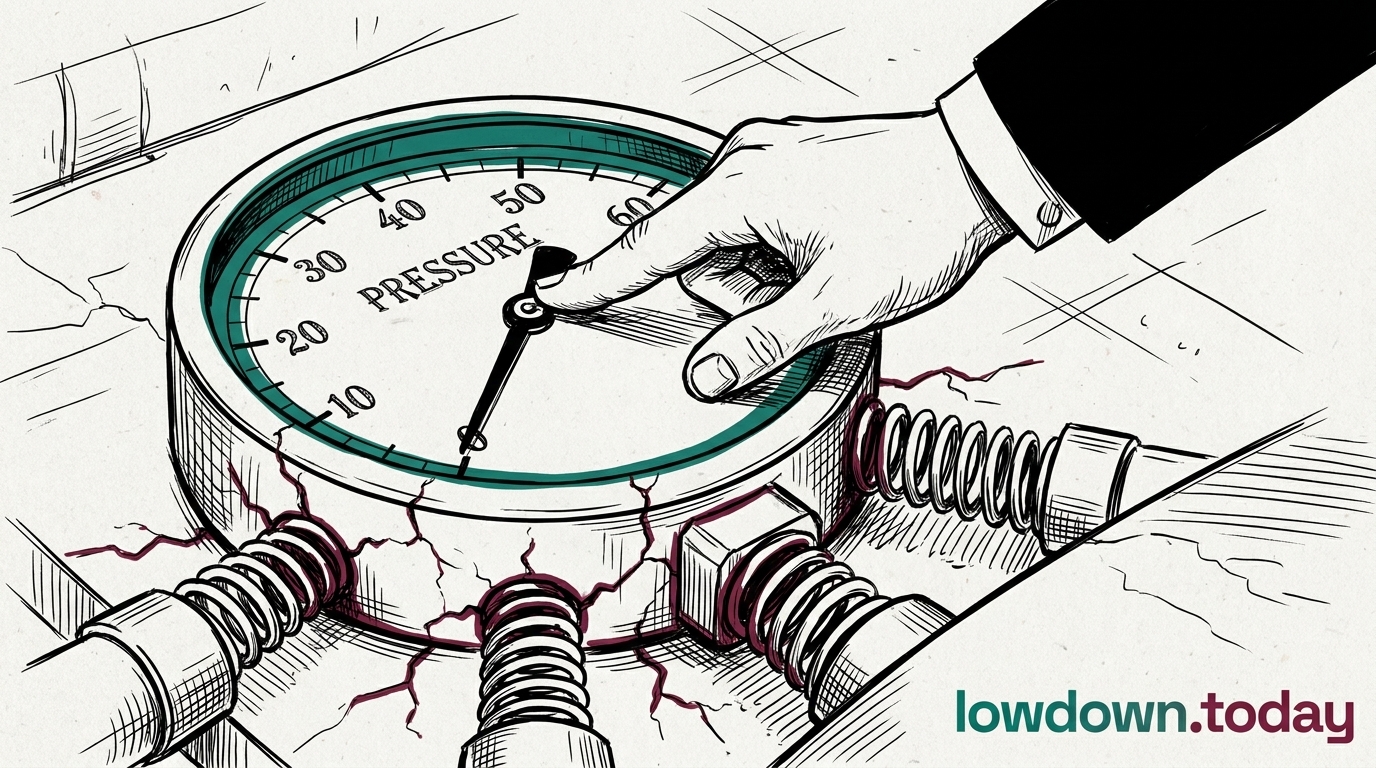
Europe's diesel shortage is about barrels not arriving, not the oil price, so the crack holds as crude falls.

Argus reported on 24 April that EU gasoil imports had run 695kbd, down 38% month-on-month and the lowest since its tracking began in 2016, after the Hormuz disruption stripped roughly a fifth of Europe's Gulf sourcing 1. The ICE Gasoil crack held near $54/bbl through the period 2, and US distillates sat 9% below the five-year average in the week to 15 May 3, deeper than the deficit behind the IEA's 246mb two-month draw . With the flat price down $14 and the physical deficit unchanged, the crack mechanically widens.

The arbitrage sits exactly here. BP Rotterdam's roughly 400kbd is still dark on both crude units , pulling NWE cracking capacity out at the exact moment the import gap opened. The two shocks compound rather than add: domestic refining withdrew just as the import channel closed, so the deficit cannot be covered from European runs alone, and a flat-price fall does not touch that physical gap.

The trade is to hold gasoil as the risk-adjusted long against crude. The flat price carries the deflating geopolitical premium; the crack carries the 695kbd of imports Europe lost. If a Hormuz-normalisation headline brings no actual flow inside 30 days, the backwardation re-steepens, because the barrels still have to arrive and none have yet.


Deep Analysis

In plain English

Europe imports a large share of its diesel from refineries around the Gulf region, via the Strait of Hormuz. When that sea passage closed, those imports dropped sharply ; in April, European diesel imports hit their lowest level since 2016. At the same time, one of Europe's biggest refineries, BP's Rotterdam plant, shut both of its main production units, cutting hundreds of thousands of barrels a day of domestic diesel production. With less diesel arriving from overseas and less being made locally, the price refiners could earn for turning crude oil into diesel jumped to around $54 per barrel above the cost of the crude itself. That's a historically high margin and means diesel at the pump stays expensive even as crude oil prices fall.

Deep Analysis
Root Causes

Europe's gasoil import portfolio runs roughly 20-25% from Gulf sources transiting Hormuz, with the balance from Russia (sanctioned, shadow-fleet routed), US (TC2 arb-dependent), and West Africa. The Hormuz blockade eliminated the Gulf slice ; approximately 250-300kbd of the 695kbd total reported by Argus ; in a single event.

BP Rotterdam's both-units-dark status compounds structurally: the 400kbd refinery serves as the NWE market's swing cracker, processing Urals, North Sea, and West African crudes into gasoil and naphtha.

Its absence forces traders to source ARA gasoil barges at spot rather than from refinery gate, lifting the physical premium. The ARA diesel barge premium collapse from $78/t to $9/t over ICE Gasoil reflects near-term ARA inventory relief ; but the structural deficit (695kbd import gap, 400kbd cracking absent) has not closed.

What could happen next?
  • Consequence

    The ICE Gasoil crack near $54/bbl mechanically widens further if Brent falls without commensurate distillate import recovery ; the physical shortage is supply-side, not geopolitical, and does not deflate on Iran MOU signals alone.

    Short term · Reported
  • Risk

    If BP Rotterdam's timeline extends into Q3 2026, NWE refining capacity remains 400kbd short during the summer driving season peak, sustaining $50+ gasoil cracks into H2 2026.

    Medium term · Assessed
  • Opportunity

    US distillate exporters face TC2 arb economics that favour shipping NWE: US distillates at 9% below 5yr average limit the surplus available, but ULSD crack margins at WTI basis incentivise maximum US refinery throughput for Atlantic exports.

    Short term · Assessed
First Reported In

Update #2 · GL 134C reverses the cliff, Brent -$14

EIA· 26 May 2026
Read original
Causes and effects
This Event
EU gasoil imports crash to 695kbd
The flat price carries the geopolitical premium; the crack carries a 695kbd import hole the Iran deal does nothing to fill.
Different Perspectives
Kazakhstan (Tengiz / CPC pipeline operators)
Kazakhstan's 322kbd Tengiz overage runs on the CPC pipeline, which bypasses the Gulf, making it structurally durable and effectively quota-exempt within the cartel. The Tengiz expansion reached plateau production in early 2026 and cannot be throttled without reservoir damage, setting a precedent for infrastructure-forced overproduction as an OPEC+ carve-out.
NWE sell-side macro desk
The divergence between sub-$97 Brent and a crack near $54 is the structural trade: long the crack against crude, with the June OFAC calendar as convexity on top. With the WTI unwind complete and Brent-WTI at $2 with no mechanical compressor, the Brent-WTI spread carries cheap optionality on the three June dates rather than a directional flat-price call.
Italian government / ISAB / Priolo Gargallo operators
Six GL rollovers without a completed ISAB sale leave the 320kbd Sicilian refinery under a sanctions-perimeter procurement overhang; the Italian Golden Power review has no confirmed timeline and can block the Ludoil deal independently of OFAC. Rome secured a 30-day EU derogation for ISAB in 2012 and is expected to seek one again if 27 June approaches.
Chinese state refiners (CNPC / Sinopec)
Chinese seaborne crude imports ran at a decade-low 6.78mbd in May as refining margins stayed negative near -$2/bbl, with state refiners drawing on onshore strategic stocks rather than buying at $90-plus Brent. The demand hole, not a reopened Hormuz, compressed the Brent-Dubai EFS off its $6-plus peak; restart signal is margin recovery above $3-5/bbl.
EU Council sanctions directorate
Brussels adopted its 21st sanctions package on 26 May targeting shadow-fleet tanker listings and bank financing rather than revising the G7 price cap, a doctrine that routes pressure through freight and financing costs rather than cap arithmetic. The EU's approach compounds OFAC's tonnage drain without requiring G7 consensus on a new cap number.
US Treasury / OFAC
US Treasury / OFAC
OFAC has issued no GL 134D rollover as of 04 June, leaving a 13-day cliff on the Russian vessel-services umbrella while simultaneously running a negotiation-only clock on the ISAB divestiture to 27 June. The dual-deadline architecture, authorise-without-compelling on the Russian refinery track while closing Iranian buyer legs, is OFAC's deliberate June compliance design.