Skip to content
Briefings are running a touch slower this week while we rebuild the foundations.See roadmap
European Oil Markets
4JUN

ARA stocks bottom in a build month

3 min read
10:20UTC

ARA total product stocks fell to their lowest since November 2014 in the week to 28 May, a multi-year low recorded when storage normally builds ahead of summer demand.

EconomicDeveloping
Key takeaway

A build-month low at ARA puts a physical floor under European product cracks the ceasefire selloff has not removed.

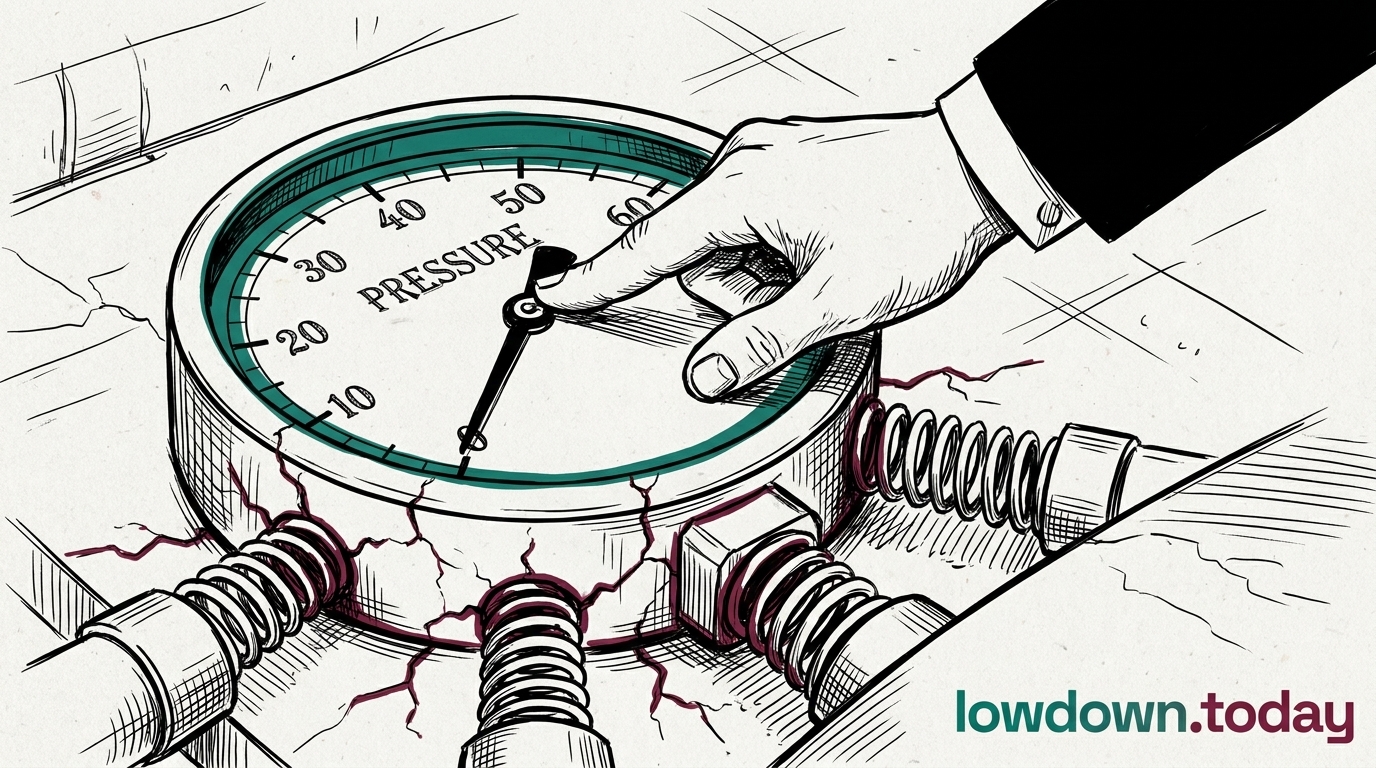
ARA total product stocks fell to their lowest since November 2014 in the week to 28 May, a 12-year low across the Rotterdam, Amsterdam and Antwerp hub 1. The calendar is what makes it a signal: May normally builds storage ahead of summer demand, so a multi-year low here points to supply scarcity, not a demand pull thinning the tanks.

The read lands on the European side of the crack thesis the 26 May briefing set out , the one that held the gasoil margin steady even as the ceasefire knocked Brent lower . A build-season low in the NWE barge complex says the tightness reaches Rotterdam, with the storage tanks short of barrels rather than thin on demand. Both sides of the Atlantic now show the same structural deficit.

For a European product desk the consequence is direct: ICE Gasoil and ARA barge cracks have a floor the ceasefire selloff has not removed, because the barrels behind them are genuinely short. Rotterdam carries the same turnaround risk as the US complex. If refinery runs rebuild the NWE tanks through June and Gulf product flows freely on a holding ceasefire, the ARA deficit resolves and the crack reverts toward its pre-war level rather than finding a new $40-45 floor.


Deep Analysis

In plain English

ARA stands for Amsterdam-Rotterdam-Antwerp, the main storage and trading hub for refined oil products in Northwest Europe. When stocks at ARA are low, product prices in Europe rise because there is less of a buffer between refineries and consumers. The ARA complex just recorded its lowest total oil product stock level since November 2014, a 12-year low. In normal years, stocks build in late May as refineries prepare for summer demand; this week PJK International's data shows them falling. Supply coming into ARA storage cannot keep pace with demand and with exports from Europe to other regions, suggesting a genuine shortage rather than a temporary blip.

What could happen next?
  • Consequence

    Entering summer draw season at a 12-year ARA low removes the normal stock-buffer against supply disruption; any refinery outage, shipping delay, or sanctions tightening from the June deadline cluster amplifies the crack response disproportionately.

  • Risk

    If the low is middle-distillate-led, gasoil and jet crack spreads face the sharpest upside in the event of a supply shock; the ARA complex has no seasonal replenishment buffer through July.

First Reported In

Update #3 · OFAC loads a June squeeze the screen ignores

Reuters· 29 May 2026
Read original
Causes and effects
This Event
ARA stocks bottom in a build month
A seasonal build month recording a multi-year low is a supply signal rather than a demand pull, putting a physical floor under the ICE Gasoil crack on the European side of the Atlantic.
Different Perspectives
Kazakhstan (Tengiz / CPC pipeline operators)
Kazakhstan's 322kbd Tengiz overage runs on the CPC pipeline, which bypasses the Gulf, making it structurally durable and effectively quota-exempt within the cartel. The Tengiz expansion reached plateau production in early 2026 and cannot be throttled without reservoir damage, setting a precedent for infrastructure-forced overproduction as an OPEC+ carve-out.
NWE sell-side macro desk
The divergence between sub-$97 Brent and a crack near $54 is the structural trade: long the crack against crude, with the June OFAC calendar as convexity on top. With the WTI unwind complete and Brent-WTI at $2 with no mechanical compressor, the Brent-WTI spread carries cheap optionality on the three June dates rather than a directional flat-price call.
Italian government / ISAB / Priolo Gargallo operators
Six GL rollovers without a completed ISAB sale leave the 320kbd Sicilian refinery under a sanctions-perimeter procurement overhang; the Italian Golden Power review has no confirmed timeline and can block the Ludoil deal independently of OFAC. Rome secured a 30-day EU derogation for ISAB in 2012 and is expected to seek one again if 27 June approaches.
Chinese state refiners (CNPC / Sinopec)
Chinese seaborne crude imports ran at a decade-low 6.78mbd in May as refining margins stayed negative near -$2/bbl, with state refiners drawing on onshore strategic stocks rather than buying at $90-plus Brent. The demand hole, not a reopened Hormuz, compressed the Brent-Dubai EFS off its $6-plus peak; restart signal is margin recovery above $3-5/bbl.
EU Council sanctions directorate
Brussels adopted its 21st sanctions package on 26 May targeting shadow-fleet tanker listings and bank financing rather than revising the G7 price cap, a doctrine that routes pressure through freight and financing costs rather than cap arithmetic. The EU's approach compounds OFAC's tonnage drain without requiring G7 consensus on a new cap number.
US Treasury / OFAC
US Treasury / OFAC
OFAC has issued no GL 134D rollover as of 04 June, leaving a 13-day cliff on the Russian vessel-services umbrella while simultaneously running a negotiation-only clock on the ISAB divestiture to 27 June. The dual-deadline architecture, authorise-without-compelling on the Russian refinery track while closing Iranian buyer legs, is OFAC's deliberate June compliance design.