Skip to content
You can now search across every topic, entity and event.What's new
European Oil Markets
4JUN

Brent closes above $100 for first time

4 min read
10:20UTC

Brent crude settled at $100.46 — up 49% from pre-war levels — on the day the IEA declared the war the largest supply disruption in oil market history. The agency's record 400-million-barrel reserve release, announced days earlier, did not prevent the breach.

EconomicDeveloping
Key takeaway

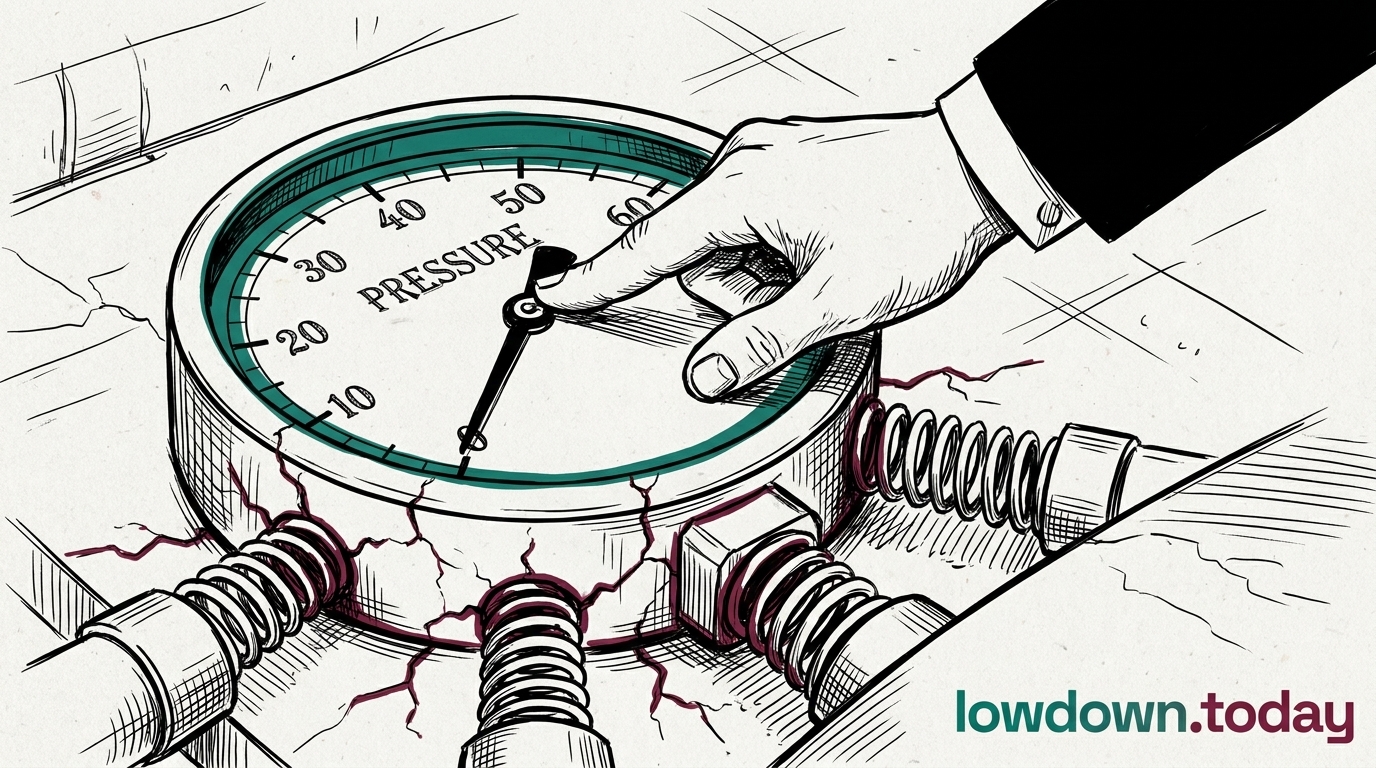
Oil at $100 is a credibility verdict on US escort promises, not just a supply signal.

Brent Crude closed Thursday at $100.46 per barrel — up 9.2% on the day and 49% above its pre-war level of $67.41 on 27 February. WTI settled at $95.73, up 9.7%. The $100 threshold that commodity traders had watched since the IRGC declared its absolute Hormuz blockade has now been breached on a closing basis.

The trigger was the International Energy Agency's March Oil Market Report, which called the war "the largest supply disruption in the history of the global oil market." The trajectory has been relentless: Brent had climbed from $67.41 to $92.69 in the war's first week , spiked above $119 on Day 10 before a $30 intraday reversal on Trump's "very soon" language , and has now settled above triple figures. The pattern — spikes on operational reality, dips on political rhetoric, each trough higher than the last — is a market systematically discounting diplomatic signals in favour of physical supply data.

The IEA's record 400-million-barrel strategic reserve release , announced earlier in the week, was designed to prevent precisely this outcome. Oil rose 9% the day after the release was announced. The US contribution of 172 million barrels from the Strategic Petroleum Reserve will take 120 days to deliver at planned discharge rates; the supply gap is measured in days. Three cargo ship attacks in the strait on the same day as the announcement effectively nullified its market impact. Strategic reserves are designed for temporary disruptions with a visible endpoint. This disruption has neither.

The $100 close is also a credibility price. Energy Secretary Wright's deleted claim on 10 March that the Navy had already escorted a tanker through Hormuz — a statement that briefly sent oil down approximately 12% before retraction — and the contradictory escort timelines offered by Wright and Treasury Secretary Bessent on Thursday have eroded confidence that Washington can reopen the strait on any near-term schedule. When the administration's own cabinet members give incompatible answers on the same day about whether escorts are happening, imminent, or logistically impossible, the market prices in the worst case. Every barrel above $100 now carries a risk premium that is less about Iranian naval capability than about American governmental coherence.


Deep Analysis

In plain English

Oil just crossed $100 a barrel on a closing basis for the first time in this war. That is a psychological line traders had been watching closely — like a stock hitting a watched threshold. The price jumped because a respected international agency declared this the worst oil supply crisis in recorded history. The important detail is that the US government has repeatedly promised to escort tankers through the blocked strait. The market has stopped believing that promise. When governments lose credibility on commitments like this, prices reflect the pessimism directly.

Deep Analysis
Synthesis

The oil price rising 9% on the day the reserve release was announced inverted the standard policy logic: reserve releases are designed to suppress price expectations. The market is treating reserves as finite and the disruption as open-ended. Each subsequent US policy announcement will carry diminishing effect unless physical Hormuz access is restored — the credibility discount compounds with every failed promise.

Root Causes

The $100 breach reflects two compounding failures not fully captured in price commentary. The IEA's 400-million-barrel reserve release covers roughly 50 days at an 8 million bpd shortfall — a finite buffer the market has already discounted. No pipeline network exists with the volume to substitute Hormuz flows; the UAE's ADCOP and Saudi Petroline combined offer roughly 6.5 million bpd of rerouting capacity against a 10 million bpd gap.

Escalation

The shape of the Brent futures curve will indicate whether markets price a short or prolonged disruption. If December 2026 futures approach spot levels — collapsing backwardation — the market is pricing a structural rather than temporary blockade. That shift would accelerate corporate hedging costs and deepen the downstream inflation transmission.

What could happen next?
  • Consequence

    Fuel costs will transmit into consumer price indices within two to four weeks, complicating central bank rate decisions globally.

    Short term · Assessed
  • Risk

    Steep futures backwardation will raise corporate hedging costs sharply, accelerating cost pass-through to consumers before physical supply conditions change.

    Immediate · Suggested
  • Precedent

    A failed record reserve release at this scale will permanently weaken the IEA tool's credibility as a price-management instrument in future crises.

    Long term · Assessed
  • Meaning

    The $100 close as a credibility price means further US policy contradictions on escorts will be reflected immediately in energy markets.

    Immediate · Assessed
First Reported In

Update #33 · Oil breaks $100; war reaches Iraqi waters

CNBC· 13 Mar 2026
Read original
Different Perspectives
Kuwait
Kuwait
Kuwait absorbed the Iranian strike that knocked generating units offline at a combined power-and-desalination plant on 17 July, the event that finally moved freight and insurance in lockstep with Brent. The strike hit essential civilian infrastructure, not a trading desk's benchmark.
Asian buyers (Singapore)
Singapore's middle distillates rose 12% month-to-date to 8.91m barrels and fuel oil passed 19m barrels on a 105% net-import surge, buyers retaining barrels as the East-West arbitrage window narrows. Cargoes are being stockpiled ahead of further Hormuz-driven freight repricing rather than released west.
Austria (Coreper holdout)
Vienna is blocking the same package over roughly EUR 2bn of frozen Russian assets earmarked for Raiffeisen, a domestic banking dispute with no connection to the oil cap racing toward its 23 July expiry. The linkage forces the whole package to wait on a bilateral compensation fight.
Greece (Coreper holdout)
Athens is holding the 21st sanctions package at the 22 July Coreper vote over Russian LNG re-export rights, a condition unrelated to the oil price cap itself, leaving the $44.10 freeze one day from expiry without a deal. Greece's own tanker registry gives it a direct stake in how any shadow-fleet measures are drafted.
Marine underwriters (Gulf war-risk)
Hull war-risk cover for Hormuz transits widened to a 3-10% band on 17 July with 5% the emerging norm, up from a 3-4% baseline set in late June, the first repricing in six weeks to track a flat-price move rather than lag it. Cover resets on actuarial evidence of loss, not on diplomatic or price signals.
Money managers (CFTC-tracked)
The CFTC's week-to-14-July snapshot, released 17 July, showed WTI managed-money net long collapsing 69% to 19,783 contracts and a standalone 60,141-contract net short on Brent Last Day (NYMEX). Both readings predate the Kuwait strike and the 20 July escalation, so any covering since is not yet visible in public data.