Skip to content
You can now search across every topic, entity and event.What's new
European Oil Markets
31JUL

Iran lost track of its own minefield

2 min read
09:33UTC

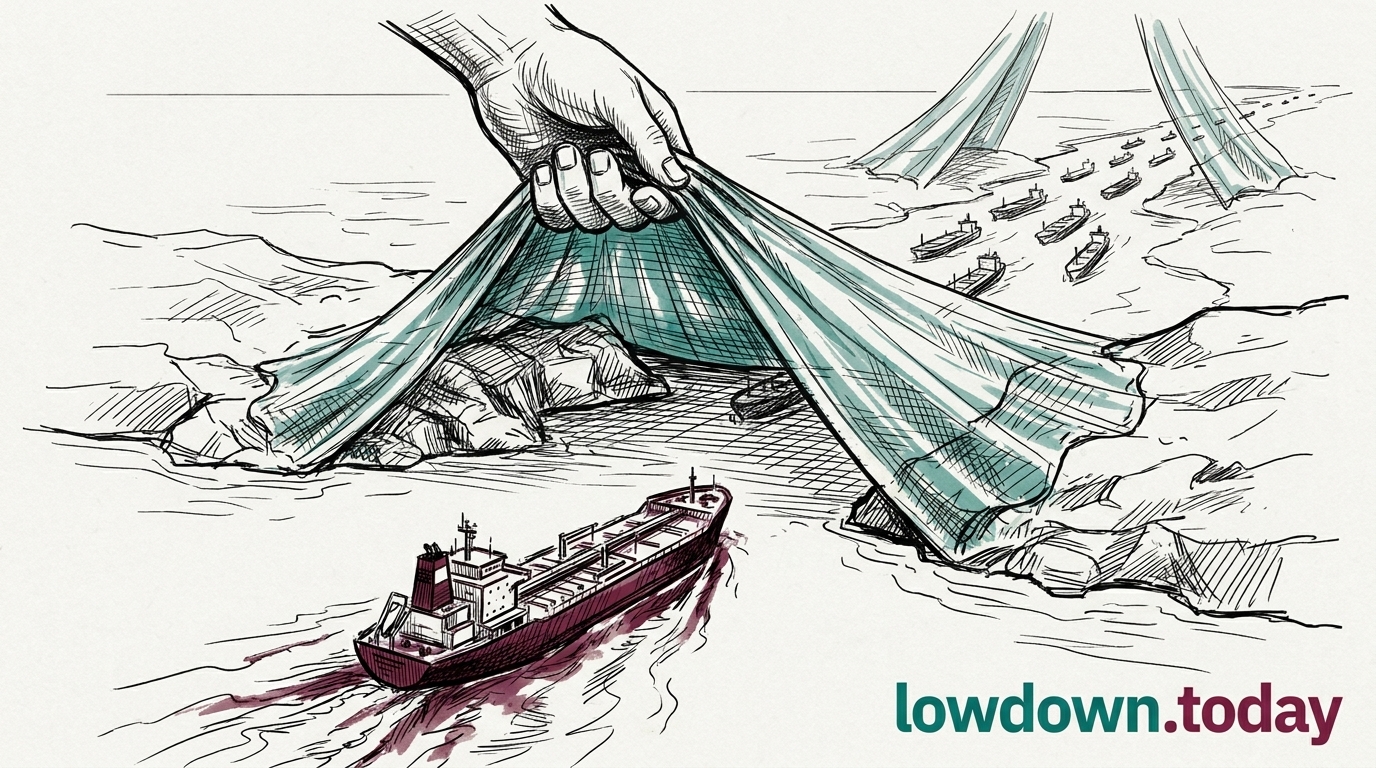
Tehran deployed at least a dozen mines in Hormuz and never mapped most of them. US intelligence officials told the New York Times and Wall Street Journal the minefield now sits beyond Iran's own reach.

EconomicDeveloping
Key takeaway

Iran cannot reopen Hormuz because it cannot find the mines it laid.

US intelligence officials told the New York Times and the Wall Street Journal this week that Iran deployed at least a dozen naval mines in the Strait of Hormuz during the opening weeks of the war and did not systematically track every placement 12. Some mines drifted from their original positions. Iranian authorities cannot reliably map, locate, or recover all of them, and Tehran lacks the capability to remove the mines once found. This is single-provenance US-intelligence reporting, relayed through two American papers; no non-American source has confirmed the assessment independently.

The two models identified are Maham-3, a moored mine with magnetic and acoustic sensors, and Maham-7, a seabed limpet-style device designed to evade sonar 3. US officials call Iran's mine-tracking failure "a key factor in Tehran's failure to meet demands from the Trump administration" to reopen the strait. The minefield has become an ungoverned obstacle Iran itself cannot clear.

The IRGC corridor charts Iran published on 9 April, directing traffic through channels near Larak Island , now read less as a coercive toll architecture than as a confession: Tehran does not know which channels are safe because it does not know where its own mines are. That confession reshapes the operational meaning of the toll regime that was producing 20 transits per day on 5 April . What looked like leverage on Monday looks like a trap on Friday.


Deep Analysis

In plain English

Iran laid sea mines — underwater bombs that detonate when a ship passes over or near them — in the Strait of Hormuz, the narrow waterway that most of the world's oil travels through. The problem is that Iran never properly recorded where each mine was placed, and some have since drifted from their original positions. That matters because the ceasefire deal requires Iran to reopen the strait. But Iran cannot safely reopen it if it does not know where its own mines are. Even if both sides want peace, the physical danger in the water does not go away because of a political agreement.

Deep Analysis
Root Causes

Iran's mine doctrine was designed for area denial, not for precision emplacement with recovery in mind. The IRGC's naval arm built the Maham series to be cheap, difficult to detect, and deniable — not to be retrievable. That doctrine made strategic sense as a deterrent against US carrier groups; it becomes a liability when the ceasefire demands Iran clear what it laid.

The second cause is institutional: the IRGC operates as a parallel naval command with limited integration with the regular Artesh navy, which has the only functional minesweeping vessels. Coordination between the two forces in active mine-laying operations was not systematically documented.

What could happen next?
  • Consequence

    Any ceasefire compliance demand that Iran 'open Hormuz' is physically unenforceable until a credible mine-clearance process is established by a third-party naval force.

    Immediate · 0.85
  • Risk

    An uncharted minefield increases the probability of an accidental detonation by a commercial vessel, which could trigger an insurance market withdrawal making the strait economically impassable even if politically agreed open.

    Short term · 0.75
  • Precedent

    If a multinational minesweeping mandate is eventually issued, the 1991 Gulf War precedent suggests clearance of an imprecisely-laid field in a deep-water strait could require six months or more even with full cooperation.

    Medium term · 0.7
First Reported In

Update #65 · Iran lost its own minefield

Daily Caller· 11 Apr 2026
Read original
Different Perspectives
Sanctions compliance officer reviewing a Lukoil International GmbH bid
OFAC's amended FAQ 1224 gives a compliance desk its first published standard: full severance from Lukoil and a US-jurisdiction blocked account for sale proceeds. The conditions name neither ISAB nor Italy, so a Priolo Gargallo-linked bid answers a different question than a Neftochim Burgas or Petrotel Ploiesti one.
Managed-money funds on Brent Last Day
CFTC data for the week to 21 July showed managed money flipping 74,400 contracts to a net long of 15,665 against 1,410 short on the Brent Last Day contract, code 06765T. A fund that held that short through July has now covered it, and the spent short base raises the bar for the next leg higher.
Saudi crude exporters
Saudi-linked tanker transits through Bab el-Mandeb fell to about 7.5 a day after the 24 July underwriting withdrawal, pushing more barrels onto the longer route round the Cape or through the Yanbu terminal. Every diverted barrel ties up a ship for longer, and a fleet that turns slower charges more.
Tanker owners on the Bab el-Mandeb route
Lloyd's-market syndicates withdrew war-risk cover from Saudi-linked hulls on 24 July, leaving owners of that class of vessel to sail Bab el-Mandeb uninsured or not at all. Tanker transits on the route fell to roughly 7.5 a day, and cover, once withdrawn, does not return on a shipowner's timetable.
Eni
Eni
Eni's board approved second-quarter results on 29 July, swinging refining EBIT to a EUR0.08bn profit from a year-earlier loss even as group profit doubled, and named Red Sea freight cost as a cap on that improvement. A refiner absorbing higher shipping costs on Saudi-linked crude while its numbers improve treats the freight line as a drag, not a crisis.
Asian buyers (India, Japan, China, South Korea)
Asian refiners are absorbing 62% of Yanbu's 3.75m b/d flow, the bulk of Saudi Arabia's rerouted crude now clearing east rather than into the Atlantic basin. That destination split leaves Asian buyers more exposed to any single Yanbu-specific disruption than under the kingdom's normal multi-terminal export pattern.



