Skip to content
You can now search across every topic, entity and event.What's new
European Oil Markets
23JUL

Iran Exempts Iraq From Hormuz as Oil Output Collapses

3 min read
19:27UTC

Iraq lost three-quarters of its oil production to the blockade. Tehran granted relief and called it brotherhood.

EconomicAssessed
Key takeaway

Iran is converting Hormuz from a blockade into a bilateral licensing system it controls.

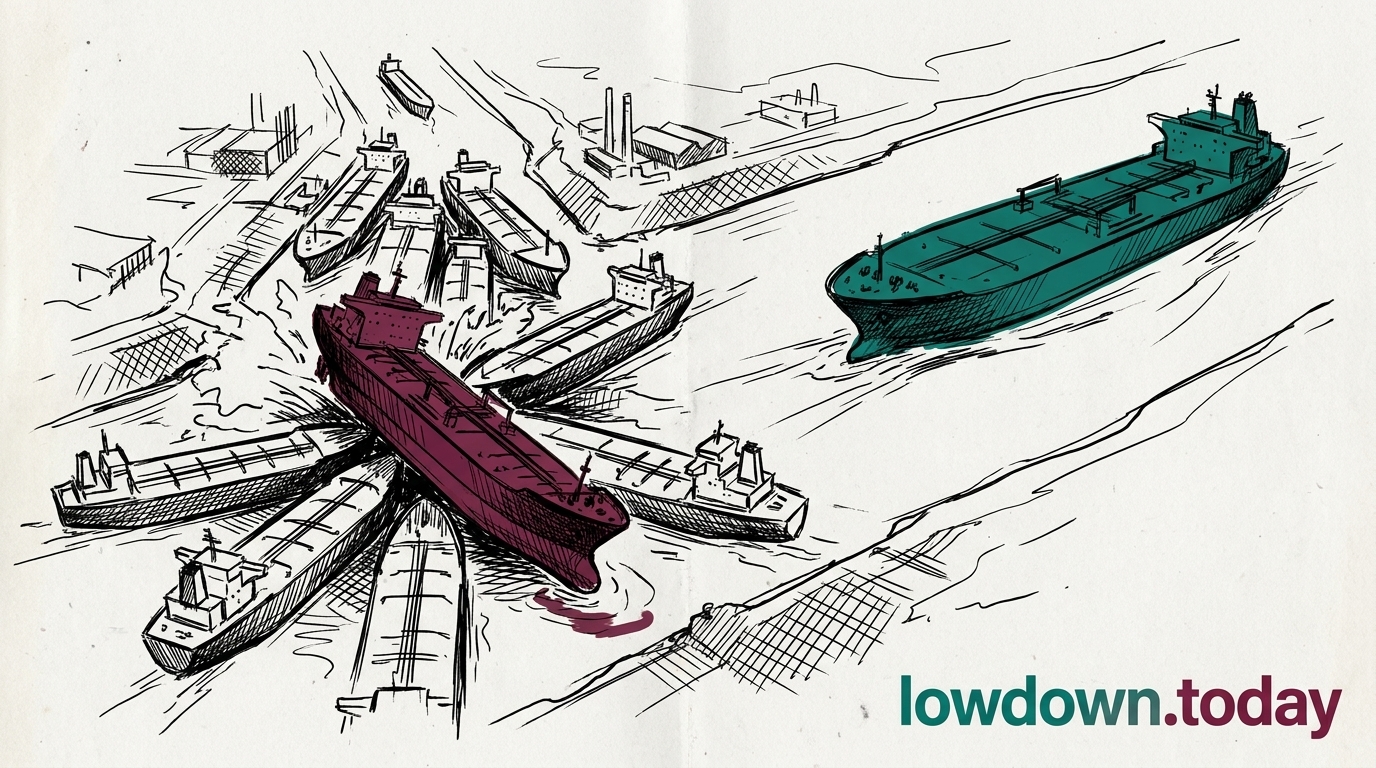
Iran exempted Iraq from all Strait of Hormuz restrictions on 5 April, citing "brotherly" ties. 1 Iraq's oil production had collapsed from 4.3 to 1.2 million barrels per day under the blockade, a 72% drop costing roughly $200 million daily. Oil is the single revenue source that funds Iraq's government. The exemption is a survival measure for both sides: Iraq's economy cannot function without Hormuz access, and Iran needs at least one friendly neighbour whose state has not been destroyed by Iranian policy.

Weekly Hormuz transits rose to 53 last week, up from 36, but still down over 90% from the pre-war normal of roughly 966. The increase is driven entirely by bilateral exemptions: the Philippines, France , Japan, Oman, and now Iraq. Each deal further normalises Tehran's sovereignty claim over international waters. The coalition posture Washington maintained since the blockade began is dissolving into a series of licensing arrangements administered by Tehran.

Ali Vaez of the International Crisis Group assessed that Hormuz control is "much more potent than even a nuclear weapon." Former CIA Director Bill Burns said Tehran has "tasted its power and leverage and won't soon give it up." US intelligence simultaneously assessed Iran will not open Hormuz "any time soon." 2

Deep Analysis

In plain English

Iran is blocking most ships from passing through a narrow waterway that most of the world's oil passes through. Iraq, which is Iran's neighbour and has historically friendly relations with Tehran, was losing three-quarters of its oil income because of the blockade. Iran has now said Iraq's ships can pass through. This sounds like a concession, but it is actually something more significant: Iran is deciding country by country who gets to use an international waterway, and charging them for the privilege. That is a fundamental change in who controls global oil shipping.

First Reported In

Update #59 · Day 37: A Ground War Inside Iran That Nobody Will Name

Al Jazeera· 5 Apr 2026
Read original
Different Perspectives
US money managers (CFTC-tracked)
US money managers had trimmed WTI net long positioning into July's rally, doubting the Hormuz premium would hold without freight or war-risk confirmation, and the crude stock build reported for the week to 17 July gives that scepticism a fundamentals basis. The 25 July CFTC data will show whether Brent's move above $100 changed their calculus.
Asian distillate buyers (Singapore)
Singapore's distillate holders kept retaining middle-distillate barrels as the East-West arbitrage window narrowed further this week, a pattern that sharpened as Fujairah light distillates hit a record low. Cargoes are being held rather than released west into the tightening Mediterranean market.
Bulgaria
Bulgaria
Bulgaria secured the removal of Lukoil founder Vagit Alekperov and Patriarch Kirill from the 21st package, with President Rumen Radev calling a personal listing 'shooting ourselves in the foot'. Sofia is protecting its position in Lukoil's EUR 3bn compensation claim over the 2023 Neftohim Burgas nationalisation.
Russia
Russia
Russia loses the roughly $14 a barrel of legal headroom the price-cap formula would have released toward $58, even as Urals continues trading below Moscow's $59 budget floor. The shadow-fleet insurance workaround that lets sanctioned crude clear above $44 in practice remains untouched by the freeze itself.
European Union
European Union
The EU adopted its 21st sanctions package on 23 July, freezing the $44 Russia oil cap for 12 months rather than letting the formula drift it toward $58, and listed shadow-fleet support vessels for the first time. The package cleared only after three failed Coreper votes.
Marine war-risk underwriters (Lloyd's-linked syndicates)
War-risk syndicates lifted southern Red Sea hull premiums 150% to about 0.75% of hull value after the 20 July blockade declaration, still a seventh of the roughly 5% Hormuz band. Underwriters reset on realised loss, not declared threat, so the 23 July Encelia and Layla strikes set up the next re-mark.
