Skip to content
You can now search across every topic, entity and event.What's new
European Oil Markets
23JUL

Last P&I clubs quit Gulf; Hormuz sealed

4 min read
19:27UTC

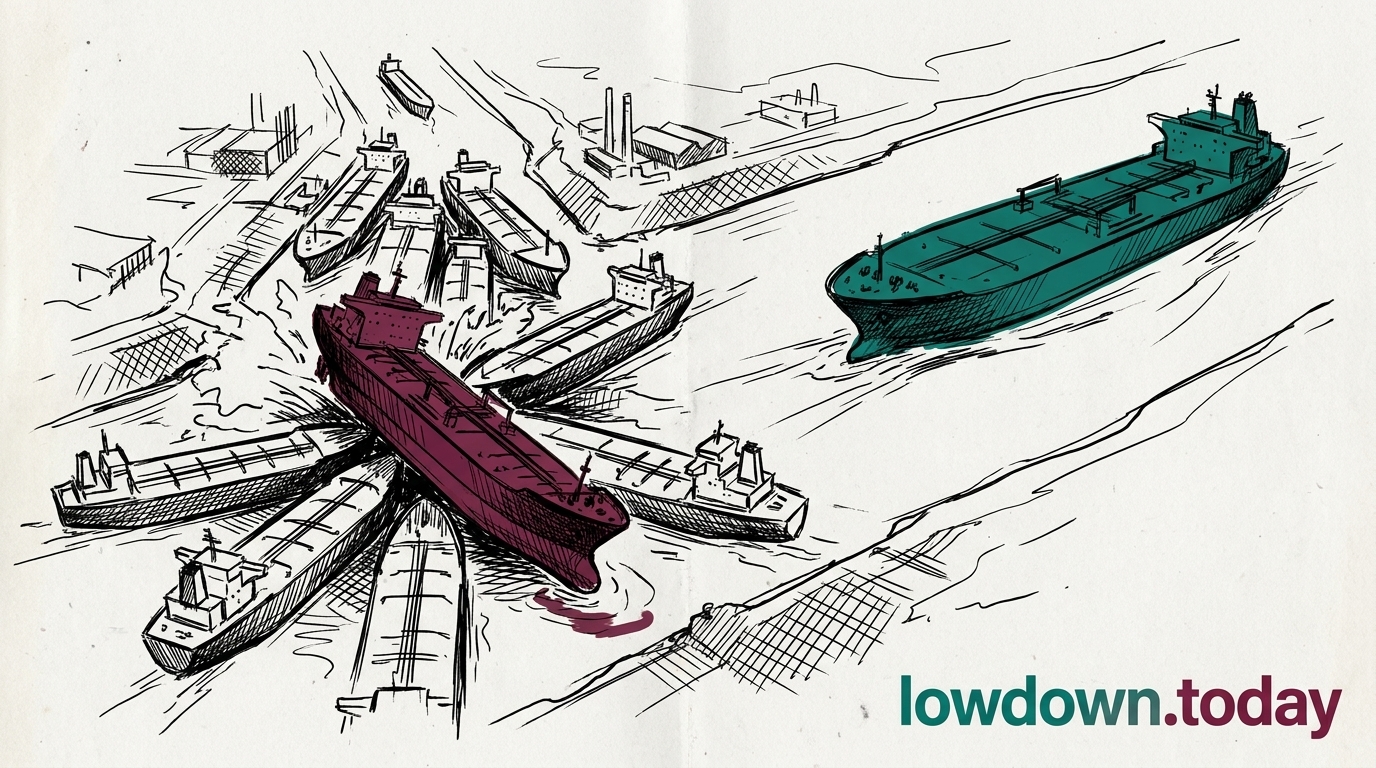
Every major Protection & Indemnity club has cancelled war risk cover for the Gulf. After midnight Thursday, no internationally insured vessel can legally transit the Strait of Hormuz.

EconomicDeveloping
Key takeaway

The P&I withdrawal constitutes a de facto international commercial embargo on Gulf energy exports — one imposed by private actuarial decisions rather than any government, and therefore not reversible by government decree alone.

Gard and NorthStandard, the two largest Protection & Indemnity clubs by insured tonnage, issued cancellation notices on Wednesday for the Persian Gulf, the strait of Hormuz, and Iranian waters. They join American Steamship Owners Mutual P&I, London P&I Club, and Skuld, which issued notices earlier in the week . Lloyd's of London separately classified Iran, The Gulf, and parts of The Gulf of Oman as high-risk zones. Every major P&I club in the global maritime insurance system has now withdrawn cover, effective midnight Thursday 5 March.

P&I insurance is the structural backbone of international shipping. It covers third-party liability — collision, pollution, crew injury, cargo loss. Without it, no port authority will grant entry, no bank will finance a voyage, no flag state will permit a vessel to sail. A tanker without P&I cover is not merely expensive to operate; it is legally inoperable under the International Convention on Civil Liability for Oil Pollution Damage.

During the Iran–Iraq tanker war between 1984 and 1988, when more than 400 commercial vessels were attacked in The Gulf, insurance markets adjusted premiums sharply but never fully withdrew. Lloyd's war risk premiums reached 7.5% of hull value at that conflict's peak. A complete withdrawal of all major P&I clubs from an entire maritime region has no precedent in the modern insurance market.

VLCC daily freight rates had already hit $423,736 — an all-time record exceeding the 1991 Gulf War peak . Hormuz traffic was down 80% from pre-conflict levels . After midnight Thursday, the remaining traffic faces a binary choice: sail uninsured — which no major shipping line or flag state will permit — or stop. President Trump's government-backed insurance through the Development Finance Corporation covers political risk but does not replace P&I liability cover; they are different products addressing different legal requirements. Reinstatement after hostilities cease requires a full syndicated risk reassessment by each club's underwriting committee — a process that historically takes weeks, not days.


Deep Analysis

In plain English

Ships need two kinds of insurance to operate commercially: one that covers the ship itself from war damage, and another (P&I) that covers liability if the ship damages something else — a port, another vessel, or the environment. The companies providing both have now all cancelled coverage for the Gulf. Without insurance, banks won't finance the cargo, and ship owners won't risk losing a vessel worth $100-200 million with no cover. The US government promised to back insurance and provide naval escorts — but the Navy itself has confirmed it doesn't currently have enough ships to run an escort programme. The result is that the promise cannot be fulfilled in time to prevent commercial shipping through the Gulf from stopping almost entirely after Thursday midnight.

Deep Analysis
Synthesis

The P&I withdrawal achieves through private market mechanics what deliberate sanctions regimes rarely accomplish: a near-total commercial embargo without a single government imposing it. This mechanism — private actuarial decisions creating collective action that states cannot easily reverse — is novel in its effectiveness and in its immunity to diplomatic resolution. No ceasefire announcement, by itself, restores cover; underwriters will require a demonstrated period of stability before reinstatement, creating a commercial lag even after any political settlement.

Root Causes

The US Navy's convoy capacity gap reflects two structural constraints: (1) post-Cold War fleet reductions have left the US with approximately 290 battle-force ships versus the 600-ship Reagan-era fleet, with carrier strike groups already committed to the theatre leaving minimal surge capacity; (2) convoy escort requires not just surface combatants but organic ASW capability, minesweeping assets, and maritime patrol aircraft — a combined-arms commitment that cannot be rapidly assembled without drawing down other global commitments. The DFC insurance pledge was announced without coordination with the Navy on operational feasibility, creating the credibility gap the Navy's statement has now exposed.

What could happen next?
3 consequence1 meaning1 risk1 precedent
  • Consequence

    Gulf energy exports face near-complete commercial cessation after midnight Thursday absent an operational naval escort programme the US Navy has confirmed does not currently exist.

    Immediate · Assessed
  • Consequence

    South Korean and Japanese strategic petroleum reserves — approximately 50 and 90 days respectively at normal consumption — will begin drawdown within days, creating a government-level response imperative within weeks.

    Short term · Assessed
  • Consequence

    Cape of Good Hope rerouting will absorb tanker capacity and raise freight rates globally, affecting non-Gulf shipping lanes.

    Short term · Assessed
  • Meaning

    The trade finance credit freeze — banks will not issue letters of credit without P&I cover — creates a dual-barrier embargo that government insurance pledges alone cannot resolve.

    Immediate · Assessed
  • Risk

    If the US cannot operationalise the escort programme within 72 hours, the credibility of the Trump pledge collapses, potentially affecting Gulf state confidence in US security guarantees more broadly.

    Short term · Assessed
  • Precedent

    A successfully operationalised government war risk insurance framework would establish a new template for state intervention in shipping markets during conflict — potentially reshaping how future maritime crises are managed.

    Long term · Suggested
First Reported In

Update #18 · First Iranian warship sunk since 1988

CNBC· 4 Mar 2026
Read original
Different Perspectives
US money managers (CFTC-tracked)
US money managers had trimmed WTI net long positioning into July's rally, doubting the Hormuz premium would hold without freight or war-risk confirmation, and the crude stock build reported for the week to 17 July gives that scepticism a fundamentals basis. The 25 July CFTC data will show whether Brent's move above $100 changed their calculus.
Asian distillate buyers (Singapore)
Singapore's distillate holders kept retaining middle-distillate barrels as the East-West arbitrage window narrowed further this week, a pattern that sharpened as Fujairah light distillates hit a record low. Cargoes are being held rather than released west into the tightening Mediterranean market.
Bulgaria
Bulgaria
Bulgaria secured the removal of Lukoil founder Vagit Alekperov and Patriarch Kirill from the 21st package, with President Rumen Radev calling a personal listing 'shooting ourselves in the foot'. Sofia is protecting its position in Lukoil's EUR 3bn compensation claim over the 2023 Neftohim Burgas nationalisation.
Russia
Russia
Russia loses the roughly $14 a barrel of legal headroom the price-cap formula would have released toward $58, even as Urals continues trading below Moscow's $59 budget floor. The shadow-fleet insurance workaround that lets sanctioned crude clear above $44 in practice remains untouched by the freeze itself.
European Union
European Union
The EU adopted its 21st sanctions package on 23 July, freezing the $44 Russia oil cap for 12 months rather than letting the formula drift it toward $58, and listed shadow-fleet support vessels for the first time. The package cleared only after three failed Coreper votes.
Marine war-risk underwriters (Lloyd's-linked syndicates)
War-risk syndicates lifted southern Red Sea hull premiums 150% to about 0.75% of hull value after the 20 July blockade declaration, still a seventh of the roughly 5% Hormuz band. Underwriters reset on realised loss, not declared threat, so the 23 July Encelia and Layla strikes set up the next re-mark.