Skip to content
You can now search across every topic, entity and event.What's new
European Oil Markets
16JUL

Vance, Ghalibaf named but pen stays dry

3 min read
09:39UTC

JD Vance was named to sign in Geneva and Mohammad Bagher Ghalibaf remotely from Tehran, yet the White House register stayed blank on Iran past 12 June.

EconomicDeveloping
Key takeaway

Signatories, transport planes and mediators all moved into place, but no Iran instrument reached the executive register.

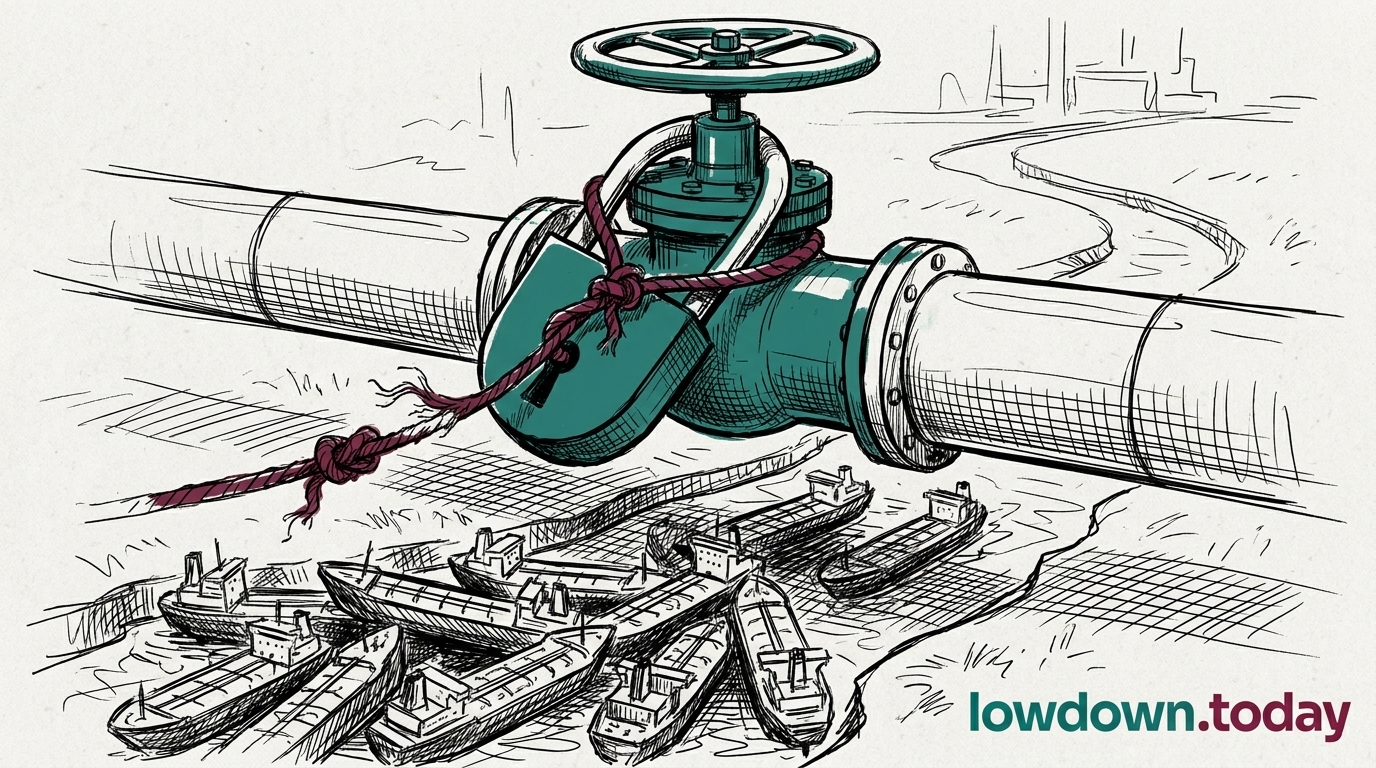
Vice-President JD Vance was named to sign the Iran memorandum in Geneva in person and parliament speaker Mohammad Bagher Ghalibaf to sign remotely from Tehran, yet the White House Presidential Actions register, the official log of US executive instruments, carried nothing on Iran past 12 June 1. Four US Air Force C-17 transport aircraft had left for Europe on Thursday carrying equipment for Vance's possible travel. Qatari negotiators flew to Tehran on Sunday morning to close the remaining gaps.

Donald Trump said the memorandum of understanding (MoU) would be signed Sunday and the strait of Hormuz would reopen immediately. The register told the other half of the story: no executive order, no memorandum, no proclamation on Iran, its most recent entries a Flag Day proclamation and a homeownership-month notice 2. Iran's foreign ministry spokesman Esmaeil Baghaei said Tehran had not taken a final decision and a signing might come in the days ahead, not Sunday.

This is the third weekend a signing has been named and not delivered. Trump touted an unsigned memorandum on 12 June and claimed highest-level Iranian approval from an approver unreachable at deal speed . The same day, four principals gave four contradictory accounts of where the deal stood . The pattern has held: the closer the ceremony gets, the more its moving parts are described and the longer the paper stays blank. The difference this weekend is that the parts are physical, planes and shuttle diplomacy rather than statements, which is why the slip reads as friction rather than vapour.


Deep Analysis

In plain English

Both sides named the people who would sign the deal: US Vice-President JD Vance would travel to Geneva in person, while Iran's parliament speaker Mohammad Bagher Ghalibaf would sign remotely from Tehran. Four US military transport planes flew to Europe in preparation. But by Sunday, no signing happened. Iran's foreign ministry said Tehran had not yet made a final decision. The official US website where the President publishes executive orders and agreements showed nothing new about Iran since 12 June. Qatar flew negotiators into Tehran on Sunday morning to try to close the remaining gaps. This is the pattern of the past week: logistics and names advance, but no paper appears.

Deep Analysis
Root Causes

Iran's constitution assigns war-and-peace authority to the Supreme Leader, not the parliament speaker. Ghalibaf signing remotely from Tehran rather than physically travelling to Geneva signals that constitutional constraints are the binding factor, separate from any logistical explanation. The Speaker is the third-ranking constitutional figure; his signing authority over a foreign affairs instrument of this magnitude is constitutionally ambiguous without explicit Khamenei delegation.

The four C-17s departing for Europe represent genuine operational pre-positioning: these aircraft carry the secure communications and support equipment that a Vice-Presidential ceremony requires. Their departure created a political commitment the US side is unwilling to abandon without a document.

What could happen next?
  • Risk

    IRGC commander Vahidi's faction retains a veto over Ghalibaf's signing authority; a blank register by Monday morning would confirm the corps has not cleared the text and the ceremony window has closed.

    Immediate · Assessed
  • Consequence

    Four C-17s positioned in Europe without a ceremony creates a domestic US optics problem: the administration must either produce a document or withdraw the aircraft, making the next 24-48 hours a decision point.

    Immediate · Assessed
  • Meaning

    Ghalibaf's remote signing format, if accepted, would establish a precedent that Iran can execute foreign affairs instruments without the parliament physically present in the signatory state, weakening the legal weight of the MoU.

    Short term · Reported
First Reported In

Update #127 · US drops red line; signature still slips

Al Jazeera· 14 Jun 2026
Read original
Different Perspectives
Indian refiners
Indian refiners
Indian refiners kept lifting discounted Urals as the India/Baltic price split widened past $9-10 a barrel, a gap that only grows as GL X1's Iranian wind-down cuts an alternative discounted grade off the market by 17 July. Cheaper Russian feedstock is being locked in while it lasts.
Chinese refiners
Chinese refiners
Chinese refiners gain leverage as the Urals-Brent discount widens, since Beijing's state buyers already source discounted Russian barrels near the fiscal floor unaffected by Western insurance costs. A wider discount, if it holds past 23 July, lets them lock in cheaper term contracts regardless of the cap's outcome.
US money managers (CFTC-tracked)
Managed money trimmed WTI net length into the rally, positioning that reflects doubt the Hormuz premium survives without freight or war-risk confirmation. The Brent-WTI spread widening almost entirely on the Brent leg supports that scepticism about a broad-based repricing.
OPEC+ (Saudi-led subgroup)
Saudi Arabia is defending market share through a fourth straight 188kbd August hike even as OPEC's own July MOMR cut 2026 demand growth for the fourth consecutive month. At a $108-111 fiscal breakeven, every added barrel costs Riyadh revenue it cannot recoup, so the hike reads as a positioning signal, not a demand bet.
Greek shipping registries
Greece, backed by Cyprus and Malta, is pushing a three-month cap-freeze compromise against the Commission's freeze to January 2027 ahead of the 23 July vote. Athens' and Valletta's combined tanker registrations mean a shorter review gives their insurers more frequent chances to reprice risk on Russian cargoes.
Russia (Deputy PM Alexander Novak)
Novak extended the diesel export restriction to producers on 8 July, the first producer-binding curb of the war, protecting the domestic pump price ahead of any refinery repair timeline. Urals still trades below Russia's $59 budget floor even as Brent gained, so the ban trades export revenue for fiscal stability at home.