Skip to content
You can now search across every topic, entity and event.What's new
European Oil Markets
16JUL

IRGC declares Hormuz shut a second time

3 min read
09:39UTC

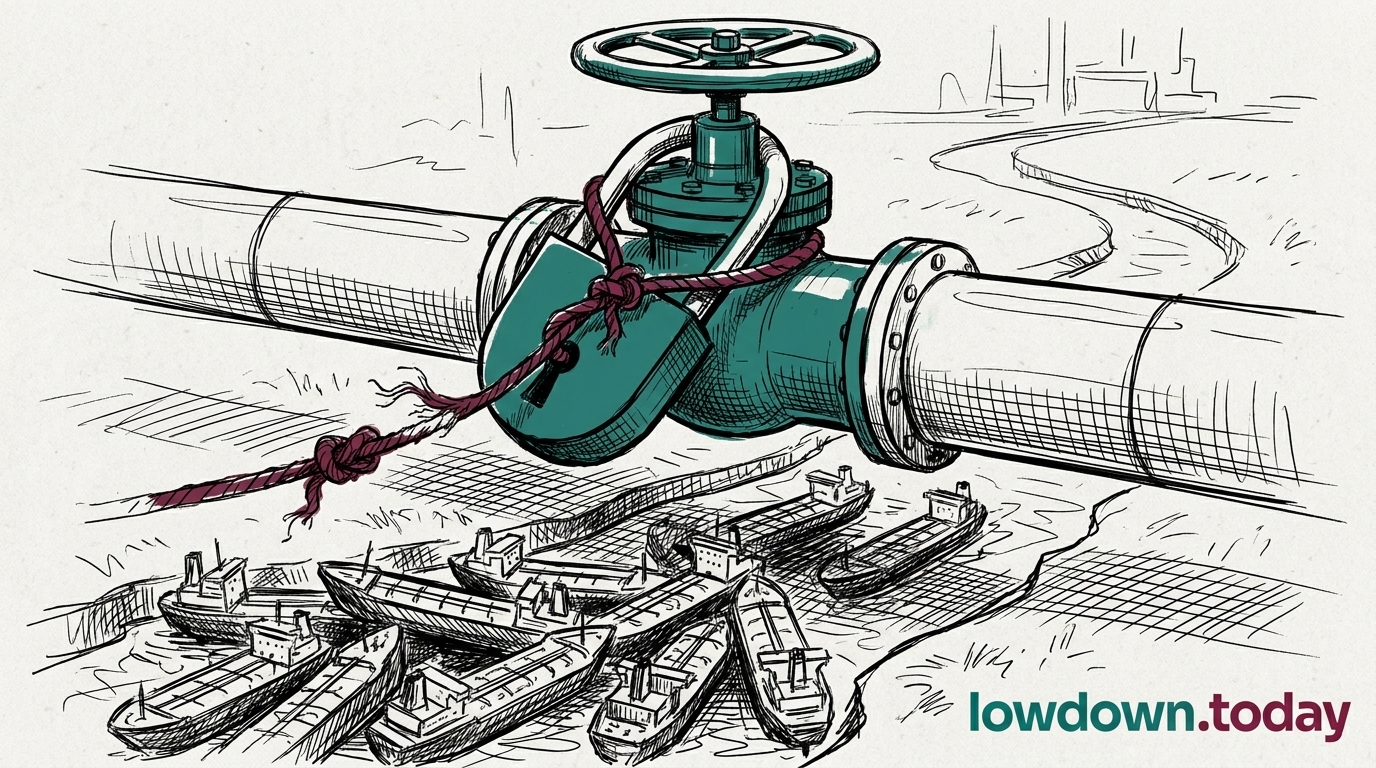
The IRGC's Khatam al-Anbia command declared the Strait of Hormuz closed on 20 June, its second such order of the war. CENTCOM rejected it within hours.

EconomicDeveloping
Key takeaway

Iran shut Hormuz over a deal Israel never signed, making the closure leverage on Washington.

Iran's Khatam al-Anbia Central Headquarters, the operational command of the Islamic Revolutionary Guard Corps (IRGC), declared the Strait of Hormuz closed on Saturday 20 June and called the move "the first step of response to the enemy's breach of trust" 1. The order came from the corps, not from Iran's Foreign Ministry. IRGC boats told all commercial shipping to stay clear. The stated grounds were that Israeli strikes in Lebanon broke Article 1 of the Islamabad Memorandum of Understanding (MoU), the deal Iran and the US signed on 15 June under Pakistani and Qatari mediation.

This is the IRGC's second Hormuz closure declaration of the war. The first came on 11 June, an order US Central Command (CENTCOM) also rejected at the time. CENTCOM rejected this one too: spokesman Navy Captain Tim Hawkins said "Iran does not control the strait of Hormuz" 2, and reported commercial traffic continuing to move. The pattern is now set across two declarations in nine days, with the corps closing the waterway by announcement and the transit data answering back.

The closure exposes the same fracture visible at the Switzerland talks the next day, where Araghchi and Ghalibaf were negotiating the MOU even as the corps declared its central provision void. Khamenei has not appeared in public since 8 March and communicates by sealed courier, so the corps runs the war while the civilian ministry runs the diplomatic track. The two arms of the Iranian state point in opposite directions on the same calendar day.

Article 1 of the MOU governs the ceasefire, and Iran's case is that Israel's Lebanon offensive broke it. Yet Israel never signed the MOU and rejected its terms outright . Iran is invoking a breach of a deal by a government that is not party to it, which makes the closure a pressure instrument aimed at Washington over Lebanon rather than a maritime measure with a legal spine.


Deep Analysis

In plain English

The Strait of Hormuz is a narrow waterway between Iran and Oman. About 20% of the world's oil passes through it. Iran's military, the Islamic Revolutionary Guard Corps, or IRGC, declared the strait closed on 20 June. This was the second time during the current conflict that the IRGC had made this declaration; the first was on 11 June. The US military (called CENTCOM) rejected the declaration and said shipping continued. This is possible because most vessels are now using a different route, through waters controlled by Oman, not Iran. The IRGC's closing order does not physically stop ships from using that Omani corridor. The declaration functions as a political and legal threat more than a physical barrier.

Deep Analysis
Root Causes

The IRGC's Khatam al-Anbia HQ cited Article 1 of the Islamabad MOU as breached by Israeli Lebanon strikes. Israel never signed the MOU. The structural root cause is a treaty architecture that binds Iran and the US but cannot bind Israel, creating a legal trigger Iran can pull whenever Israel acts in Lebanon without Washington's ability to prevent the trigger from firing.

Khatam al-Anbia HQ's second closure also serves an internal purpose. Hardline IRGC factions needed visible evidence that the corps did not capitulate when the civilian government signed the MOU. Each closure declaration, whether enforced or not, preserves the corps's institutional standing inside Iran's war leadership.

Escalation

Two closures in ten days, both rejected by CENTCOM, both failing to affect the price of Brent materially. The IRGC's closure declarations are losing credibility with oil markets even if they retain legal and political weight for the diplomats. The risk of a third closure, or one that targets the Omani corridor specifically, remains.

What could happen next?
  • Risk

    A third IRGC closure declaration specifically threatening the Omani corridor, rather than the TSS lanes, would force CENTCOM into a direct confrontation with Iran over a route it has publicly cleared.

    Short term · Suggested
  • Precedent

    The MOU's Article 1 mechanism, which lets Iran cite Israeli Lebanon actions as a US obligation breach, creates a legal architecture Iran can activate as long as Israel operates in Lebanon.

    Medium term · Assessed
  • Consequence

    Washington must now either pressure Israel to halt Lebanon operations, which Netanyahu has refused, or accept that Iran will periodically re-close Hormuz under MOU cover.

    Short term · Reported
First Reported In

Update #134 · Hormuz shuts as Vance flies to Geneva

Tasnim News Agency· 21 Jun 2026
Read original
Different Perspectives
Indian refiners
Indian refiners
Indian refiners kept lifting discounted Urals as the India/Baltic price split widened past $9-10 a barrel, a gap that only grows as GL X1's Iranian wind-down cuts an alternative discounted grade off the market by 17 July. Cheaper Russian feedstock is being locked in while it lasts.
Chinese refiners
Chinese refiners
Chinese refiners gain leverage as the Urals-Brent discount widens, since Beijing's state buyers already source discounted Russian barrels near the fiscal floor unaffected by Western insurance costs. A wider discount, if it holds past 23 July, lets them lock in cheaper term contracts regardless of the cap's outcome.
US money managers (CFTC-tracked)
Managed money trimmed WTI net length into the rally, positioning that reflects doubt the Hormuz premium survives without freight or war-risk confirmation. The Brent-WTI spread widening almost entirely on the Brent leg supports that scepticism about a broad-based repricing.
OPEC+ (Saudi-led subgroup)
Saudi Arabia is defending market share through a fourth straight 188kbd August hike even as OPEC's own July MOMR cut 2026 demand growth for the fourth consecutive month. At a $108-111 fiscal breakeven, every added barrel costs Riyadh revenue it cannot recoup, so the hike reads as a positioning signal, not a demand bet.
Greek shipping registries
Greece, backed by Cyprus and Malta, is pushing a three-month cap-freeze compromise against the Commission's freeze to January 2027 ahead of the 23 July vote. Athens' and Valletta's combined tanker registrations mean a shorter review gives their insurers more frequent chances to reprice risk on Russian cargoes.
Russia (Deputy PM Alexander Novak)
Novak extended the diesel export restriction to producers on 8 July, the first producer-binding curb of the war, protecting the domestic pump price ahead of any refinery repair timeline. Urals still trades below Russia's $59 budget floor even as Brent gained, so the ban trades export revenue for fiscal stability at home.