Skip to content
You can now search across every topic, entity and event.What's new
European Oil Markets
16JUL

CENTCOM rewrites blockade scope before enforcement begins

2 min read
09:39UTC

Someone between the presidential bedroom and Central Command headquarters rewrote the blockade from a full-strait closure to an Iranian-port restriction before a single vessel was turned away.

EconomicDeveloping
Key takeaway

The military narrowed the president's order before enforcing it, creating two competing legal frameworks.

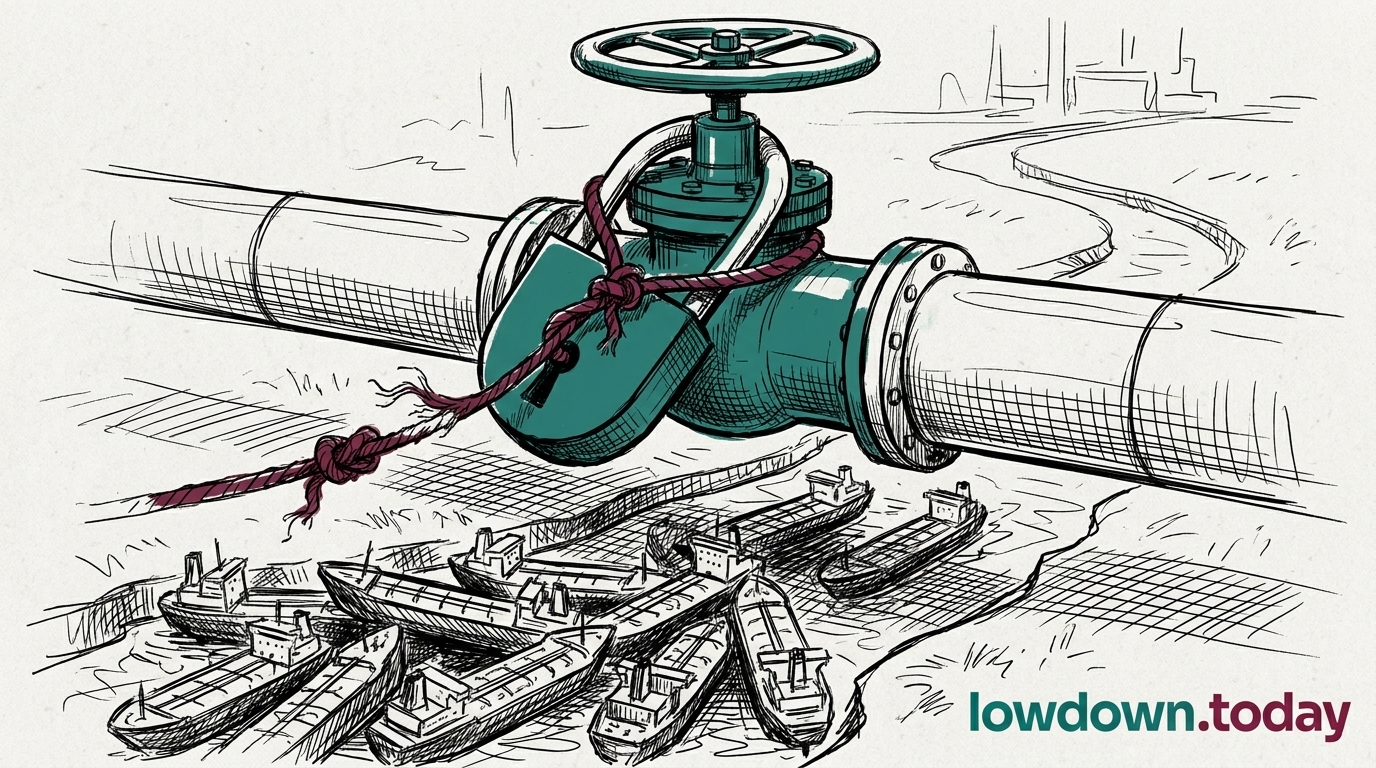
CENTCOM (US Central Command) began enforcing the blockade at 2pm GMT, but its operational order does not match the president's words. Trump ordered a blockade of "any and all Ships" in the strait. CENTCOM restricted enforcement to vessels entering or departing Iranian ports, with an explicit carve-out for non-Iranian-port traffic. The two positions are irreconcilable.

The narrowing reflects a legal calculation. Blocking an international strait without formal authority or allied consent violates UNCLOS in ways the administration cannot easily defend. Blocking Iranian ports is closer to the 1962 Cuban quarantine precedent, though Kennedy's quarantine had a formal presidential proclamation.

The practical distinction may not matter. IRGC (Islamic Revolutionary Guard Corps) mine corridors control who transits the strait , and CENTCOM's blockade controls what arrives at Iranian ports. Commercial shippers face competing jurisdictional claims over the same chokepoint. Hormuz traffic had recovered from single digits to double digits by Saturday . It fell back toward zero once enforcement began. The IRGC called the blockade "an illegal act" and "piracy."


Deep Analysis

In plain English

Trump's social media post said the US Navy would stop all ships entering or leaving the entire Strait of Hormuz , the narrow waterway through which a fifth of the world's oil travels. That would mean stopping ships from Japan, China, France, and dozens of other countries that have nothing to do with Iran. By the time the military actually put the order into effect, they had rewritten it to only cover ships going to and from Iranian ports , a much narrower scope. A Japanese oil tanker heading for Kuwait could still technically pass through. The problem: no one officially announced this change. Trump's post still says one thing; the military is enforcing something different. Shipping companies, flag states, and allied governments do not know which version is operational.

Deep Analysis
Root Causes

The CENTCOM narrowing reflects a specific structural tension in US civil-military relations: the military can execute, but it also has independent legal obligations under the Uniform Code of Military Justice and international law of armed conflict. A flag officer who enforces an order that constitutes a manifest violation of international law has personal legal exposure.

The strait-to-port narrowing is the minimum modification required to move the blockade from 'clear UNCLOS violation' to 'legally arguable.' Port blockades have some precedent under the 1909 Declaration of London and the customary law of naval warfare. Transit-passage prohibition in an international strait does not.

What could happen next?
  • Risk

    Any CENTCOM officer who intercepts a vessel under the tweet's full-strait order, or any officer who declines to intercept under the same tweet, is acting without clear authority , creating individual legal exposure and command confusion at sea.

    Immediate · 0.85
  • Consequence

    The gap between presidential order and military execution will be cited by allied governments as evidence that the US command structure is unreliable , compounding the diplomatic damage of the blockade itself.

    Short term · 0.78
  • Meaning

    CENTCOM's narrowing is the fourth instance of the military modifying a presidential Hormuz ultimatum before enforcement, establishing a durable pattern of operational restraint within a rhetorically escalatory posture.

    Medium term · 0.8
First Reported In

Update #67 · Trump blockades Iran on a tweet

CENTCOM / Al Jazeera· 13 Apr 2026
Read original
Causes and effects
This Event
CENTCOM rewrites blockade scope before enforcement begins
The gap between presidential order and military execution leaves commercial shippers unable to determine which authority governs their passage through Hormuz.
Different Perspectives
Indian refiners
Indian refiners
Indian refiners kept lifting discounted Urals as the India/Baltic price split widened past $9-10 a barrel, a gap that only grows as GL X1's Iranian wind-down cuts an alternative discounted grade off the market by 17 July. Cheaper Russian feedstock is being locked in while it lasts.
Chinese refiners
Chinese refiners
Chinese refiners gain leverage as the Urals-Brent discount widens, since Beijing's state buyers already source discounted Russian barrels near the fiscal floor unaffected by Western insurance costs. A wider discount, if it holds past 23 July, lets them lock in cheaper term contracts regardless of the cap's outcome.
US money managers (CFTC-tracked)
Managed money trimmed WTI net length into the rally, positioning that reflects doubt the Hormuz premium survives without freight or war-risk confirmation. The Brent-WTI spread widening almost entirely on the Brent leg supports that scepticism about a broad-based repricing.
OPEC+ (Saudi-led subgroup)
Saudi Arabia is defending market share through a fourth straight 188kbd August hike even as OPEC's own July MOMR cut 2026 demand growth for the fourth consecutive month. At a $108-111 fiscal breakeven, every added barrel costs Riyadh revenue it cannot recoup, so the hike reads as a positioning signal, not a demand bet.
Greek shipping registries
Greece, backed by Cyprus and Malta, is pushing a three-month cap-freeze compromise against the Commission's freeze to January 2027 ahead of the 23 July vote. Athens' and Valletta's combined tanker registrations mean a shorter review gives their insurers more frequent chances to reprice risk on Russian cargoes.
Russia (Deputy PM Alexander Novak)
Novak extended the diesel export restriction to producers on 8 July, the first producer-binding curb of the war, protecting the domestic pump price ahead of any refinery repair timeline. Urals still trades below Russia's $59 budget floor even as Brent gained, so the ban trades export revenue for fiscal stability at home.