Skip to content
You can now search across every topic, entity and event.What's new
European Oil Markets
6JUL

Iran FM: we never asked for a ceasefire

3 min read
09:52UTC

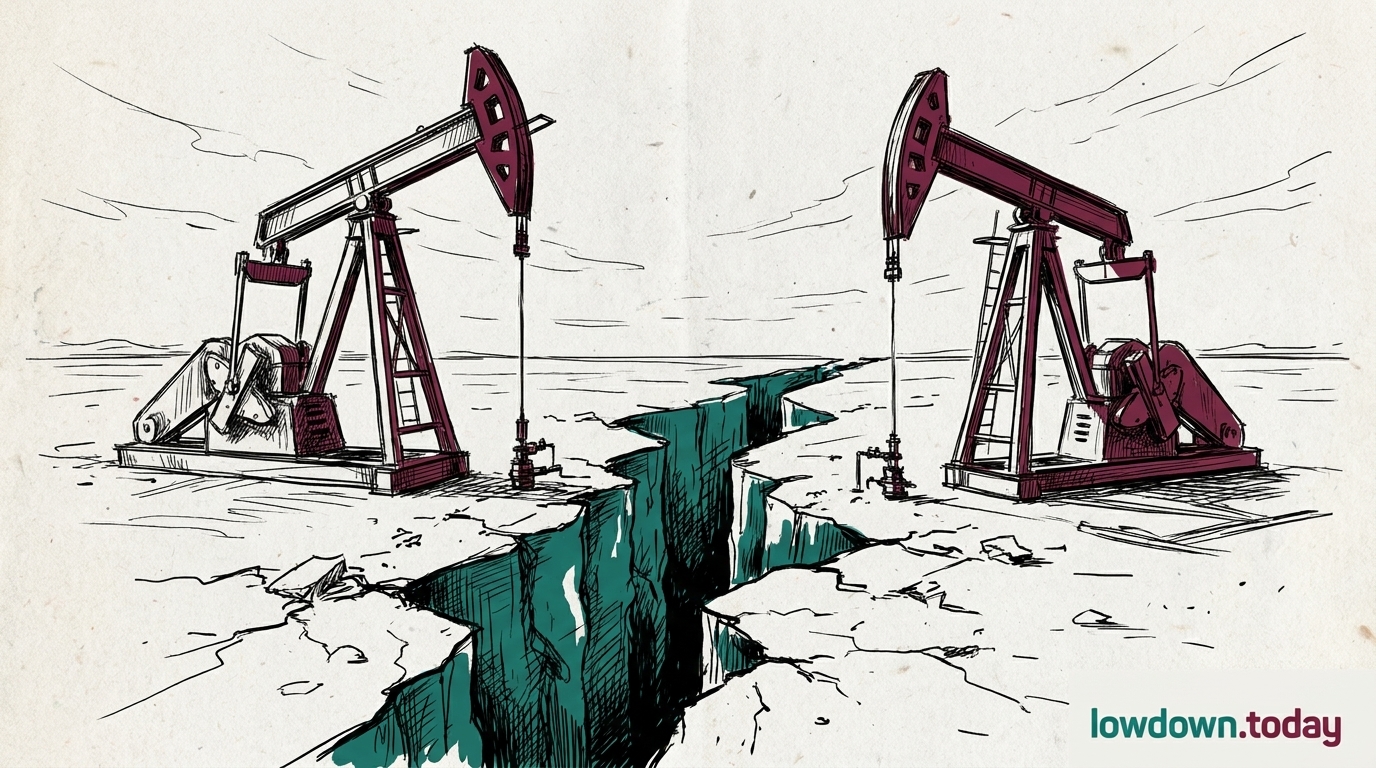
Iran's foreign minister flatly denied ever seeking a ceasefire, contradicting Trump and exposing the unresolved fracture between Tehran's civilian government and its revolutionary command.

EconomicDeveloping
Key takeaway

Iran's civilian-IRGC split makes Araghchi's denial simultaneously credible and strategically irrelevant.

Iranian Foreign Minister Abbas Araghchi told CBS's Face the Nation on Sunday: "No, we never asked for a ceasefire, and we have never asked even for negotiation" 1. The statement directly contradicts President Trump, who claimed last week that Tehran "wants to make a deal" .

Araghchi is not a minor official improvising. He was a member of the Iranian team that negotiated the 2015 nuclear deal and has spent decades in the diplomatic service. He knows how to hedge — and chose not to. His phrasing was categorical: not "we are not asking now" but "we never asked." The denial is retroactive, designed to close off any impression that Tehran initiated or welcomed contact.

The question is whom Araghchi speaks for. Iran's dual-power structure has produced contradictory signals since the war's first week. President Pezeshkian outlined three ceasefire conditions — recognition of Iran's "legitimate rights," reparations, and binding security guarantees — in calls with Pakistan and Russia on 11 March . Pezeshkian ordered a halt to Gulf strikes on 7 March; the IRGC ignored him within hours, and Parliament Speaker Ghalibaf publicly reversed the commitment 2. The civilian government and the revolutionary command operate on separate channels. Araghchi's CBS appearance may reflect the foreign ministry closing ranks with the IRGC under fire — or it may reflect the plain fact that the foreign ministry does not control the IRGC's decision-making and never has.

For Washington, the practical consequence is the same either way: no diplomatic off-ramp is currently visible. Trump's claim that Iran wanted a deal may have been based on backchannel signals, domestic political messaging, or both. Araghchi's public denial makes it harder for either side to pursue quiet contact without contradicting its own leadership. The 2015 nuclear deal required eighteen months of secret talks in Oman before becoming public — and those talks depended on a degree of internal Iranian consensus, between President Rouhani's team and Supreme Leader Ali Khamenei, that does not currently exist between Pezeshkian and Mojtaba Khamenei's IRGC. Netanyahu himself acknowledged on 11 March that he did not know whether the Iranian government would fall . The war has no stated end point from either side.

Deep Analysis

In plain English

Iran has two separate centres of power that regularly say contradictory things. The elected president and his foreign minister handle diplomacy and represent Iran internationally. The Revolutionary Guards control military operations and answer to Supreme Leader Khamenei, not the president. When Araghchi says Iran never sought a ceasefire, he may be telling the truth from the civilian government's perspective — but the IRGC conducts the war and makes the binding decisions. This is why Trump's claim that Tehran 'wants a deal' and Araghchi's flat denial can both be simultaneously accurate: they may refer to different Iranian power centres. The problem is that even if the civilian government wanted negotiations, the IRGC demonstrated on 7 March that it can reverse a presidential military order within hours. A ceasefire commitment from Araghchi would not be operationally binding.

Deep Analysis
Synthesis

Araghchi's categorical denial carries less evidential weight than its certainty implies. If the Pezeshkian government had sought a ceasefire, Araghchi could not admit it publicly without triggering IRGC retaliation against civilian authority — as the 7 March episode demonstrated. The denial is therefore structurally required regardless of its factual accuracy, which renders it analytically uninformative about Iran's actual war-termination intentions. The statement tells us about Araghchi's institutional constraints, not Iran's strategic position.

Root Causes

The Islamic Republic's dual-authority structure was constitutionally designed under Velayat-e Faqih to prevent any single faction — including elected governments — from unilaterally making peace or war. The IRGC's operational autonomy has expanded under Khamenei's direct patronage, outpacing formal constitutional channels. This design feature, intended to protect revolutionary institutions from internal capture, now prevents coherent war termination signalling at the exact moment coherence is most needed.

Escalation

The IRGC's demonstrated capacity to override presidential authority — reversing Pezeshkian's Gulf strike halt within hours on 7 March — means Iran's de-escalation capability is structurally impaired independently of diplomatic will. Any ceasefire signal from the civilian government is not operationally binding. This is not a negotiating posture; it is a command architecture failure that makes war termination harder than either side may intend, creating a structural escalation bias.

What could happen next?
  • Risk

    Any back-channel contacts between the Pezeshkian government and US intermediaries could be undermined or reversed by IRGC action at any time, as demonstrated on 7 March.

    Immediate · Assessed
  • Meaning

    Trump's 'wants to make a deal' claim and Araghchi's denial may both be accurate if they reference different Iranian power centres, making the apparent contradiction less informative than it appears.

    Immediate · Suggested
  • Consequence

    Iran's inability to make binding ceasefire commitments through its civilian channel extends the period before any negotiated pause is achievable, regardless of the volume of diplomatic contacts.

    Short term · Assessed
  • Precedent

    If Iran ultimately accepts a ceasefire negotiated through civilian channels, the IRGC's acquiescence will require visible military justification — establishing a pattern where Iran can only exit wars after demonstrable battlefield reversal reaches Khamenei directly.

    Long term · Suggested
First Reported In

Update #37 · Six more weeks of strikes; Hormuz deal dead

Al Jazeera· 16 Mar 2026
Read original
Causes and effects
This Event
Iran FM: we never asked for a ceasefire
Eliminates the only diplomatic off-ramp Trump publicly claimed existed. With Iran's foreign minister categorically denying interest in talks, and the civilian-IRGC split producing contradictory signals on whether Iran even has a unified negotiating position, no visible pathway to negotiation exists as the war enters its third week.
Different Perspectives
Indian refiners
Indian refiners
Indian refiners kept lifting discounted Urals as the India/Baltic price split widened past $9-10 a barrel, a gap that only grows as GL X1's Iranian wind-down cuts an alternative discounted grade off the market by 17 July. Cheaper Russian feedstock is being locked in while it lasts.
Chinese refiners
Chinese refiners
Chinese refiners gain leverage as the Urals-Brent discount widens, since Beijing's state buyers already source discounted Russian barrels near the fiscal floor unaffected by Western insurance costs. A wider discount, if it holds past 23 July, lets them lock in cheaper term contracts regardless of the cap's outcome.
US money managers (CFTC-tracked)
Managed money trimmed WTI net length into the rally, positioning that reflects doubt the Hormuz premium survives without freight or war-risk confirmation. The Brent-WTI spread widening almost entirely on the Brent leg supports that scepticism about a broad-based repricing.
OPEC+ (Saudi-led subgroup)
Saudi Arabia is defending market share through a fourth straight 188kbd August hike even as OPEC's own July MOMR cut 2026 demand growth for the fourth consecutive month. At a $108-111 fiscal breakeven, every added barrel costs Riyadh revenue it cannot recoup, so the hike reads as a positioning signal, not a demand bet.
Greek shipping registries
Greece, backed by Cyprus and Malta, is pushing a three-month cap-freeze compromise against the Commission's freeze to January 2027 ahead of the 23 July vote. Athens' and Valletta's combined tanker registrations mean a shorter review gives their insurers more frequent chances to reprice risk on Russian cargoes.
Russia (Deputy PM Alexander Novak)
Novak extended the diesel export restriction to producers on 8 July, the first producer-binding curb of the war, protecting the domestic pump price ahead of any refinery repair timeline. Urals still trades below Russia's $59 budget floor even as Brent gained, so the ban trades export revenue for fiscal stability at home.
