Skip to content
Welcome, thoughtbot's Giant Robots listeners!Start here
European Oil Markets
6JUL

GL X prices relief Europe cannot buy

3 min read
09:52UTC

OFAC's General License X reopened Iranian crude for Asian buyers on 22 June and sent Brent toward a three-month low near $73, but EU and UK sanctions bar European refiners from lifting a single barrel of it.

EconomicDeveloping
Key takeaway

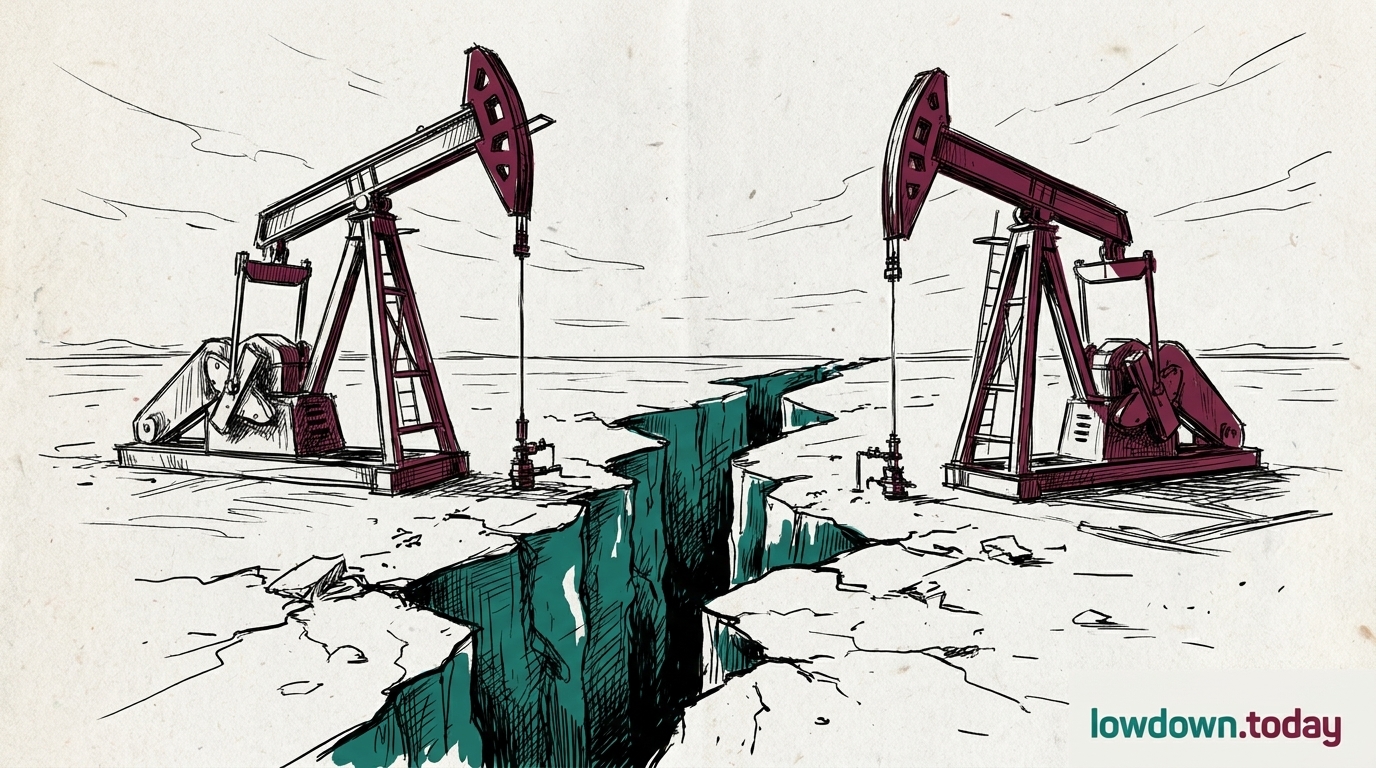
US sanctions relief Europe cannot legally use widens the gap between flat Brent and European product cracks.

OFAC issued Iran-related General License X (GL X) on Monday 22 June, authorising the production, sale, delivery and shipping of Iranian crude with dollar payments through 21 August⁠1. Crude desks read it as a global supply event and sold Brent toward a three-month low near $73, extending the slide from $78.96 a week earlier. European refiners cannot lift a single barrel of it.

EU Regulation 833/2014, the sanctions framework that bars European firms from buying Iranian crude, is not overridden by a US general licence, and UK sanctions hold the same line⁠2. Asian and Indian refiners can take the freed barrels; European firms cannot. ARA and Mediterranean desks face the same distillate shortage they carried last week, now at a lower flat price.

The barrels GL X frees are lawful for an Indian buyer and unlawful for an Italian one. Flat Brent cannot tell the two apart and prices the global barrel down; the ICE Gasoil crack prices the barrel Europe is actually allowed to run, which has not loosened. A desk holding the gasoil crack against flat Brent is positioned for that split to widen.

Deep Analysis

In plain English

Oil sanctions work through two legally separate systems that are not coordinated with each other. The US system is run by OFAC, part of the US Treasury, and binds on US companies and anyone using the US dollar clearing system. The European system is run under EU law and binds on European companies and banks, regardless of what the US allows. On 22 June, OFAC issued General License X allowing Iranian crude to be bought, sold, and shipped. This was part of the ongoing US-Iran diplomatic process. Asian refineries in China, India, and South Korea, which are not subject to EU law, can now legally purchase Iranian crude at a significant discount to market prices. However, European refineries in the Netherlands, Germany, Italy, and France are still banned from buying Iranian crude under EU Regulation 833/2014 and UK sanctions. These European rules apply regardless of what the US allows. So when Brent Crude fell to $73, that price move was the market pricing in more supply from Iran. But European refiners cannot buy any of it. For them, diesel and heating oil remain exactly as scarce as they were before GL X was issued. The ICE Gasoil future, the European diesel benchmark, stayed elevated relative to the lower Brent price precisely because European buyers are excluded from the supply relief.

Deep Analysis
Root Causes

EU Regulation 833/2014 (adopted 31 July 2014, extended by Council Regulation 2022/1271 and successive packages through 2025) prohibits EU persons from purchasing, importing, transporting, or providing services related to crude oil or petroleum products of Iranian origin.

Article 3aa as amended in 2022 explicitly includes crude oil from Iran alongside Russia's crude; the regulation does not provide a carve-in mechanism for US general licences, and Article 8 provides for member-state criminal penalties for violations. Any European refiner, trader, or bank providing trade finance for an Iranian cargo faces potential asset freezes and criminal referral to national competent authorities.

UK sanctions under the Russia (Sanctions)(EU Exit) Regulations 2019 and the Iran (Sanctions) Regulations 2023, as amended, separately reproduce this prohibition for UK persons in equivalent terms. The structural result of this legal architecture is a market where the same Iranian barrel is simultaneously authorised for Asian buyers transacting through OFAC-jurisdictional channels and prohibited for European buyers regardless of the price differential.

The ICE gasoil crack against flat Brent will structurally widen as long as this asymmetry persists: European product buyers face the same distillate shortage as before GL X, at a lower flat-price level that has priced in supply they cannot legally access.

What could happen next?
  • Consequence

    The legal access asymmetry between Asian and European buyers for GL X Iranian crude will widen the Brent-Dubai EFS (Exchange of Futures for Swaps) as Iranian barrels price competitively against Gulf crude for Asian buyers but provide no equivalent relief for NWE or Med refiners buying Brent-priced feedstock.

  • Risk

    If the Islamabad framework collapses before 21 August and GL X is revoked, Brent would recover sharply; European refiners would face the same physical shortage at a higher flat price, with no period of relief in between.

First Reported In

Update #11 · Thin Brent book, heavy WTI length into a loaded week

OFAC· 26 Jun 2026
Read original →
Different Perspectives
S&P Global
S&P Global
S&P Global said on 12 November that thin refining buffers leave jet fuel exposed to price spikes in 2027. Its view cuts against the pump-lag case, because tight middle distillates would keep jet and diesel dear even as crude falls.
European Union
European Union
The Commission proposed a 22nd package on 23 November that would list more than 70 more tankers and ban Russia-insured ones, after listing Balance Insurance on 16 November. It needs every member state's vote, so Russian tanker insurance becomes the EU's next test of unanimity.
UK households and hauliers
UK drivers paid 193.29p a litre for diesel in the week of 23 November, DESNZ data show, 31.33p more than petrol, and BoilerJuice quoted heating oil at 96.51p a litre before VAT. They pay the gap that crude's fall has not closed, with motor fuels up 33.2% in October's inflation figures.
Saudi Arabia and the OPEC+ Seven
The OPEC+ Seven held December output at September's level on 1 November, and Saudi Aramco priced December Arab Light to Europe below Brent, Attaqa reported. The full group decides on Sunday 29 November whether about 2m b/d of cuts outlast 2026, with Saudi diesel loadings already up 30% in early November.
Eni
Eni
Eni reported a third-quarter standard refining margin of $28.1 a barrel and raised its full-year assumption from $14 to $18. Its finance chief Francesco Gattei said on the 23 October call that the quarter to date was at $18, press coverage reported, so the refiner sees its windfall shrinking.
Gulf oil producer
Gulf oil producer
Secured OPEC's confirmed 188,000 b/d September increment with the next meeting set for 6 September, but the Secretariat's own 2 August release says nothing about the fourth quarter. Output guidance beyond September remains undisclosed even as delegate sourcing keeps filling that gap.

Written with AI from Lowdown's published reporting. Not individually reviewed by an editor. Editorial standards.
