Skip to content
You can now search across every topic, entity and event.What's new
European Oil Markets
18JUN

Brent hit a three-month low at $79

4 min read
12:45UTC

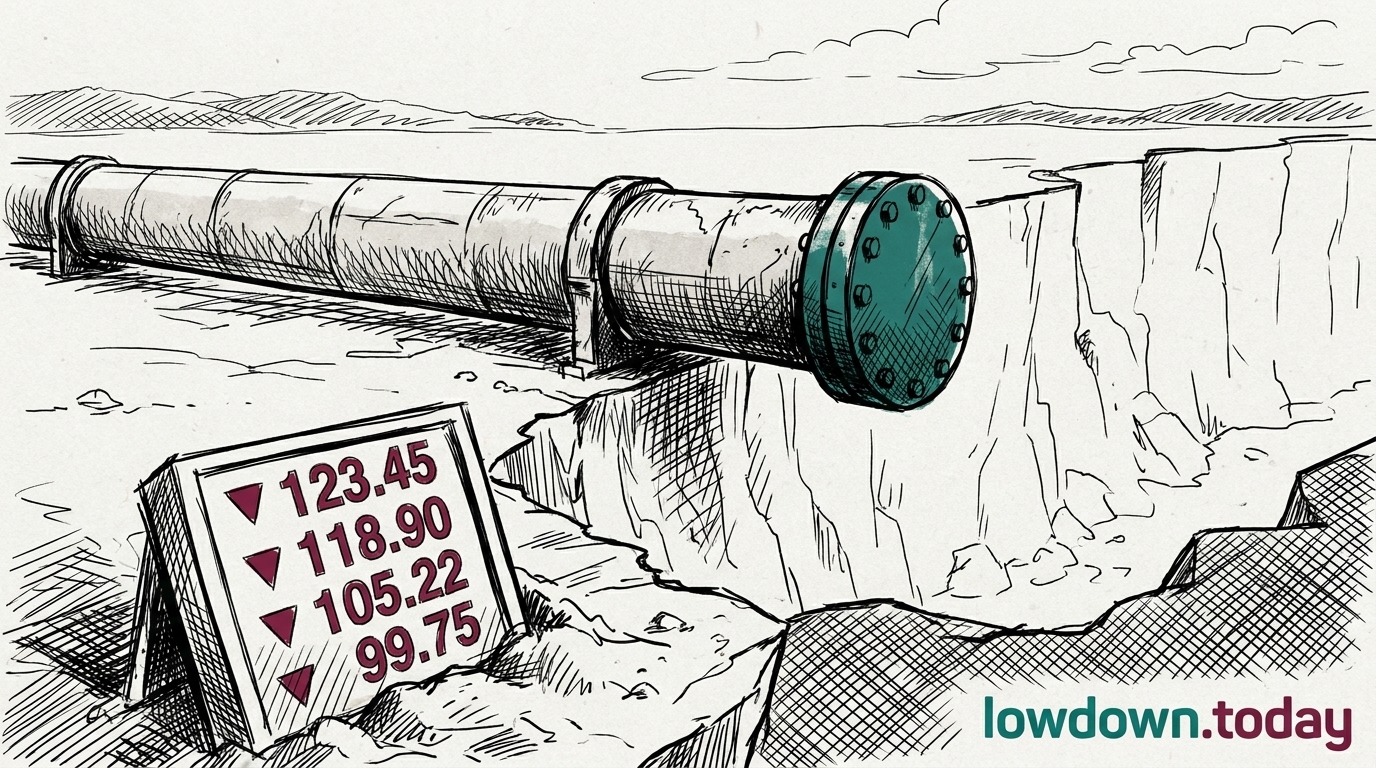
Brent printed $78.96 on 17 June, a three-month low, then fell roughly 2% further toward $77 as WTI traded near $74.82, ending a five-session selloff of the Iran-diplomacy supply story.

EconomicDeveloping
Key takeaway

Brent fell to a three-month low on Iran diplomacy while the sanctions plumbing quietly tightened around it.

Brent Crude, the benchmark that prices roughly two-thirds of internationally traded oil, printed $78.96 on 17 June, a three-month low, then fell about 2% further on 18 June toward $77, with West Texas Intermediate (WTI) near $74.82 1 2. Five consecutive sessions sold the story that Iran diplomacy would release barrels back to the market, unwinding the war premium that built through the Hormuz blockade rather than registering any fresh supply.

The contradiction is that the flat price fell in the same week two genuine Russian-supply tightenings landed: the GL 134C vessel-services lapse on 17 June and the EU move to freeze its price cap. The screen cannot price both a sanctions cut and an Iran relief at once, so it priced the relief and ignored the cut. That is structural, not a lag the next session corrects.

Positioning sits inside the price layer rather than as its own story. The dual crude net-long flagged on 15 June was rebuilt into this eight-week Brent low; with Brent down to $78.96 it now sits on a $15-18 adverse move, longs assembled well above current screens. The CFTC week-to-9-June read is already stale, the 20 June Commitments of Traders report the decisive flush check on whether that book was carried out or held into a crowded long sitting on losses.


Deep Analysis

In plain English

Oil prices have been falling for five days in a row, dropping to their lowest level in three months. The reason is that the US and Iran are in peace talks, and traders are expecting Iran to start selling oil again soon. More Iranian oil on the market means lower prices, so traders are selling now in anticipation. But here is the odd thing: at the same time, data shows that actual oil stocks in the US have been falling for eight weeks in a row, and refineries are running flat out to meet demand. The oil market is physically tight, but the price is falling because of optimism about a deal that has not been signed yet. Traders who bought oil at higher prices hoping to profit are now sitting on large losses, and their decision about whether to hold or sell will be a big driver of what happens to prices in the coming days.

Deep Analysis
Root Causes

Five consecutive sessions of Iran-diplomacy selling reflect a single-factor risk-premium unwind: the market built a Hormuz-disruption premium into crude prices over the prior weeks and is now mechanically reversing that premium as peace signals accumulate. The structural bullish signals (inventory draws, high refinery runs, distillate deficit) are subordinated to the diplomacy narrative in the short run because fund positioning responds to flow-of-news, not fundamentals.

The GL 134C lapse on the same day as the three-month Brent low creates a structural contradiction: the single largest tightening of Russian crude supply infrastructure since GL 134A lapsed in April 2022 occurred while the flat price printed a three-month low.

Either the lapse is operationally insignificant (shadow-fleet absorbs displaced volume again) or the screen is mispriced on the Russia supply side. The 20 June COT positioning data and Baltic Aframax shadow-fleet rate divergence are the two reads that will resolve that contradiction.

First Reported In

Update #9 · Russia cliff landed while screens sold Iran

CNBC· 18 Jun 2026
Read original
Different Perspectives
Gulf oil producer
Gulf oil producer
Secured OPEC's confirmed 188,000 b/d September increment with the next meeting set for 6 September, but the Secretariat's own 2 August release says nothing about the fourth quarter. Output guidance beyond September remains undisclosed even as delegate sourcing keeps filling that gap.
Money manager positioned in WTI
Added 21,402 lots to a 108,307 net long in NYMEX WTI in the week to 28 July, against just 1,485 added to Brent's 15,740, a roughly fourteen-to-one split. Conviction sits in the American benchmark even as the European diesel story sets the record.
Indian refiner buying Urals
Bought Russian crude at a discount that narrowed to $1-2 a barrel in the week to 29 July from over $10, as Hormuz risk pushed it toward Urals. If that risk eases with the strike now called off, the discount it is currently enjoying could re-widen just as fast.
Russian diesel exporter
Novak tied any lifting of the diesel export ban, due to lapse 31 July, to an unspecified market recovery with no date, and pushed the gasoline ban to end-2026. An open-ended constraint suits an exporter benefiting from the record European crack it feeds.
War-risk underwriter
Withdrew war-risk cover for Saudi-linked hulls on 24 July and has not reinstated it, holding Bab el-Mandeb tanker transits near 7.5 a day. A cancelled strike does not by itself trigger the committee review needed to re-accept the class.
Northwest European refiner
Sources only 17% of diesel imports from Saudi Red Sea ports against the Mediterranean's 24%, so the ARA crack at $85.86 trails the Med print by $5.81. Lower Red Sea exposure is cushioning it against the rerouting cost, not eliminating it.



