Skip to content
You can now search across every topic, entity and event.What's new
European Oil Markets
6JUL

Deal bans the Hormuz toll, licenses its replacement

3 min read
09:52UTC

The published memorandum bans tolls on Hormuz passage, then invokes UNCLOS Article 26(2) to recast the IRGC's toll body as an Iran-Oman provider of maritime services, with a charge-free window of only 60 days.

EconomicDeveloping
Key takeaway

Iran agreed to drop the toll for 60 days and kept the legal machinery to switch it back on.

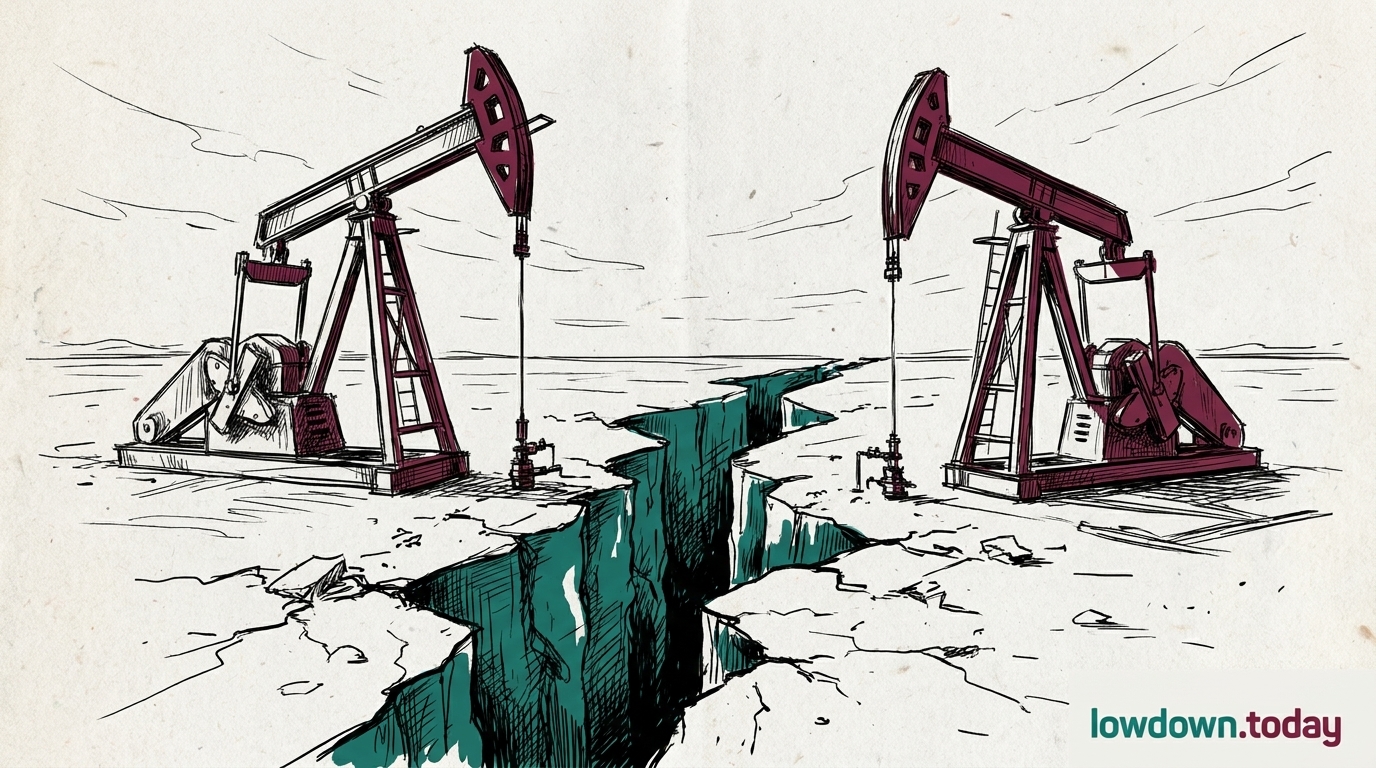
The Islamabad Memorandum of Understanding (MoU) text, published 17 June, bans "tolls" on Strait of Hormuz passage, then invokes the UN Convention on the Law of the Sea (UNCLOS), Article 26(2), to recast the charges as "maritime navigation services" 1. That article forbids fees on innocent passage but permits charges for specific services rendered to a ship, so a renamed toll becomes lawful revenue. Management is handed jointly to Iran and Oman, and the charge-free window runs 60 days only.

The body collecting the money does not go away. The Persian Gulf Strait Authority (PGSA), the body Iran's Revolutionary Guard (IRGC) created on 5 May that levied up to $2 million per tanker , is not dissolved under the deal. It survives under a quieter label, the 60-day clock counting down to the charge's return. Iran asserted Hormuz sovereignty and collected paid passage as early as 15 June, foreshadowing the framing the text now formalises .

Iran's foreign minister Abbas Araghchi put it plainly: "Charges for services provided will be collected," naming navigation, environmental protection and insurance. Counting from a signing date of roughly 15-16 June, the fees could resume as early as mid-August. The party with the largest exposure to those fees, Saudi Arabia, holds no seat in the Iran-Oman mechanism that will set them.


Deep Analysis

In plain English

The ceasefire deal said Iran would stop charging ships to pass through the Strait of Hormuz. But it only said so for 60 days. After that, Iran can restart the charges under a different name. Instead of calling them 'tolls' , a word the deal bans , Iran will call them 'maritime navigation services fees', citing a section of international maritime law. Think of it as a motorway toll renamed a 'road maintenance contribution.' The underlying charge is the same; the label has changed. The legal argument is questionable, but Iran has 60 days before it matters. By then, the deal will either be extended or collapsed on other grounds.

What could happen next?
  • Precedent

    The UNCLOS Article 26(2) rebranding, if unchallenged, sets a template for any state controlling a maritime chokepoint to levy transit charges under a services-fee framing that avoids the political label of 'toll.'

    Medium term · Reported
  • Risk

    Saudi Arabia's four idle supergiant fields face annual fee liability of up to $2 billion once the 60-day window closes, with no voice in the fee-setting mechanism. Riyadh's 26-day public silence on the MOU may break as the mid-August charge-resumption date approaches.

    Medium term · Reported
  • Opportunity

    The 60-day grace period gives shipping companies, P&I clubs, and international maritime lawyers a window to file UNCLOS arbitration claims testing the services-fee framing before charges resume.

    Medium term · Suggested
First Reported In

Update #131 · Iran deal's first death tests the text

Al Jazeera· 18 Jun 2026
Read original
Different Perspectives
Greek shipping registries
Flag states dominating the tanker fleet await the EU's 15 July cap-freeze vote. A formula unlock toward $75 would loosen the ceiling squeezing insurance and crewing costs on their registered hulls.
US money managers
US money managers
NYMEX WTI managed-money net long fell 23% to +64,041 in the week to 7 July, trimming length into the rally on doubt the Hormuz premium survives without freight or war-risk confirmation.
European refiners (ARA)
ARA refiners are capturing an $80/bbl US diesel crack as Russian gasoil loadings collapsed to 234kbd before Novak's 31 July export ban even bites, widening the arbitrage straight into refining margins.
OPEC+
OPEC+
The seven-member group confirmed a fourth consecutive 188kbd August hike on 5 July, defending market share even though Saudi Arabia's $108-111/bbl breakeven means every added barrel costs Riyadh revenue it cannot recoup.
Indian refiners
Indian refiners
Refiners kept lifting discounted Urals as the India/Baltic split widened past $9-10 a barrel on 7 July. A wider Urals-Brent gap means cheaper feedstock locked in against Baltic buyers.
Russia
Russia
Urals traded $48.95-55.12 on 12-13 July, below Moscow's $59 budget floor even as Brent gained $6. Oil and gas fund roughly 30% of federal revenue, and Novak's diesel export ban is rationing a shrinking export base.