Skip to content
You can now search across every topic, entity and event.What's new
European Oil Markets
30JUN

Three Iranian principals, three incompatible lines

2 min read
17:30UTC

Lowdown Analysis

EconomicDeveloping
Key takeaway

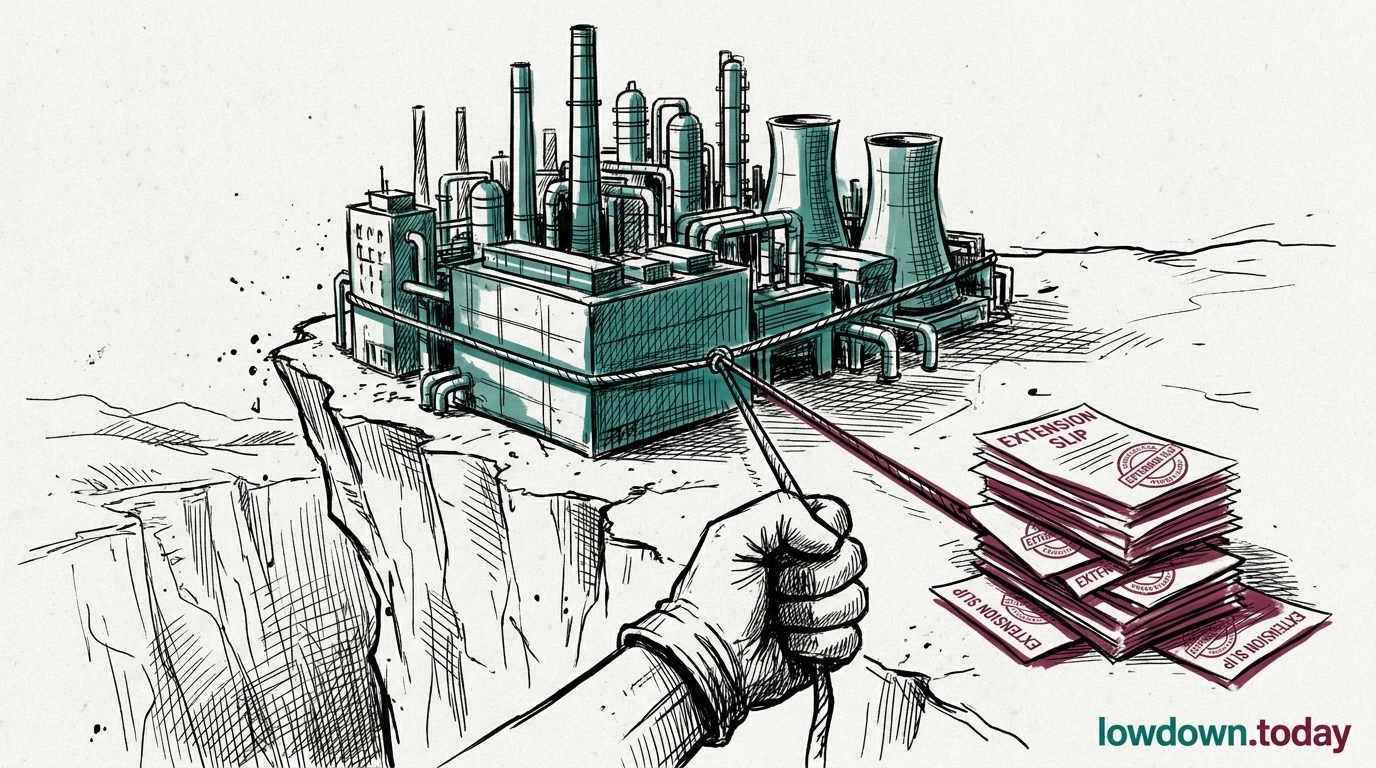
Vahidi, Araghchi and Ghalibaf's office published three incompatible positions on the extension on 21 April.

Ahmad Vahidi, commanding the Islamic Revolutionary Guard Corps (IRGC, Iran's parallel military), told deputies on 21 April that the IRGC opposes negotiation while the blockade stands 1. Foreign Minister Abbas Araghchi called the blockade 'an act of war and thus a violation of the ceasefire' to Farsi-language press the same day 2. A senior adviser to parliamentary speaker Mohammad Bagher Ghalibaf separately described the extension as 'a ploy to buy time for a surprise strike'.

The three lines landed on the same day President Masoud Pezeshkian, Ghalibaf and foreign ministry spokesman Esmaeil Baqaei had already hardened their rhetoric . This is the same civilian-IRGC deadlock that broke the Islamabad round on 12 April, when the IRGC's blockade-first condition held the door shut . Washington has now set an exit trigger whose fulfilment requires Tehran to resolve a split the Islamabad collapse proved it cannot resolve under pressure.


Deep Analysis

In plain English

Iran does not have a single government speaking with one voice. It has two parallel power structures: an elected civilian government, led by President Pezeshkian and Foreign Minister Araghchi, and the Islamic Revolutionary Guard Corps (IRGC), a powerful military and business organisation that answers to a different chain of command. On 21 April, IRGC commander Ahmad Vahidi said Iran would not negotiate while the US blockade continues. Foreign Minister Abbas Araghchi called the blockade 'an act of war and a violation of the ceasefire'. A third figure, the parliament speaker's adviser, called the ceasefire extension a trap for a surprise strike. All three statements came on the same day. Trump's extension requires Iran to deliver a single 'unified proposal'. But the three people who would need to agree on that proposal publicly disagreed about what was even happening. That is why the exit condition is, at present, unreachable.

Deep Analysis
Root Causes

Iran's civilian-IRGC split on negotiation has a structural origin that predates the 2026 war. The IRGC's economic empire , construction, energy, and banking conglomerates representing an estimated 10-20% of GDP , directly benefits from the blockade posture by controlling smuggling and alternative trade routes that replace sanctioned official channels. Vahidi's 'no negotiations while blockade stands' position protects IRGC economic interests as much as it expresses military doctrine.

The absence of a unifying supreme authority since Khamenei's death removes the one constitutional mechanism capable of overriding Vahidi. Mojtaba Khamenei was installed under IRGC pressure and has issued no directive forcing alignment. The civilian government cannot produce a unified proposal because the IRGC that would need to sign off on it is also the institution blocking access to Mojtaba Khamenei.

What could happen next?
  • Risk

    Vahidi's institutionally binding blockade-first veto means the exit condition cannot be met regardless of civilian diplomatic progress, leaving the extension as a mechanism for prolonging the status quo.

  • Consequence

    Three incompatible Iranian positions on one day confirm the Islamabad round's structural failure was not accidental, making a further Vance shuttle likely to produce the same outcome.

First Reported In

Update #76 · Trump posts an exit Iran can't reach

NBC News· 22 Apr 2026
Read original
Different Perspectives
Greek shipping registries
Flag states dominating the tanker fleet await the EU's 15 July cap-freeze vote. A formula unlock toward $75 would loosen the ceiling squeezing insurance and crewing costs on their registered hulls.
US money managers
US money managers
NYMEX WTI managed-money net long fell 23% to +64,041 in the week to 7 July, trimming length into the rally on doubt the Hormuz premium survives without freight or war-risk confirmation.
European refiners (ARA)
ARA refiners are capturing an $80/bbl US diesel crack as Russian gasoil loadings collapsed to 234kbd before Novak's 31 July export ban even bites, widening the arbitrage straight into refining margins.
OPEC+
OPEC+
The seven-member group confirmed a fourth consecutive 188kbd August hike on 5 July, defending market share even though Saudi Arabia's $108-111/bbl breakeven means every added barrel costs Riyadh revenue it cannot recoup.
Indian refiners
Indian refiners
Refiners kept lifting discounted Urals as the India/Baltic split widened past $9-10 a barrel on 7 July. A wider Urals-Brent gap means cheaper feedstock locked in against Baltic buyers.
Russia
Russia
Urals traded $48.95-55.12 on 12-13 July, below Moscow's $59 budget floor even as Brent gained $6. Oil and gas fund roughly 30% of federal revenue, and Novak's diesel export ban is rationing a shrinking export base.