Skip to content
You can now search across every topic, entity and event.What's new
European Oil Markets
22JUN

Navy says it cleared two Hormuz lanes

2 min read
09:55UTC

Admiral Brad Cooper said Navy divers, SEALs and aircraft from four services removed Revolutionary Guard mines from two Strait of Hormuz transit routes. He gave no total for the mines removed.

EconomicDeveloping
Key takeaway

Cooper declared two Hormuz routes clear without publishing a mine count or a survey.

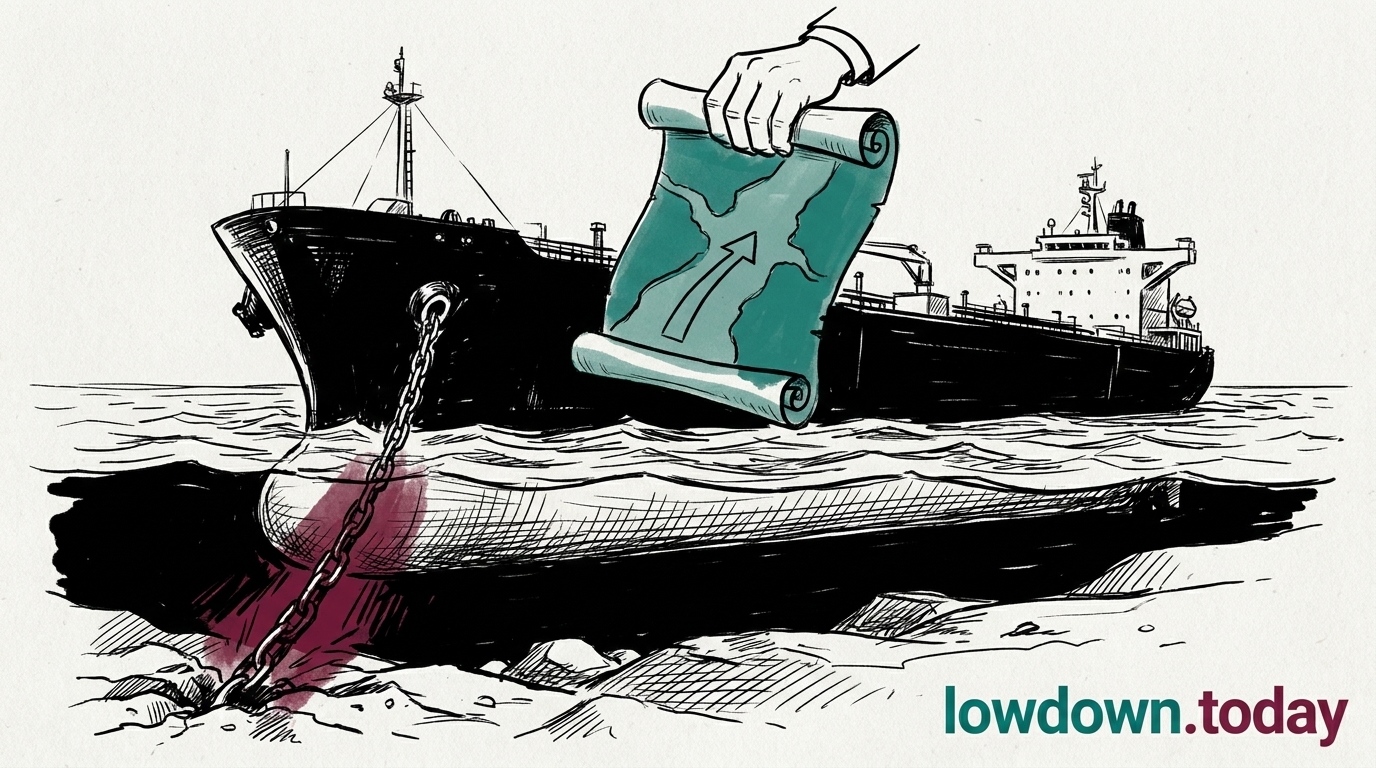
Admiral Brad Cooper, commander of US Central Command (CENTCOM), the American military command responsible for the Middle East, said on Friday 28 August that Navy divers, Navy SEALs and aircraft drawn from four services had cleared mines from two transit routes in the Strait of Hormuz. The mines were laid in the spring by the Islamic Revolutionary Guard Corps (IRGC), Iran's parallel armed force, which answers to the Supreme Leader rather than to the defence ministry. "The circumstances were challenging and dangerous, to say the least, but we got the job done," Cooper said 1.

Cooper's announcement withholds the operational detail. It carries no count of mines removed or disabled, no account of how they were laid, no chart of the two routes and no date on which the sweep began. CENTCOM has run an escort corridor through this water since early May, and the region has been building around the risk it manages: DP World accelerated Fujairah port facilities designed to bypass the strait altogether .

Iran can seed a channel far faster than the US Navy can sweep it, and that ratio is the weapon. A small boat does the laying overnight; clearing the same water needs purpose-built hulls, divers in the water and days of methodical search. Iran leaned on that asymmetry through the 1987-88 Tanker War, when American reflagging and convoy escort ran alongside repeated re-mining and the strait never actually closed. Escorting does not clear water, and clearing water does not keep it clear.

Tehran has already converted the strait's condition into a financial claim, demanding compensation running to trillions of dollars for coastline damage . A route the US Navy declares clear and Iran declares mined is a route both governments can price.


Deep Analysis

In plain English

The US Navy says it swept two shipping lanes through the Strait of Hormuz, the narrow waterway between Iran and Oman that a large share of the world's seaborne oil passes through. Divers, Navy SEALs and aircraft searched for and removed mines that Iran had laid. "Cleared" describes a single search, not a permanent guarantee. Nobody outside the US Navy has published proof the routes stayed clear, which matters to anyone whose fuel price depends on tankers moving through that water without being blown up.

Deep Analysis
Root Causes

No international body maintains a real-time mine registry for the Strait of Hormuz. The IMO and IMB have no verification mandate inside an active conflict zone, so commercial insurers and flag states have nothing to check a clearance claim against except the transit record itself.

Mine warfare compounds the gap. Contact mines can be found by sweep gear, but a corridor can be reseeded overnight with a handful of moored mines from a small boat, leaving no trace for a visual or sonar pass that already moved on.

First Reported In

Update #175 · Iran says it re-mined the cleared lanes

Task & Purpose· 3 Sept 2026
Read original
Causes and effects
This Event
Navy says it cleared two Hormuz lanes
The command that escorts merchant traffic through the strait declared two routes clear without publishing anything a third party could check.
Different Perspectives
Gulf oil producer
Gulf oil producer
Secured OPEC's confirmed 188,000 b/d September increment with the next meeting set for 6 September, but the Secretariat's own 2 August release says nothing about the fourth quarter. Output guidance beyond September remains undisclosed even as delegate sourcing keeps filling that gap.
Money manager positioned in WTI
Added 21,402 lots to a 108,307 net long in NYMEX WTI in the week to 28 July, against just 1,485 added to Brent's 15,740, a roughly fourteen-to-one split. Conviction sits in the American benchmark even as the European diesel story sets the record.
Indian refiner buying Urals
Bought Russian crude at a discount that narrowed to $1-2 a barrel in the week to 29 July from over $10, as Hormuz risk pushed it toward Urals. If that risk eases with the strike now called off, the discount it is currently enjoying could re-widen just as fast.
Russian diesel exporter
Novak tied any lifting of the diesel export ban, due to lapse 31 July, to an unspecified market recovery with no date, and pushed the gasoline ban to end-2026. An open-ended constraint suits an exporter benefiting from the record European crack it feeds.
War-risk underwriter
Withdrew war-risk cover for Saudi-linked hulls on 24 July and has not reinstated it, holding Bab el-Mandeb tanker transits near 7.5 a day. A cancelled strike does not by itself trigger the committee review needed to re-accept the class.
Northwest European refiner
Sources only 17% of diesel imports from Saudi Red Sea ports against the Mediterranean's 24%, so the ARA crack at $85.86 trails the Med print by $5.81. Lower Red Sea exposure is cushioning it against the rerouting cost, not eliminating it.



