Skip to content
You can now search across every topic, entity and event.What's new
European Oil Markets
18MAY

OFAC hits Oman as Iran relief stalls

2 min read
17:30UTC

OFAC designated a Muscat financial firm on 18 June for Hezbollah links, and through 21 June issued no Iran general licence and delisted no Iranian entity. The MOU promised relief within 48 hours.

EconomicDeveloping
Key takeaway

OFAC sanctioned an Oman firm while issuing no Iran relief five days after the MOU promised it.

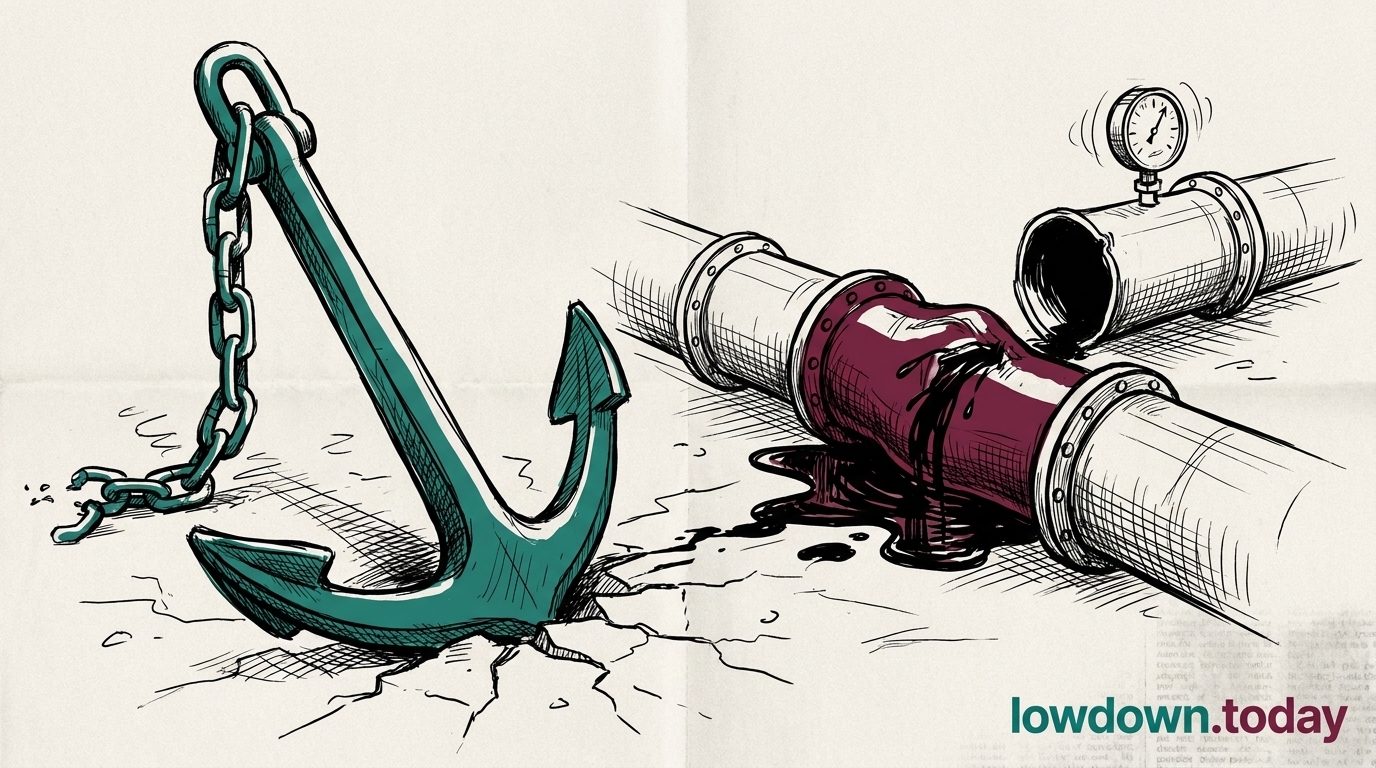
The Office of Foreign Assets Control (OFAC) designated Globe International SPC of Muscat on 18 June, naming The Firm as a financial node in the network of Hezbollah facilitator Alaa Hamieh 1. The action was a counter-terrorism designation, not Iran sanctions relief, and it accompanied OFAC's same-day move against Hezbollah figures Sleiman Frangieh and Mahmoud Qamati . Through 21 June, OFAC issued no Iran general licence and delisted no Iranian entity 2.

Oman is mediating the Islamabad Memorandum of Understanding (MoU), hosting the territorial-waters lane that now carries the strait's traffic, and now hosting an entity Washington has just sanctioned. The same week Muscat became the strait's practical gatekeeper, it also became a sanctions target's registered address.

For Iran itself, OFAC has issued no instrument at all. the MOU's sanctions-relief and blockade provisions were meant to land within 48 hours of the 16 June signing . Five days on, The White House Presidential Actions register carries nothing on Iran 3. Washington ended its 66-day naval blockade on 18 June as promised , the cheapest of its obligations to fulfil, and left every costly one to a final agreement it has not drafted.

OFAC can move fast when it wants to designate, as the Globe International action shows, yet has issued not a single licence to deliver the relief Iran was promised. That gap, action against Iran's allies but no action for Iran, hangs over the Switzerland table and gives Tehran its argument that the deal runs one way.


Deep Analysis

In plain English

When Iran and the US signed the Islamabad peace memorandum on 15-16 June, one of the commitments was that the US Treasury's sanctions office, called OFAC, would ease some financial restrictions on Iran almost immediately. Five days later, through 21 June, OFAC had not done this. It had not removed any Iranian entities from its blacklist. It had not issued any licence allowing previously banned transactions. Instead, on 18 June, OFAC designated a new company, Globe International SPC, based in Oman, as a financial node connected to Hezbollah. This is the opposite of sanctions relief. Oman is the country whose waters are now the only operating Hormuz shipping lane and whose government is co-mediating the Iran-US talks. The awkwardness of OFAC sanctioning an Oman-based entity while Oman mediates a peace deal illustrates how disconnected the sanctions bureaucracy and the diplomatic track are.

Deep Analysis
Root Causes

OFAC sanctions on Iran operate under multiple executive orders (E.O. 13224, E.O. 13902) that require specific revocation or general-licence issuance to create exemptions. A verbal MOU commitment by the Vice President does not automatically trigger OFAC action; Treasury must separately publish the waiver.

The Trump administration's pattern throughout the conflict, zero signed Iran executive instruments through Day 80 on 18 May, and continuing through 21 June, reflects a deliberate choice to maintain executive flexibility rather than bind itself with signed legal instruments.

The Globe International SPC designation on 18 June compounds the signal: OFAC's counter-terrorism team continued its routine enforcement cycle against the Hezbollah financial network while the diplomacy team was in Geneva. There is no evidence the two tracks coordinated to avoid the optics of designating an entity in the same 48-hour window the MOU required sanctions relief.

What could happen next?
  • Risk

    If OFAC issues no oil-transaction waiver before the next round of Geneva talks, Iran's delegation will arrive with a concrete unfulfilled US obligation as its opening leverage.

    Immediate · Assessed
  • Consequence

    The Lloyd's-Chubb $400m war-risk consortium cannot underwrite Hormuz cargoes without OFAC sanctions screening clearance, the same clearance OFAC has not issued. The consortium's practical utility depends entirely on a waiver the MOU promised and Treasury has not delivered.

    Short term · Assessed
  • Risk

    Oman's simultaneous roles, mediating Iran-US talks, hosting the operative Hormuz lane, and now hosting an OFAC-designated entity, create a political liability that could force Muscat to distance itself from the mediation architecture.

    Medium term · Suggested
First Reported In

Update #134 · Hormuz shuts as Vance flies to Geneva

OFAC· 21 Jun 2026
Read original
Different Perspectives
Greek shipping registries
Flag states dominating the tanker fleet await the EU's 15 July cap-freeze vote. A formula unlock toward $75 would loosen the ceiling squeezing insurance and crewing costs on their registered hulls.
US money managers
US money managers
NYMEX WTI managed-money net long fell 23% to +64,041 in the week to 7 July, trimming length into the rally on doubt the Hormuz premium survives without freight or war-risk confirmation.
European refiners (ARA)
ARA refiners are capturing an $80/bbl US diesel crack as Russian gasoil loadings collapsed to 234kbd before Novak's 31 July export ban even bites, widening the arbitrage straight into refining margins.
OPEC+
OPEC+
The seven-member group confirmed a fourth consecutive 188kbd August hike on 5 July, defending market share even though Saudi Arabia's $108-111/bbl breakeven means every added barrel costs Riyadh revenue it cannot recoup.
Indian refiners
Indian refiners
Refiners kept lifting discounted Urals as the India/Baltic split widened past $9-10 a barrel on 7 July. A wider Urals-Brent gap means cheaper feedstock locked in against Baltic buyers.
Russia
Russia
Urals traded $48.95-55.12 on 12-13 July, below Moscow's $59 budget floor even as Brent gained $6. Oil and gas fund roughly 30% of federal revenue, and Novak's diesel export ban is rationing a shrinking export base.