Skip to content
You can now search across every topic, entity and event.What's new
European Oil Markets
18MAY

Half of Iran's missiles survive, WSJ reports

2 min read
17:30UTC

The Wall Street Journal, citing US intelligence officials, reported on 10 April that Iran has preserved roughly half its ballistic missile and attack-drone stockpile. Defence Secretary Pete Hegseth called the programme 'functionally destroyed' a fortnight earlier.

EconomicDeveloping
Key takeaway

Washington's spies believe Iran can still hurt things; Washington's ministers do not say so.

The Wall Street Journal, citing US intelligence officials, reported on 10 April that Tehran has preserved roughly half its ballistic missile and attack-drone stockpile and retains "thousands of ballistic missiles" 1. Defence Secretary Pete Hegseth had told reporters in late March that Iran's missile and drone programmes were "functionally destroyed", and Benjamin Netanyahu said last month that Iran had "no ability" to rebuild.

More than half of Iran's missile launchers have been destroyed, damaged, or buried by US and Israeli strikes, the same officials say, but Tehran can still repair them or dig the buried ones out. US intelligence believes Iran can reconstitute significant strike capability on a timeline measured in months, not years. This is single-provenance US-intelligence reporting relayed through one American paper.

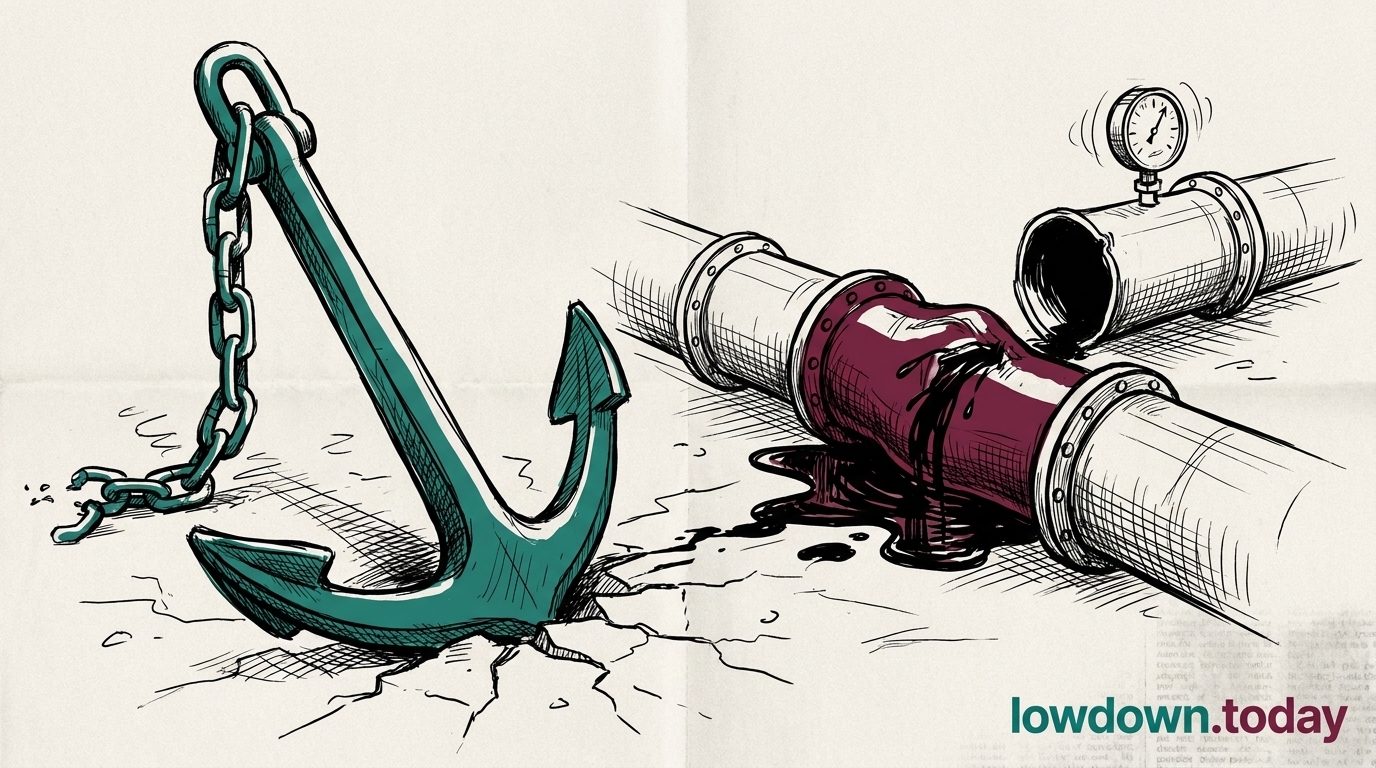
The assessment arrives in the same week Washington has issued zero formal Iran presidential instruments across the full war and during the diplomatic window opened at Islamabad . Every declaration of completion in this war has been followed within days by an intelligence assessment that quietly contradicts it: Trump's "nuclear objective attained", Hegseth's "functionally destroyed", Netanyahu's "no ability". The public claim shrinks; the private estimate catches up.


Deep Analysis

In plain English

Defence Secretary Hegseth said Iran's missiles were 'functionally destroyed'. Israel's Netanyahu said Iran had 'no ability to rebuild'. The US intelligence community — the same officials whose analysis underlies both those claims — now says Iran has kept roughly half its missiles. This does not mean the strikes failed entirely: more than half of Iran's launch platforms (the vehicles and fixed sites from which missiles are fired) have been damaged or destroyed. But the missiles themselves, buried in dispersed underground sites, survived in much larger numbers than the public statements suggested.

Deep Analysis
Root Causes

Iran's missile survivability reflects two design choices made over 15 years of sanctions pressure. The IRGC Aerospace Force built geographically-dispersed underground storage — the buried launchers US officials acknowledge can be excavated — specifically anticipating an air campaign that could not sustain ground-level destruction of hardened sites.

The second factor is the Decentralised Mosaic Defence doctrine itself: by devolving launch authority to autonomous provincial units, Iran reduced the command-and-control concentration that would make a decapitation strike operationally effective. A 50% launcher loss with dispersed warhead survival is a designed outcome, not a failure.

First Reported In

Update #65 · Iran lost its own minefield

Haaretz· 11 Apr 2026
Read original
Causes and effects
This Event
Half of Iran's missiles survive, WSJ reports
The rhetoric-versus-reality gap is becoming the war's most consistent pattern, and every future strike calculus must assume Iranian retaliation capability rather than a degraded one.
Different Perspectives
Indian refiners
Indian refiners
Indian refiners kept lifting discounted Urals as the India/Baltic price split widened past $9-10 a barrel, a gap that only grows as GL X1's Iranian wind-down cuts an alternative discounted grade off the market by 17 July. Cheaper Russian feedstock is being locked in while it lasts.
Chinese refiners
Chinese refiners
Chinese refiners gain leverage as the Urals-Brent discount widens, since Beijing's state buyers already source discounted Russian barrels near the fiscal floor unaffected by Western insurance costs. A wider discount, if it holds past 23 July, lets them lock in cheaper term contracts regardless of the cap's outcome.
US money managers (CFTC-tracked)
Managed money trimmed WTI net length into the rally, positioning that reflects doubt the Hormuz premium survives without freight or war-risk confirmation. The Brent-WTI spread widening almost entirely on the Brent leg supports that scepticism about a broad-based repricing.
OPEC+ (Saudi-led subgroup)
Saudi Arabia is defending market share through a fourth straight 188kbd August hike even as OPEC's own July MOMR cut 2026 demand growth for the fourth consecutive month. At a $108-111 fiscal breakeven, every added barrel costs Riyadh revenue it cannot recoup, so the hike reads as a positioning signal, not a demand bet.
Greek shipping registries
Greece, backed by Cyprus and Malta, is pushing a three-month cap-freeze compromise against the Commission's freeze to January 2027 ahead of the 23 July vote. Athens' and Valletta's combined tanker registrations mean a shorter review gives their insurers more frequent chances to reprice risk on Russian cargoes.
Russia (Deputy PM Alexander Novak)
Novak extended the diesel export restriction to producers on 8 July, the first producer-binding curb of the war, protecting the domestic pump price ahead of any refinery repair timeline. Urals still trades below Russia's $59 budget floor even as Brent gained, so the ban trades export revenue for fiscal stability at home.