Skip to content
You can now search across every topic, entity and event.What's new
European Oil Markets
18MAY

Chips Act II gives Brussels equity authority

3 min read
17:30UTC

Bloomberg reported on Thursday 30 April 2026 that the Chips Act II revamp will grant the European Commission direct equity-stake authority in semiconductor fabs, removing the member-state intermediary that proved insufficient at Magdeburg and Crolles.

EconomicDeveloping
Key takeaway

Brussels has fixed the capital pipe Chips Act I lacked; the demand-side failure mode behind both flagship fabs remains.

Bloomberg reported on Thursday 30 April 2026 that the revamped Chips Act II, slated for Commission adoption on 27 May, will grant the European Commission direct equity-stake authority in semiconductor fabrication plants 1. The instrument removes the member-state intermediary required under the original 2023 EU Chips Act, under which Berlin and Paris had to clear state-aid mechanisms before EU capital reached a fab.

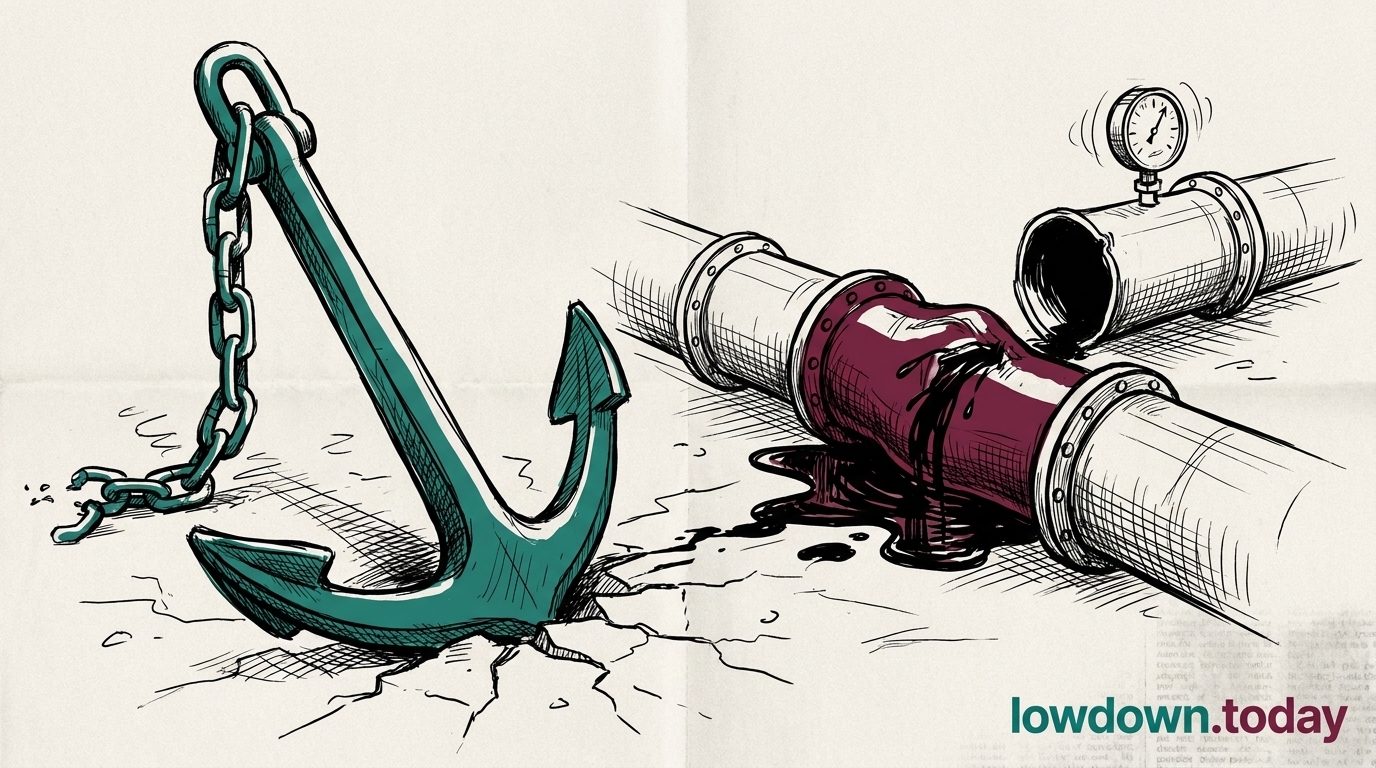
Intel's cancellation of the €30bn Magdeburg project in early 2026 and GlobalFoundries' suspension of the €7.5bn Crolles fab together stripped €37.5bn from Chips Act I delivery, exposing the failure mode the new authority is built to fix. Both files relied on member-state aid mechanisms that took years to clear and proved insufficient to trigger private commitment when Intel posted a quarterly net loss and GlobalFoundries cited insufficient state-aid availability. By taking equity stakes directly, Brussels skips the bottleneck that delayed both files.

Operator demand remains the constraint the new instrument does not address. Magdeburg was cancelled because Intel pulled back globally; Crolles was suspended because GlobalFoundries judged the customer commitment thin. Direct-investment capital does not produce demand for chips that the operators in question were unwilling to underwrite. Italy's €211m photonic-chips state aid in April, routed through The Commission rather than Rome, is the template for what Commission-routed capital looks like in practice: small, surgical, application-specific, at the trailing edge rather than leading-edge logic. The first Chips Act II deployment after 27 May will signal whether Brussels intends to use the instrument at scale or as a backstop.


Deep Analysis

In plain English

Intel's cancelled German factory and GlobalFoundries' cancelled French one each required tens of billions of euros; they failed partly because EU funding came too late and with too many conditions. Computer chip factories, called fabs, cost that much because the machines inside them require extreme precision. Previously, the EU could only offer grants or loans through individual EU countries to attract chipmakers. When Intel cancelled its planned German factory and GlobalFoundries cancelled its French one, those national funding promises were not enough to keep the projects alive. Chips Act II lets the EU Commission itself buy a share in chip factories, like a co-owner, rather than just offering subsidies. That means the EU has skin in the game and can offer chipmakers a more flexible financial partnership: equity co-investment rather than a grant loaded with political conditions.

Deep Analysis
Root Causes

The original Chips Act's member-state routing was a product of EU treaty constraints on direct state aid: Article 107 TFEU limits Commission spending in member-state territory except through approved aid schemes, and the Council-level political deal in 2023 required member states to front direct industrial subsidies.

Chips Act II's equity-stake mechanism circumvents this by framing investment as commercial participation rather than aid, a distinction the Commission's legal service had been developing since the 2024 European Defence Industry Programme introduced similar direct-equity tools.

A secondary root cause is the concentration of fab-siting decisions in two or three large chipmakers. When Intel withdrew from Magdeburg and GlobalFoundries from Crolles, the Commission had no instrument to substitute: it could not offer Intel an equity partnership instead of waiting for German state-aid clearance. Chips Act II closes that instrument gap.

What could happen next?
  • Precedent

    The first use of Commission direct-equity authority in a fab project will set the pricing and governance template for all subsequent European semiconductor investments.

    Medium term · 0.8
  • Risk

    If the Commission prices its equity participation below market returns to attract investment, the WTO Subsidies and Countervailing Measures Agreement could be invoked by the US or Taiwan, triggering a trade dispute around the same period as the USTR Section 301 review.

    Medium term · 0.5
  • Opportunity

    ESMC and the TSMC-led Dresden joint venture are already committed; the mechanism's first live test may be a second-generation Dresden expansion or a new fab project from an Asian chipmaker seeking European market access.

    Long term · 0.55
First Reported In

Update #5 · Brussels' 27 May package, two days before G7

Bloomberg· 17 May 2026
Read original
Different Perspectives
Indian refiners
Indian refiners
Indian refiners kept lifting discounted Urals as the India/Baltic price split widened past $9-10 a barrel, a gap that only grows as GL X1's Iranian wind-down cuts an alternative discounted grade off the market by 17 July. Cheaper Russian feedstock is being locked in while it lasts.
Chinese refiners
Chinese refiners
Chinese refiners gain leverage as the Urals-Brent discount widens, since Beijing's state buyers already source discounted Russian barrels near the fiscal floor unaffected by Western insurance costs. A wider discount, if it holds past 23 July, lets them lock in cheaper term contracts regardless of the cap's outcome.
US money managers (CFTC-tracked)
Managed money trimmed WTI net length into the rally, positioning that reflects doubt the Hormuz premium survives without freight or war-risk confirmation. The Brent-WTI spread widening almost entirely on the Brent leg supports that scepticism about a broad-based repricing.
OPEC+ (Saudi-led subgroup)
Saudi Arabia is defending market share through a fourth straight 188kbd August hike even as OPEC's own July MOMR cut 2026 demand growth for the fourth consecutive month. At a $108-111 fiscal breakeven, every added barrel costs Riyadh revenue it cannot recoup, so the hike reads as a positioning signal, not a demand bet.
Greek shipping registries
Greece, backed by Cyprus and Malta, is pushing a three-month cap-freeze compromise against the Commission's freeze to January 2027 ahead of the 23 July vote. Athens' and Valletta's combined tanker registrations mean a shorter review gives their insurers more frequent chances to reprice risk on Russian cargoes.
Russia (Deputy PM Alexander Novak)
Novak extended the diesel export restriction to producers on 8 July, the first producer-binding curb of the war, protecting the domestic pump price ahead of any refinery repair timeline. Urals still trades below Russia's $59 budget floor even as Brent gained, so the ban trades export revenue for fiscal stability at home.