Skip to content
You can now search across every topic, entity and event.What's new
European Oil Markets
18MAY

EU chip share slips to 9%

3 min read
17:30UTC

The Commission's own scorecard put EU semiconductor share at 9% against its 20% goal for 2030, a gap that has widened, not closed, since the target was written.

EconomicDeveloping
Key takeaway

Europe's chip share has fallen since the target was set, before any new law could act.

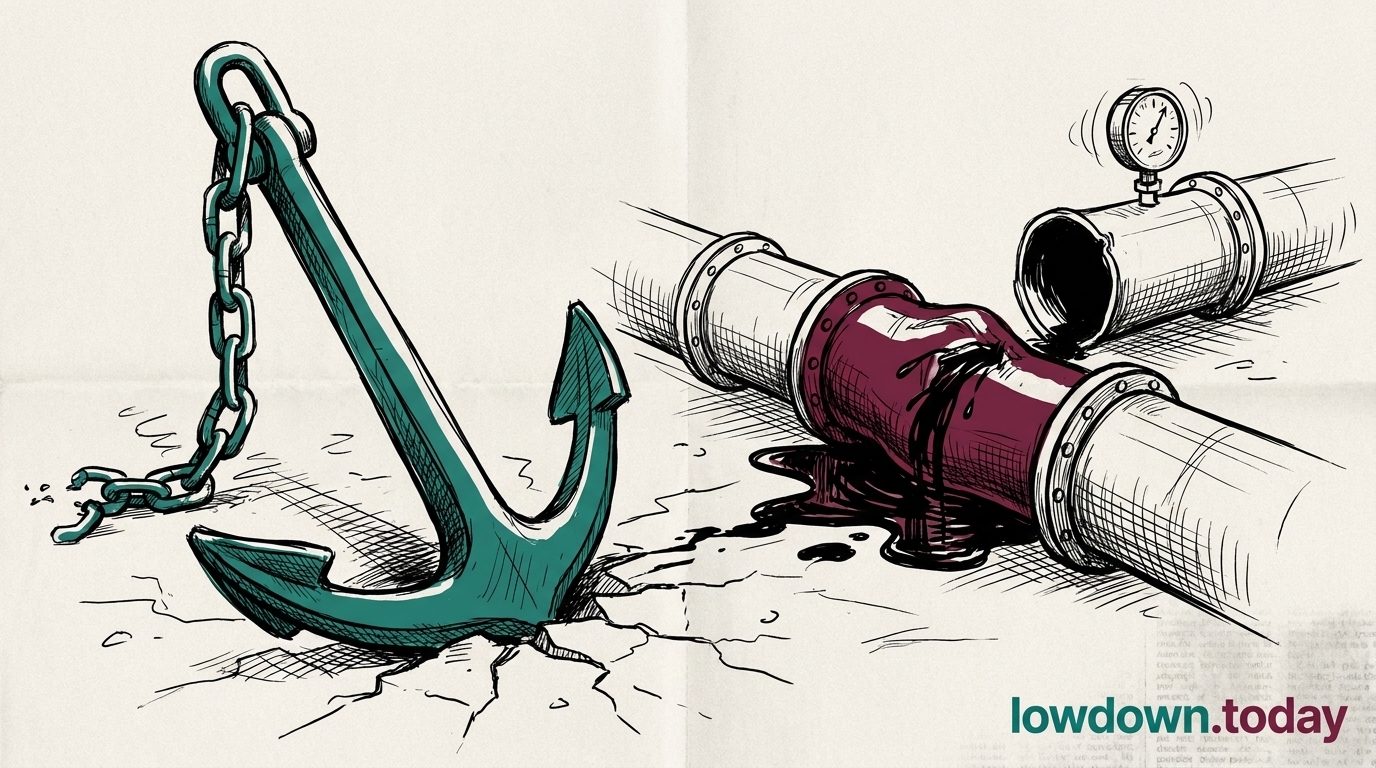
The European Commission published its 2026 State of the Digital Decade report on Wednesday 17 June, and its headline number undercut the law Brussels adopted a fortnight earlier 1. The EU holds 9% of the global semiconductor market against its own 20% target for 2030. That share has not crept towards the goal since the first Chips Act in 2023. It has fallen.

The gap reflects what the original target counted. When Brussels set 20% by 2030, the planned capacity included Intel's 30bn euro Magdeburg fab and the 7.5bn euro GlobalFoundries Crolles project. Intel cancelled Magdeburg; GlobalFoundries suspended Crolles. Roughly 37.5bn euros of assumed leading-edge capacity left the plan, and the baseline collapsed with it.

Chips Act II handed The Commission direct equity-stake authority in fabs on 3 June, so Brussels can fund construction without a member state acting as intermediary . The scorecard showing the gap wider arrived 14 days later. Two weeks is no time at all, and a fab takes years; the data is not a verdict on a law adopted alongside CADA . The 9% measures how far behind the start line the bloc stands before any new law has had time to act.


Deep Analysis

In plain English

The EU set a target in 2023 to make 20% of the world's computer chips by 2030. To get there it assumed two big new factories would be built: one by Intel (a US chipmaker) in Magdeburg, Germany (worth 30bn euros), and one by GlobalFoundries (another US chipmaker) in Crolles, France (worth 7.5bn euros). Intel cancelled Magdeburg in early 2026; GlobalFoundries paused Crolles in 2024. The Commission published its annual progress report on 17 June 2026 and the headline number was 9%, lower than when the target was set. A new law called Chips Act II was adopted two weeks earlier and gives Brussels direct power to invest in chip factories. But factories take years to build, and the scorecard measures where things stand right now.

Deep Analysis
Root Causes

The original Chips Act counted planned fab investments as assumed capacity before those investments had been contractually committed. Intel's Magdeburg depended on a guaranteed customer pipeline that Intel's own Q2 2024 losses ($1.6bn net loss) made untenable; GlobalFoundries' Crolles depended on 10nm FD-SOI demand from European automotive customers who had slowed orders. Neither commitment was demand-backed.

Second, the Commission's instrument for semiconductor investment under the original Chips Act required member states to act as financial intermediaries, adding a political veto layer the Commission could not control. Chips Act II removes that veto, but the demand-side gap it cannot resolve: the EU has no captive high-volume customer for leading-edge chips that would underwrite a new fab's utilisation rate.

What could happen next?
  • Consequence

    Chips Act II's €120bn investment target to 2035 now starts from a lower base than the original Chips Act, with no confirmed leading-edge fab to anchor the trajectory.

    Medium term · Assessed
  • Risk

    If the Commission cannot generate customer-side demand commitments to underwrite a new fab's utilisation rate, direct equity authority alone does not resolve the structural gap Intel and GlobalFoundries cited when cancelling.

    Long term · Suggested
  • Precedent

    The scorecard establishes the 9% figure as the official baseline for all future Chips Act II progress reporting; the 20% target can no longer be measured against the original assumed-capacity trajectory.

    Immediate · Reported
First Reported In

Update #9 · EU chip share slips to 9% as law takes hold

European Commission· 18 Jun 2026
Read original
Different Perspectives
Indian refiners
Indian refiners
Indian refiners kept lifting discounted Urals as the India/Baltic price split widened past $9-10 a barrel, a gap that only grows as GL X1's Iranian wind-down cuts an alternative discounted grade off the market by 17 July. Cheaper Russian feedstock is being locked in while it lasts.
Chinese refiners
Chinese refiners
Chinese refiners gain leverage as the Urals-Brent discount widens, since Beijing's state buyers already source discounted Russian barrels near the fiscal floor unaffected by Western insurance costs. A wider discount, if it holds past 23 July, lets them lock in cheaper term contracts regardless of the cap's outcome.
US money managers (CFTC-tracked)
Managed money trimmed WTI net length into the rally, positioning that reflects doubt the Hormuz premium survives without freight or war-risk confirmation. The Brent-WTI spread widening almost entirely on the Brent leg supports that scepticism about a broad-based repricing.
OPEC+ (Saudi-led subgroup)
Saudi Arabia is defending market share through a fourth straight 188kbd August hike even as OPEC's own July MOMR cut 2026 demand growth for the fourth consecutive month. At a $108-111 fiscal breakeven, every added barrel costs Riyadh revenue it cannot recoup, so the hike reads as a positioning signal, not a demand bet.
Greek shipping registries
Greece, backed by Cyprus and Malta, is pushing a three-month cap-freeze compromise against the Commission's freeze to January 2027 ahead of the 23 July vote. Athens' and Valletta's combined tanker registrations mean a shorter review gives their insurers more frequent chances to reprice risk on Russian cargoes.
Russia (Deputy PM Alexander Novak)
Novak extended the diesel export restriction to producers on 8 July, the first producer-binding curb of the war, protecting the domestic pump price ahead of any refinery repair timeline. Urals still trades below Russia's $59 budget floor even as Brent gained, so the ban trades export revenue for fiscal stability at home.