Skip to content
You can now search across every topic, entity and event.What's new
European Energy Markets
31JUL

Brent tops $100 as the reroute closes

2 min read
09:44UTC

Brent crude crossed $100 a barrel on 23 July for the first time since May, and traders tied the jump straight to the tanker strikes in the Bab al-Mandab.

EconomicDeveloping
Key takeaway

Brent cleared $100 because the southern reroute closed, not because the strikes on Iran grew heavier.

Brent Crude crossed $100 a barrel on 23 July for the first time since 26 May, rising about 6.7% to roughly $100.37 by 1401 GMT, with traders tying the move directly to the previous day's tanker strikes 1. The benchmark had closed at $92.09 only a day earlier , the top of a slow four-session climb.

Brent is the international price for seaborne crude, the benchmark behind roughly two-thirds of the world's traded oil, and it carries structural exposure to shipping chokepoints that inland grades do not. For a fortnight it had shrugged off vertical escalation, more nights and a rising toll, because the barrels kept moving through the dark fleet and the Omani-shore reroute south of Hormuz, which kept cargoes reaching buyers even as the northern strait was contested.

A strike in the Bab al-Mandab removes that release valve, so the market is now pricing two contested chokepoints at once rather than one. One caution belongs on the print. Oil has spiked and faded before in this war, clearing $87 on the July blockade before sliding as cargoes found a way round. The second tanker, the Layla, remains an unconfirmed Houthi claim, and a single denied strike could take the premium out as quickly as it went in.


Deep Analysis

In plain English

Brent crude is the main international price used to set oil costs around the world. On 23 July it went above $100 a barrel for the first time since May, jumping sharply in a single day. Traders say the jump is a direct reaction to the tanker strikes: when ships carrying oil through dangerous waters become targets themselves, the oil gets more expensive because it costs more to ship and insure. This matters at the petrol pump and in home energy bills. Oil prices this high, if they hold, tend to filter through to what people pay to fill a car or heat a home within weeks.

Deep Analysis
Root Causes

Brent's structural exposure to chokepoint risk is built into the benchmark itself: it prices seaborne North Sea and Gulf cargoes, unlike West Texas Intermediate, which moves overwhelmingly by pipeline and reacts far less to Gulf shipping risk.

The move above $100 also compounds a climb that was already under way before the Encelia strike, so the jump builds on an existing tightening rather than starting from a calm baseline.

What could happen next?
  • Consequence

    Sustained Brent prices above $100 typically reach UK and European pump prices within two to four weeks, given normal refining and distribution lags.

  • Risk

    If insurers keep pricing Bab al-Mandab and Hormuz as active war zones, the premium embedded in Brent may not unwind quickly even if strikes pause, unlike the rapid snapback seen after Abqaiq in 2019.

First Reported In

Update #160 · Houthis hit Saudi tankers; Brent tops $100

Reuters· 23 Jul 2026
Read original
Different Perspectives
Spain's LNG terminal operators
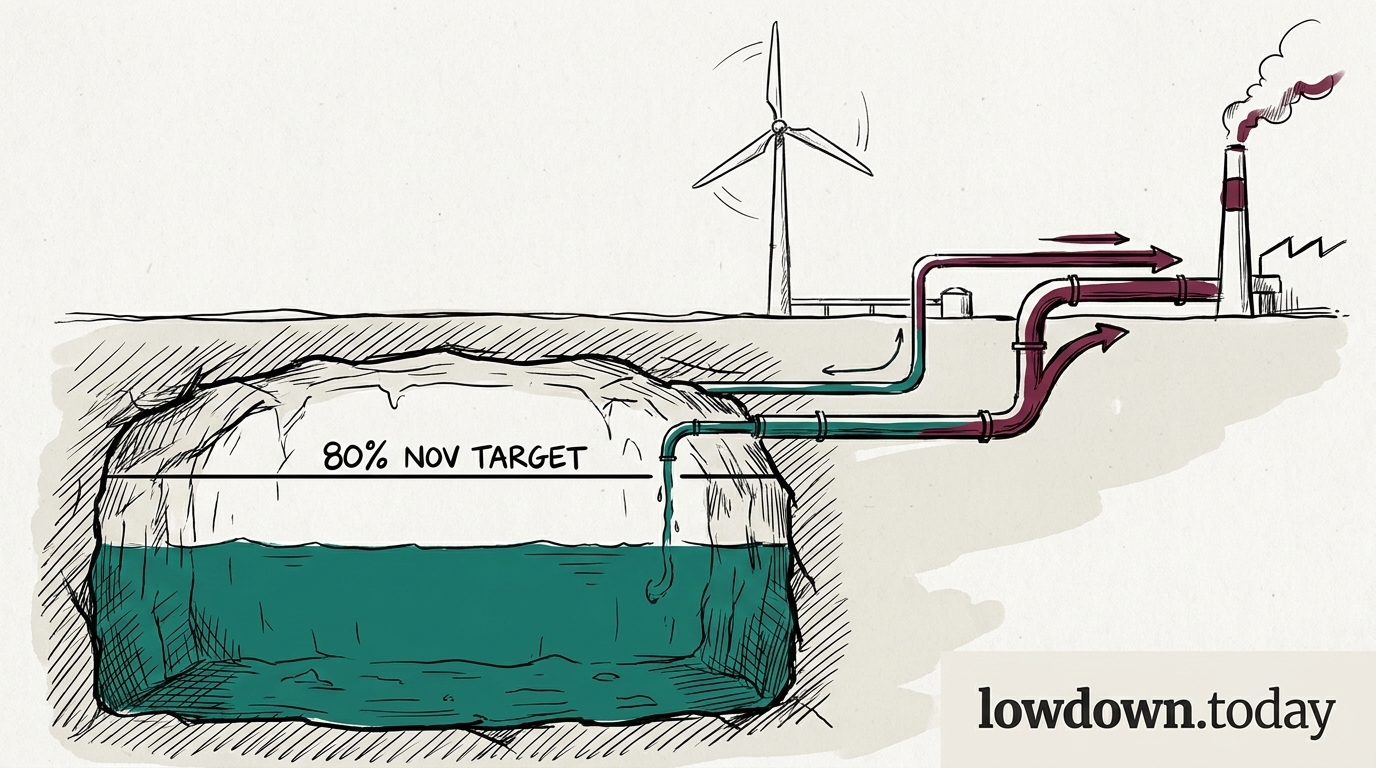
Spain's 9,145 GWh terminal inventory is the largest single stock in the EU LNG network, an option value that can reroute cargoes wherever the winter strip pays best rather than a cavern gas obligation tied to a fixed date. That flexibility matters more as Germany's cavern shortfall pushes more of the winter security question onto import infrastructure.
European Commission
European Commission
Brussels holds the bloc to 90% on a flexible window while Germany, holding roughly a quarter of EU storage capacity, tracks toward missing its own lower 80% figure by 21 points. A national shortfall this size in the anchor market matters more to bloc security than the flexible timetable alone can absorb.
French power exporters and CRE
French day-ahead rose in step with Germany but by less, reopening a EUR 7-17 premium that makes northward export flows commercially attractive again after the EUR 43.09 discount evaporated in days. CRE separately authorised RTE and Enedis to buy flexibility locally, betting the coming winter's binding constraint is grid congestion rather than a shortage of firm capacity.
TTF trading desk
TTF trading desk
A visible national shortfall like Germany's 21-point gap is a directional signal, not noise, for a desk holding the summer-winter spread. TTF's flat EUR 58-60 range through this week's German price swings says the market has not yet chosen to reprice refill risk into the front of the curve.
German cavern and CCGT operators
German caverns kept buying prompt gas at TTF near EUR 58-60 through the inversion; the wind collapse to 2.4 GW then flipped the spark spread to plus EUR 29 and put turbines back in the same queue. Every day turbines win that bid, injection at a third of the 877 GWh/day pace needed falls further behind.
Slovakia
Slovakia
Slovakia says it dropped its hold-out on the 21st sanctions package only after Ursula von der Leyen personally signed written gas-price and supply guarantees. The Council of the European Union's own 17,238-character release on the package names neither Slovakia nor any guarantee, leaving Bratislava's account unconfirmed by the institutional record.



