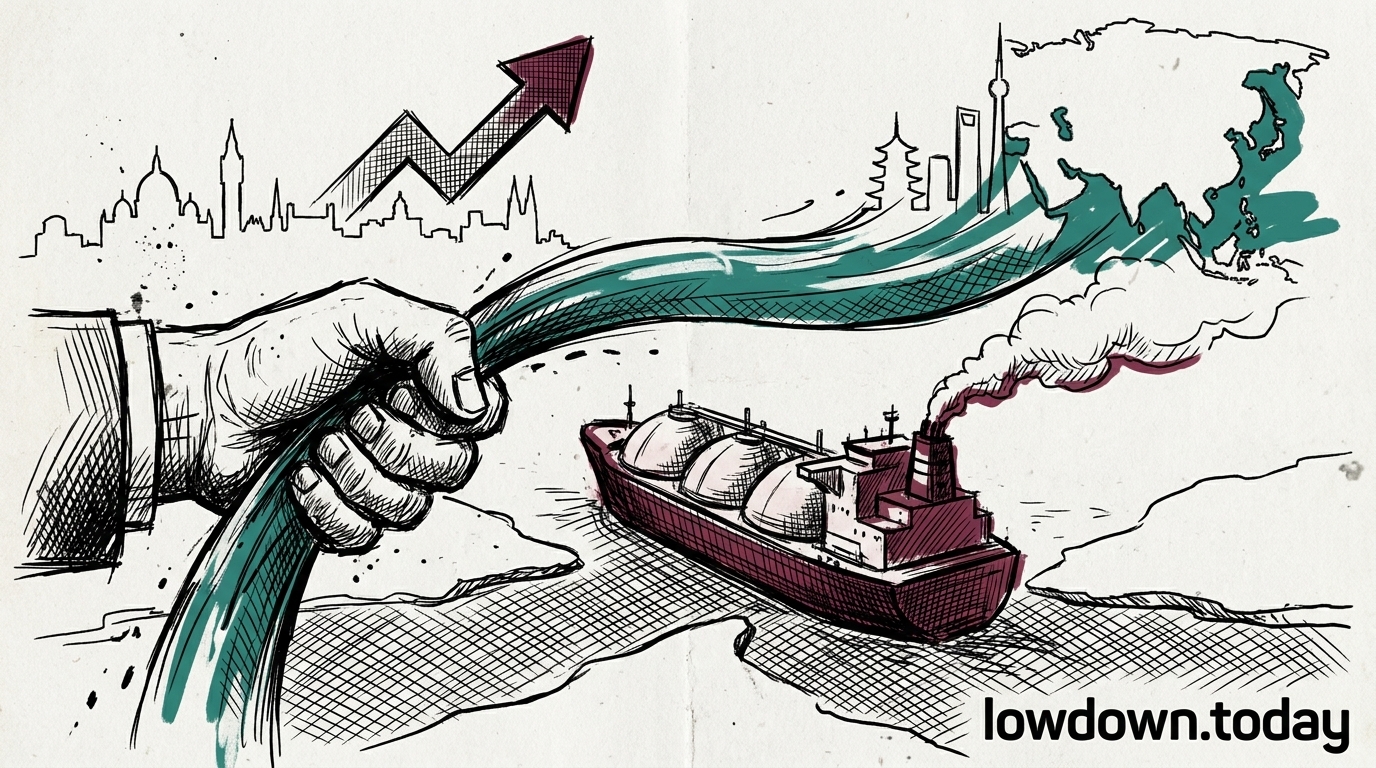
Naval escorts can currently move only three to four commercial ships a day through the Strait of Hormuz, using seven to eight escort warships for air cover against the residual mine and midget-submarine threat, Lloyd's List reports. The maritime publication frames the ratio as a fixed logistics ceiling, not a temporary bottleneck.
The corridor reopened for commercial traffic only when the first Hormuz carrier cleared to India in mid-June, and it has stayed thin since. TTF swung on each Hormuz headline over the following fortnight without settling, because the escort ratio cannot scale to normal volumes without a step-change in warships committed to the corridor. This extends the same capacity story, rather than opening a new one.
For QatarEnergy the implication is that its restart curve tracks the convoy schedule, not the communiques. Cargoes clear at the speed escorts allow, so a de-escalation headline shifts sentiment faster than it shifts throughput. A spreads desk watches the escort count as the real throttle on Qatari send-out, and treats any TTF relief on talk of normalisation as a fade candidate until the warship commitment actually rises.




