Skip to content
You can now search across every topic, entity and event.What's new
European Energy Markets
22JUN

Riyadh names energy, port and airport targets

2 min read
13:56UTC

Saudi officials published an intelligence assessment naming energy facilities, ports and airports as the next things to be hit, and said the attacks are expected in the very near future.

EconomicDeveloping
Key takeaway

Riyadh has published a target list it must now be seen to defend.

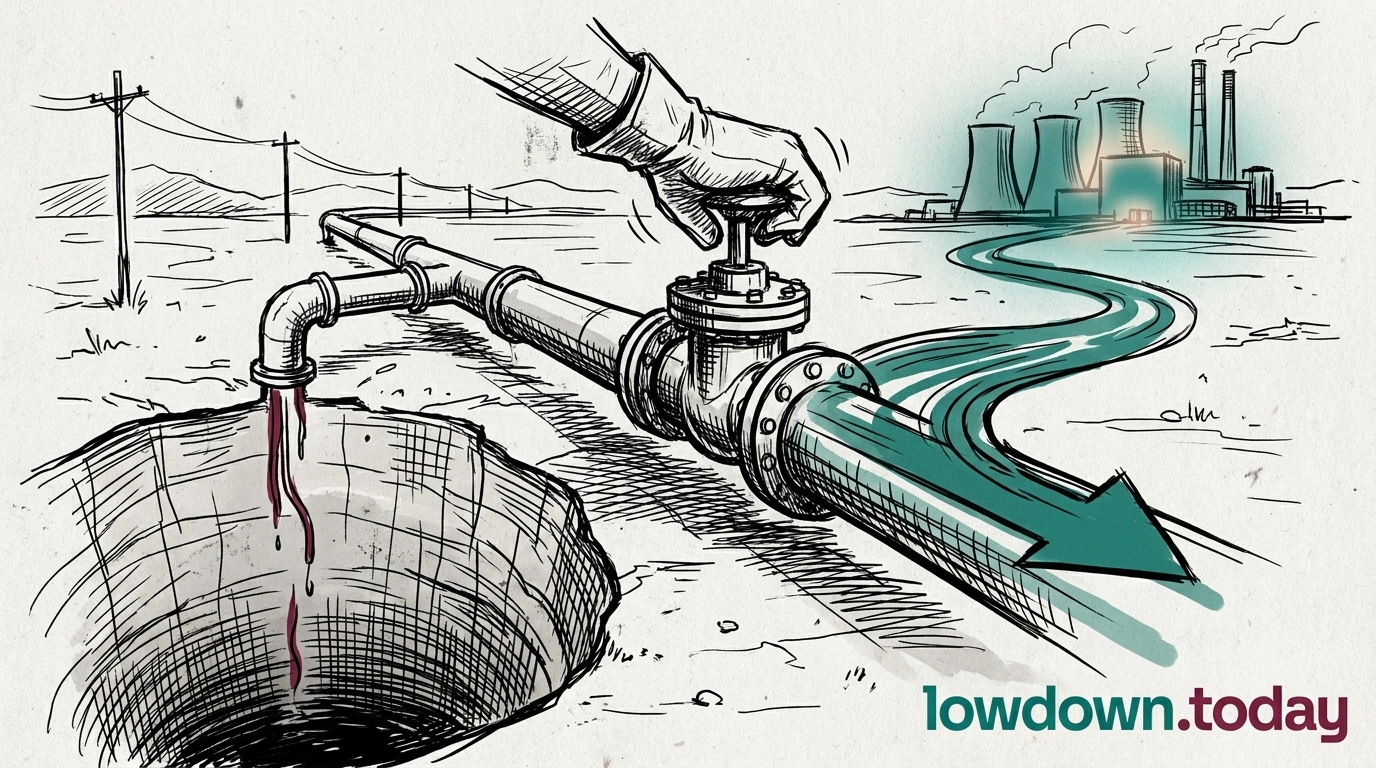
Saudi Arabia published an intelligence assessment on Thursday 6 August naming energy facilities, ports and airports as the next targets of attacks it expects "in the very near future" 1. Saudi officials said the assessment draws on Saudi, American and regional services, and points at Iraqi militia members working with the Houthis, Yemen's Iran-aligned armed movement, under the guidance of the IRGC (Islamic Revolutionary Guard Corps), Iran's ideological military force 2. Riyadh's list names civilian and economic infrastructure, not air defence sites or bases.

Governments normally keep an assessment of that kind inside the building. Publishing it does three jobs at once. It warns the operators who can actually move aircraft, reroute vessels and thicken perimeter security. It signals to Tehran that Saudi intelligence claims to have mapped the coordination structure Riyadh has just described in public. And it commits The Kingdom, because a warning issued to its own population converts a private judgement into a public promise to respond.

Weigh the claim carefully all the same. Iran-aligned Iraqi factions denied launching the drones Riyadh attributed to Iraqi territory on Monday 27 July and called the Saudi account a fabrication, and no attribution evidence for those launches has been published since. This warning rests on unnamed intelligence, names no specific group, and points at no recovered debris. Read it as Riyadh's assessment rather than as established fact, while noting what followed the last time The Kingdom named Iraq as a launch point: Saudi jets were over Iraqi territory two days later, citing Article 51 of the UN Charter .


Deep Analysis

In plain English

Saudi Arabia says it has intelligence that a network of armed groups is about to attack its energy plants, ports and airports. The groups named are Iraqi Shia militias (armed factions in Iraq aligned with Iran) and the Houthis (Yemen's Iran-backed movement), and Riyadh says Iran's Islamic Revolutionary Guard Corps, the country's most powerful military and security force, is coordinating them. This is a warning, not a confirmed attack. Saudi Arabia made a similar accusation after a drone attack in July, which the groups it named have denied.

Deep Analysis
Root Causes

Iraqi Shia militias operate with only partial answerability to Baghdad's central government, which is why Riyadh's warning names the militias and their Iranian coordination directly rather than routing a diplomatic protest through the Iraqi state.

The IRGC's foreign operations run through its own chain of command rather than Iran's foreign ministry, so a diplomatic denial from Tehran does not constrain what the Guard's regional network does next.

Escalation

Direction: rising rhetoric with no confirmed strike yet. Riyadh has paired a prior attribution with a military response before , so this warning sits one step behind that pattern rather than ahead of it.

What could happen next?
  • Risk

    War-risk insurers may reprice cover for Saudi energy, port and airport infrastructure on the strength of the warning alone, before any strike occurs.

  • Precedent

    If Riyadh strikes inside Iraq again on the strength of this warning, it repeats the attribution-then-strike sequence set on 27 and 29 July.

First Reported In

Update #167 · Riyadh names its next targets; Najran is hit

The National· 7 Aug 2026
Read original
Causes and effects
This Event
Riyadh names energy, port and airport targets
A government that has told its own citizens which installations are at risk cannot absorb a hit on one of them quietly.
Different Perspectives
Cross-border power traders
The France-Germany day-ahead spread flipped from a EUR 17.20 German premium on 1 August to a EUR 4.15 French premium on 3 August, the same day French curtailment peaked. They cannot yet attribute the flip to curtailment alone, since a like-for-like overnight comparison shows French nuclear output rising while wind fell and demand returned on the weekday step.
EDF
EDF
River-cooling limits took 7.6 GW, 12 per cent of its fleet, offline on 3 August, the highest curtailment since the heatwave began, with an easing forecast to 4.3 GW on 4 August and 3 GW after. It manages the cut as a recurring seasonal constraint, expecting it to lift with river temperature, not repair.
Gasunie
Gasunie
TTF, the Dutch hub it operates, drifted to roughly EUR 55 to 58 per MWh across the window, staying inside its recent range through both the German spark reversal and the French curtailment. It reads a flat hub price as evidence that neither event this window carried enough weight to move the fuel leg on its own.
German gas-fired generators
Record German solar of 18,761 MW on 2 August pushed the clean spark spread to minus 18.48 EUR/MWh, a loss-making day, before it returned to plus 16.20 on 3 August. They now price dispatch against post-solar residual load rather than wind alone, since the sign flipped inside 48 hours on unchanged fuel and carbon costs.
European Commission (DG Energy)
Its implementing-measures register logged transposition notices from only Portugal and Slovakia against Wednesday's Article 94 deadline for Directive (EU) 2024/1788, with 25 states silent. It expects the register to fill only gradually, since filing routinely lags legislating and any infringement track against non-notifying states runs on a slower clock than the deadline itself.
Spain's LNG terminal operators
Spain's 9,145 GWh terminal inventory is the largest single stock in the EU LNG network, an option value that can reroute cargoes wherever the winter strip pays best rather than a cavern gas obligation tied to a fixed date. That flexibility matters more as Germany's cavern shortfall pushes more of the winter security question onto import infrastructure.



