Skip to content
You can now search across every topic, entity and event.What's new
European Energy Markets
18JUN

Three Iranian principals, three incompatible lines

2 min read
09:57UTC

Lowdown Analysis

EconomicDeveloping
Key takeaway

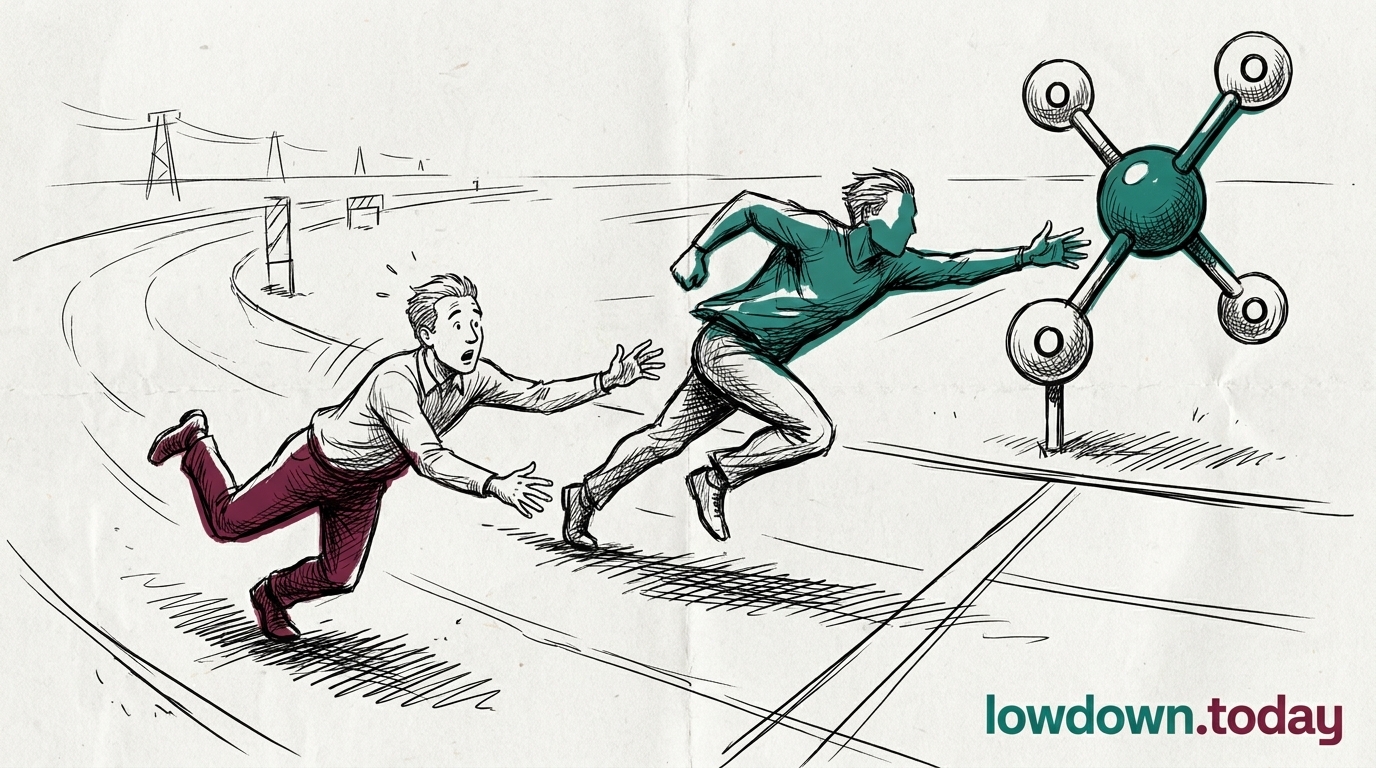
Vahidi, Araghchi and Ghalibaf's office published three incompatible positions on the extension on 21 April.

Ahmad Vahidi, commanding the Islamic Revolutionary Guard Corps (IRGC, Iran's parallel military), told deputies on 21 April that the IRGC opposes negotiation while the blockade stands 1. Foreign Minister Abbas Araghchi called the blockade 'an act of war and thus a violation of the ceasefire' to Farsi-language press the same day 2. A senior adviser to parliamentary speaker Mohammad Bagher Ghalibaf separately described the extension as 'a ploy to buy time for a surprise strike'.

The three lines landed on the same day President Masoud Pezeshkian, Ghalibaf and foreign ministry spokesman Esmaeil Baqaei had already hardened their rhetoric . This is the same civilian-IRGC deadlock that broke the Islamabad round on 12 April, when the IRGC's blockade-first condition held the door shut . Washington has now set an exit trigger whose fulfilment requires Tehran to resolve a split the Islamabad collapse proved it cannot resolve under pressure.


Deep Analysis

In plain English

Iran does not have a single government speaking with one voice. It has two parallel power structures: an elected civilian government, led by President Pezeshkian and Foreign Minister Araghchi, and the Islamic Revolutionary Guard Corps (IRGC), a powerful military and business organisation that answers to a different chain of command. On 21 April, IRGC commander Ahmad Vahidi said Iran would not negotiate while the US blockade continues. Foreign Minister Abbas Araghchi called the blockade 'an act of war and a violation of the ceasefire'. A third figure, the parliament speaker's adviser, called the ceasefire extension a trap for a surprise strike. All three statements came on the same day. Trump's extension requires Iran to deliver a single 'unified proposal'. But the three people who would need to agree on that proposal publicly disagreed about what was even happening. That is why the exit condition is, at present, unreachable.

Deep Analysis
Root Causes

Iran's civilian-IRGC split on negotiation has a structural origin that predates the 2026 war. The IRGC's economic empire , construction, energy, and banking conglomerates representing an estimated 10-20% of GDP , directly benefits from the blockade posture by controlling smuggling and alternative trade routes that replace sanctioned official channels. Vahidi's 'no negotiations while blockade stands' position protects IRGC economic interests as much as it expresses military doctrine.

The absence of a unifying supreme authority since Khamenei's death removes the one constitutional mechanism capable of overriding Vahidi. Mojtaba Khamenei was installed under IRGC pressure and has issued no directive forcing alignment. The civilian government cannot produce a unified proposal because the IRGC that would need to sign off on it is also the institution blocking access to Mojtaba Khamenei.

What could happen next?
  • Risk

    Vahidi's institutionally binding blockade-first veto means the exit condition cannot be met regardless of civilian diplomatic progress, leaving the extension as a mechanism for prolonging the status quo.

  • Consequence

    Three incompatible Iranian positions on one day confirm the Islamabad round's structural failure was not accidental, making a further Vance shuttle likely to produce the same outcome.

First Reported In

Update #76 · Trump posts an exit Iran can't reach

NBC News· 22 Apr 2026
Read original
Different Perspectives
Cross-border power traders
The France-Germany day-ahead spread flipped from a EUR 17.20 German premium on 1 August to a EUR 4.15 French premium on 3 August, the same day French curtailment peaked. They cannot yet attribute the flip to curtailment alone, since a like-for-like overnight comparison shows French nuclear output rising while wind fell and demand returned on the weekday step.
EDF
EDF
River-cooling limits took 7.6 GW, 12 per cent of its fleet, offline on 3 August, the highest curtailment since the heatwave began, with an easing forecast to 4.3 GW on 4 August and 3 GW after. It manages the cut as a recurring seasonal constraint, expecting it to lift with river temperature, not repair.
Gasunie
Gasunie
TTF, the Dutch hub it operates, drifted to roughly EUR 55 to 58 per MWh across the window, staying inside its recent range through both the German spark reversal and the French curtailment. It reads a flat hub price as evidence that neither event this window carried enough weight to move the fuel leg on its own.
German gas-fired generators
Record German solar of 18,761 MW on 2 August pushed the clean spark spread to minus 18.48 EUR/MWh, a loss-making day, before it returned to plus 16.20 on 3 August. They now price dispatch against post-solar residual load rather than wind alone, since the sign flipped inside 48 hours on unchanged fuel and carbon costs.
European Commission (DG Energy)
Its implementing-measures register logged transposition notices from only Portugal and Slovakia against Wednesday's Article 94 deadline for Directive (EU) 2024/1788, with 25 states silent. It expects the register to fill only gradually, since filing routinely lags legislating and any infringement track against non-notifying states runs on a slower clock than the deadline itself.
Spain's LNG terminal operators
Spain's 9,145 GWh terminal inventory is the largest single stock in the EU LNG network, an option value that can reroute cargoes wherever the winter strip pays best rather than a cavern gas obligation tied to a fixed date. That flexibility matters more as Germany's cavern shortfall pushes more of the winter security question onto import infrastructure.



