Skip to content
You can now search across every topic, entity and event.What's new
European Energy Markets
15JUN

Rubio signals end of Russian oil waivers

2 min read
12:23UTC

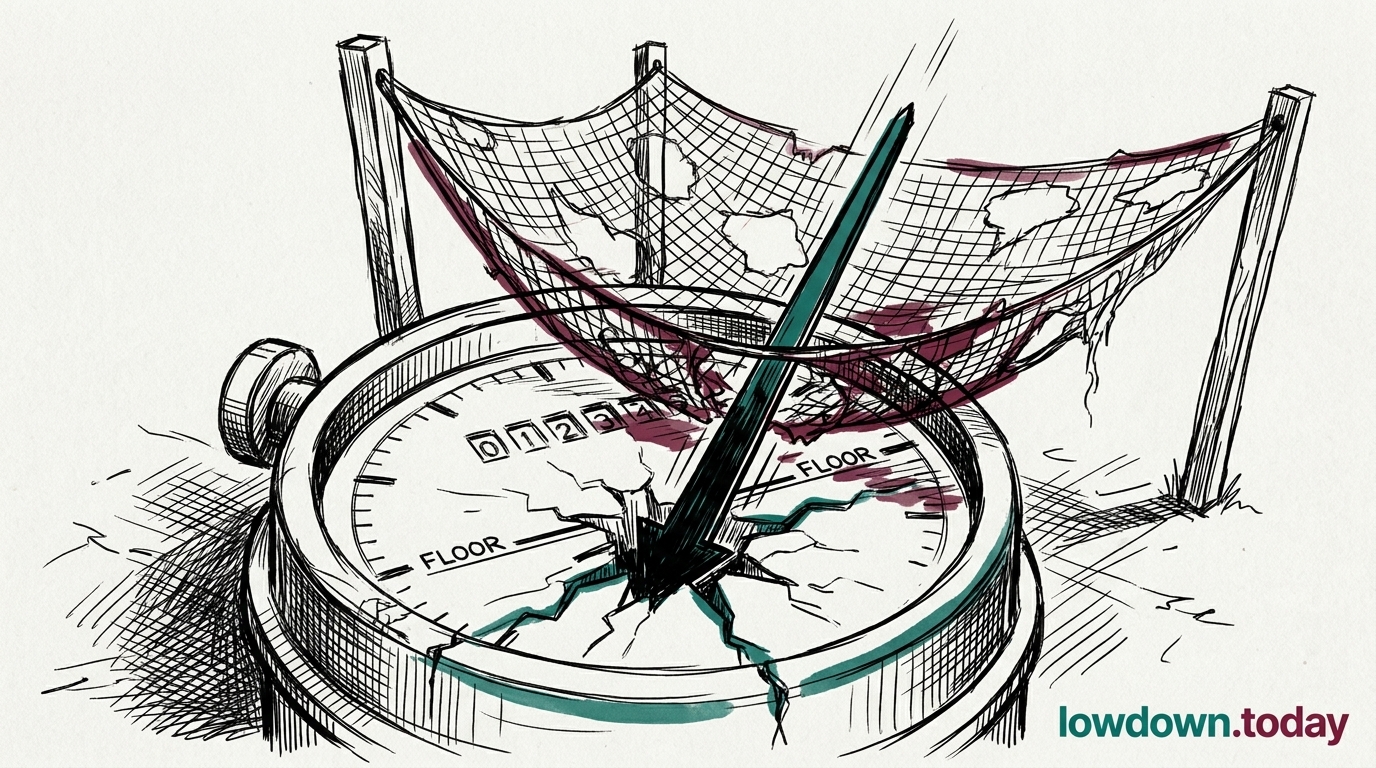
Secretary of State Marco Rubio said the US wants to end Russian oil waivers as soon as possible, breaking a monthly roll routine and sharpening the 17 June expiry of General License 134C with no successor announced.

EconomicDeveloping
Key takeaway

Rubio's routine-break converts the 17 June waiver expiry from a rollover into a genuine cliff for Indian buyers.

Marco Rubio, the US Secretary of State, said Washington wants to end Russian oil waivers "as soon as we possibly can" 1. The remark targets General License 134C, the OFAC authorisation covering vessel services for Russian oil shipments, which expires on 17 June with no GL 134D announced. OFAC is the US Treasury's sanctions enforcement office; a general license is the carve-out that lets specific transactions continue despite sanctions.

The waivers had rolled over monthly since March, which had trained the market to treat each expiry as a formality. Rubio's wording breaks that routine. When the senior US diplomat says the goal is to end the cover rather than extend it, the 17 June date stops being a rollover and becomes a genuine cliff, repricing the risk for everyone holding Russian-linked cargo.

India carries the most exposure as the primary off-take for discounted Russian crude under this cover. Lose the waiver on 17 June and Indian refiners face the choice of finding compliant alternatives at higher cost or risking secondary sanctions. Rubio's statement sharpens the 17 June cliff the prior briefing had already flagged , turning a quiet administrative deadline into the single largest sanctions hinge on the calendar.


Deep Analysis

In plain English

Deputy Prime Minister Alexander Novak publicly admitted on 4 June that Ukrainian drone strikes are reducing Russia's oil production, Moscow's first official acknowledgement. He specifically named the Yaroslavl refinery north-east of Moscow, a facility processing 300,000 barrels of oil per day that was struck in May. Russia has already banned exports of jet fuel until November 2026 and petrol since April. Ukraine's own energy strike teams assess total Russian refinery capacity knocked offline at up to 700kbd, suggesting Novak's single-refinery figure may be only a partial picture of the damage.

Deep Analysis
Root Causes

The political significance of Novak's admission lies in the structural choice it reveals. Russian domestic fuel supply has been under strain since the April gasoline export ban; acknowledging drone damage while banning exports simultaneously allows the Kremlin to attribute fuel tightness to external attack rather than sanctions-driven refinery underinvestment.

The admission is both factually accurate and politically useful: it shifts blame for consumer fuel scarcity while potentially justifying further export restrictions as 'defensive' rather than revenue-protecting. Novak's specific naming of Yaroslavl, a refinery whose operator Lukoil is already on the OFAC SDN list, adds a layer of signalling to Western audiences about the domestic consequences of sanctions enforcement.

What could happen next?
  • Consequence

    Novak's admission validates the UK's RUSI-assessed $1.2-1.4bn annual flow of third-country Russian-crude distillates, but also raises the risk that the source supply those distillates depend on is declining, undermining the policy rationale for the UK's May sanctions easement.

  • Risk

    If Ukrainian strikes have taken 600-700kbd of Russian refinery capacity offline rather than Yaroslavl's 300kbd alone, Russian crude available-for-export rises while domestic products tighten, a bullish crude signal for Europe's Urals-dependent refiners.

First Reported In

Update #6 · OPEC's quota is fiction at a 37-year low

OilPrice.com· 8 Jun 2026
Read original
Causes and effects
This Event
Rubio signals end of Russian oil waivers
Indian refiners are the primary off-take for Russian crude under the waiver, so a routine-break by the top US diplomat puts their purchase cover at risk overnight and reprices a date the market had treated as a formality.
Different Perspectives
Spain's LNG terminal operators
Spain's 9,145 GWh terminal inventory is the largest single stock in the EU LNG network, an option value that can reroute cargoes wherever the winter strip pays best rather than a cavern gas obligation tied to a fixed date. That flexibility matters more as Germany's cavern shortfall pushes more of the winter security question onto import infrastructure.
European Commission
European Commission
Brussels holds the bloc to 90% on a flexible window while Germany, holding roughly a quarter of EU storage capacity, tracks toward missing its own lower 80% figure by 21 points. A national shortfall this size in the anchor market matters more to bloc security than the flexible timetable alone can absorb.
French power exporters and CRE
French day-ahead rose in step with Germany but by less, reopening a EUR 7-17 premium that makes northward export flows commercially attractive again after the EUR 43.09 discount evaporated in days. CRE separately authorised RTE and Enedis to buy flexibility locally, betting the coming winter's binding constraint is grid congestion rather than a shortage of firm capacity.
TTF trading desk
TTF trading desk
A visible national shortfall like Germany's 21-point gap is a directional signal, not noise, for a desk holding the summer-winter spread. TTF's flat EUR 58-60 range through this week's German price swings says the market has not yet chosen to reprice refill risk into the front of the curve.
German cavern and CCGT operators
German caverns kept buying prompt gas at TTF near EUR 58-60 through the inversion; the wind collapse to 2.4 GW then flipped the spark spread to plus EUR 29 and put turbines back in the same queue. Every day turbines win that bid, injection at a third of the 877 GWh/day pace needed falls further behind.
Slovakia
Slovakia
Slovakia says it dropped its hold-out on the 21st sanctions package only after Ursula von der Leyen personally signed written gas-price and supply guarantees. The Council of the European Union's own 17,238-character release on the package names neither Slovakia nor any guarantee, leaving Bratislava's account unconfirmed by the institutional record.



