Skip to content
You can now search across every topic, entity and event.What's new
European Energy Markets
15JUN

Reshetnikov tells Meduza Russia's reserves exhausted

4 min read
12:23UTC

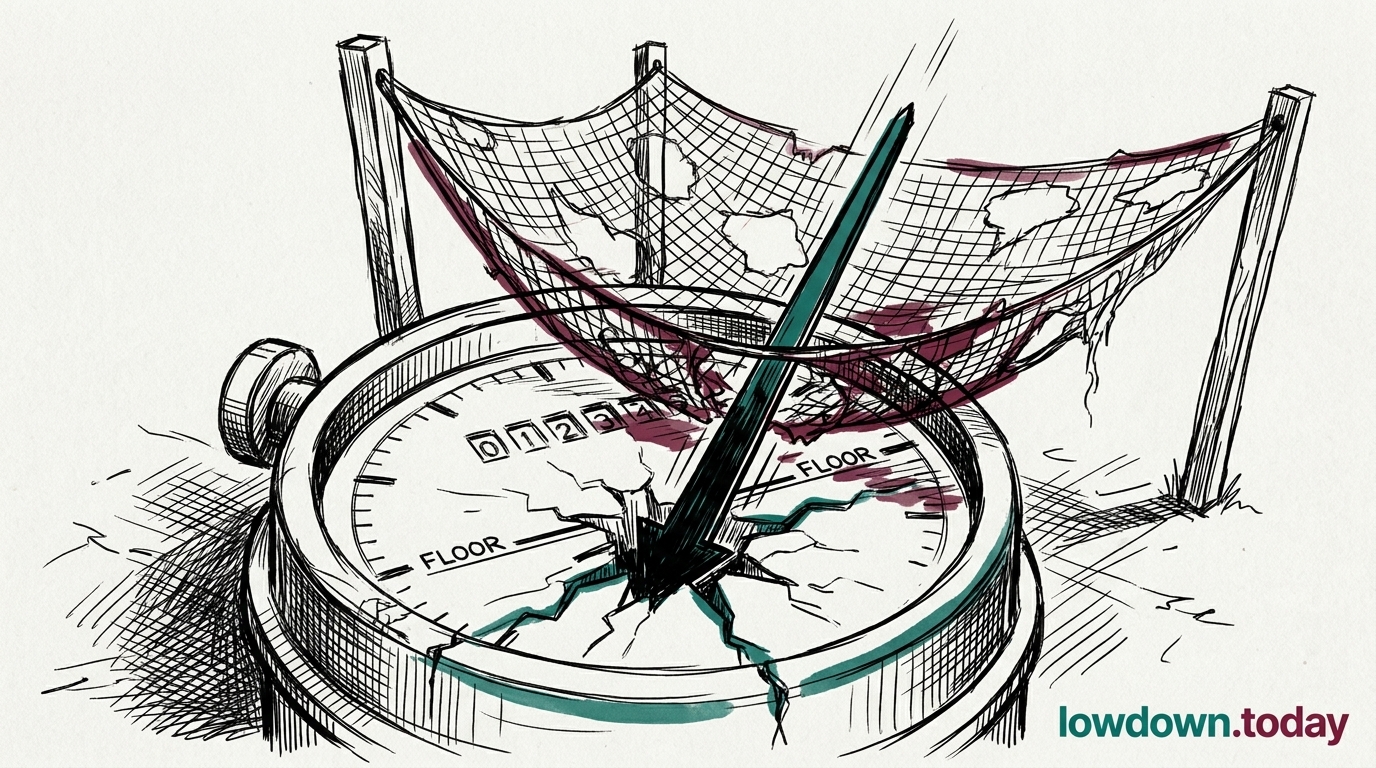
Russia's Economic Development Minister Maxim Reshetnikov told Meduza on 17 April that Moscow's internal reserves are "largely exhausted". The portfolio supposed to produce growth is explaining its absence.

EconomicDeveloping
Key takeaway

Putin called it seasonal; his Development Minister called it structural in the same fortnight.

Russian Economic Development Minister Maxim Reshetnikov told Meduza on Friday 17 April that Moscow's internal reserves are "largely exhausted, and the macroeconomic situation is genuinely significantly more difficult" 1. Businesses had earlier absorbed the shock, he said, "by drawing on internal reserves"; that capacity has run down. Reshetnikov's portfolio runs investment climate and industrial policy. His REMIT is supposed to produce growth, not explain its absence.

The admission lands two days after Vladimir Putin had publicly demanded government and Central Bank "explain why macroeconomic indicators had fallen short of expectations", blaming "seasonal factors" at a Kremlin meeting on Wednesday 15 April 2. A serving minister calling the constraint structural while his President calls it seasonal is the disagreement Kremlin messaging usually closes within days. Meduza, a Russian-language exile outlet based in Riga, was the only publication Reshetnikov spoke to on the record.

Fortune reported on 18 April that the federal budget deficit reached 3.45 trillion roubles, roughly $42 billion, in January and February alone, already near the full-year target of 3.79 trillion 3. First-quarter oil tax revenue halved year-on-year. Value-added tax rose from 20% to 22% in January. The National Wealth Fund had lost $4.8 billion over the two months preceding the interview ; Reshetnikov's "largely exhausted" is the structural diagnosis of which that drawdown was the quantified symptom. The historical pattern to watch is 1990, when Gosbank governor Viktor Gerashchenko publicly broke with the Politburo line on rouble structural crisis; ministerial contradictions on macro conditions have tended to precede, not lag, hard policy shifts. That precedent is not a prediction, it is a reference point for how quickly the gap between Putin and Reshetnikov's framing closes.


Deep Analysis

In plain English

Russia's Economic Development Minister: one of Putin's own cabinet: told an independent Russian outlet called Meduza that Russia's financial reserves are 'largely exhausted'. This is significant because it is an admission from inside the government, not from Western analysts. Russia spent enormous sums building up savings from oil revenues over two decades; those savings have been used to fund the war. At the same time, the government admitted its plan for the budget was already off-track by April: it had already spent nearly as much as it planned to borrow for the entire year, in just the first two months. Putin publicly blamed 'seasonal factors'; his own minister said the situation was 'genuinely significantly more difficult'.

Deep Analysis
Root Causes

Three compounding structural pressures produced the reserve depletion. Military spending consuming 38-40% of the federal budget crowds out investment that would sustain future revenue. High interest rates (16%) to contain war-driven inflation simultaneously discourage the private sector investment that generates the tax base.

And Q1 oil tax revenue halved year-on-year not primarily because of Ukrainian strikes but because Russia's budget assumption was $59 per barrel while actual Urals averaged $61-65, far below the Iran-war spike that briefly touched $123 per barrel in early April: the April revenue windfall had not yet materialised when Q1 accounts closed.

The VAT increase from 20% to 22% in January 2026 was an admission that oil-linked revenues could no longer carry the budget; it shifted the burden to domestic consumption, compressing household demand in an economy already running structural manpower deficits at the front.

What could happen next?
  • Risk

    If Iran-war oil prices normalise and Urals falls back toward $50-55 per barrel, Russia's Q1 fiscal trajectory implies insolvency of liquid reserves within 12 months, potentially forcing either a ceasefire negotiation or a domestic bond crisis.

  • Consequence

    The Putin-Reshetnikov public contradiction: 'seasonal factors' versus 'largely exhausted': signals fracturing coherence in the Kremlin's economic narrative, which historically precedes policy pivots under Soviet and Russian autocratic systems.

First Reported In

Update #14 · Kyiv's Druzhba gambit unlocks €90bn loan

Meduza· 24 Apr 2026
Read original
Different Perspectives
Spain's LNG terminal operators
Spain's 9,145 GWh terminal inventory is the largest single stock in the EU LNG network, an option value that can reroute cargoes wherever the winter strip pays best rather than a cavern gas obligation tied to a fixed date. That flexibility matters more as Germany's cavern shortfall pushes more of the winter security question onto import infrastructure.
European Commission
European Commission
Brussels holds the bloc to 90% on a flexible window while Germany, holding roughly a quarter of EU storage capacity, tracks toward missing its own lower 80% figure by 21 points. A national shortfall this size in the anchor market matters more to bloc security than the flexible timetable alone can absorb.
French power exporters and CRE
French day-ahead rose in step with Germany but by less, reopening a EUR 7-17 premium that makes northward export flows commercially attractive again after the EUR 43.09 discount evaporated in days. CRE separately authorised RTE and Enedis to buy flexibility locally, betting the coming winter's binding constraint is grid congestion rather than a shortage of firm capacity.
TTF trading desk
TTF trading desk
A visible national shortfall like Germany's 21-point gap is a directional signal, not noise, for a desk holding the summer-winter spread. TTF's flat EUR 58-60 range through this week's German price swings says the market has not yet chosen to reprice refill risk into the front of the curve.
German cavern and CCGT operators
German caverns kept buying prompt gas at TTF near EUR 58-60 through the inversion; the wind collapse to 2.4 GW then flipped the spark spread to plus EUR 29 and put turbines back in the same queue. Every day turbines win that bid, injection at a third of the 877 GWh/day pace needed falls further behind.
Slovakia
Slovakia
Slovakia says it dropped its hold-out on the 21st sanctions package only after Ursula von der Leyen personally signed written gas-price and supply guarantees. The Council of the European Union's own 17,238-character release on the package names neither Slovakia nor any guarantee, leaving Bratislava's account unconfirmed by the institutional record.



