Skip to content
You can now search across every topic, entity and event.What's new
European Energy Markets
15JUN

Oman warns of a mine in its own waters

2 min read
12:23UTC

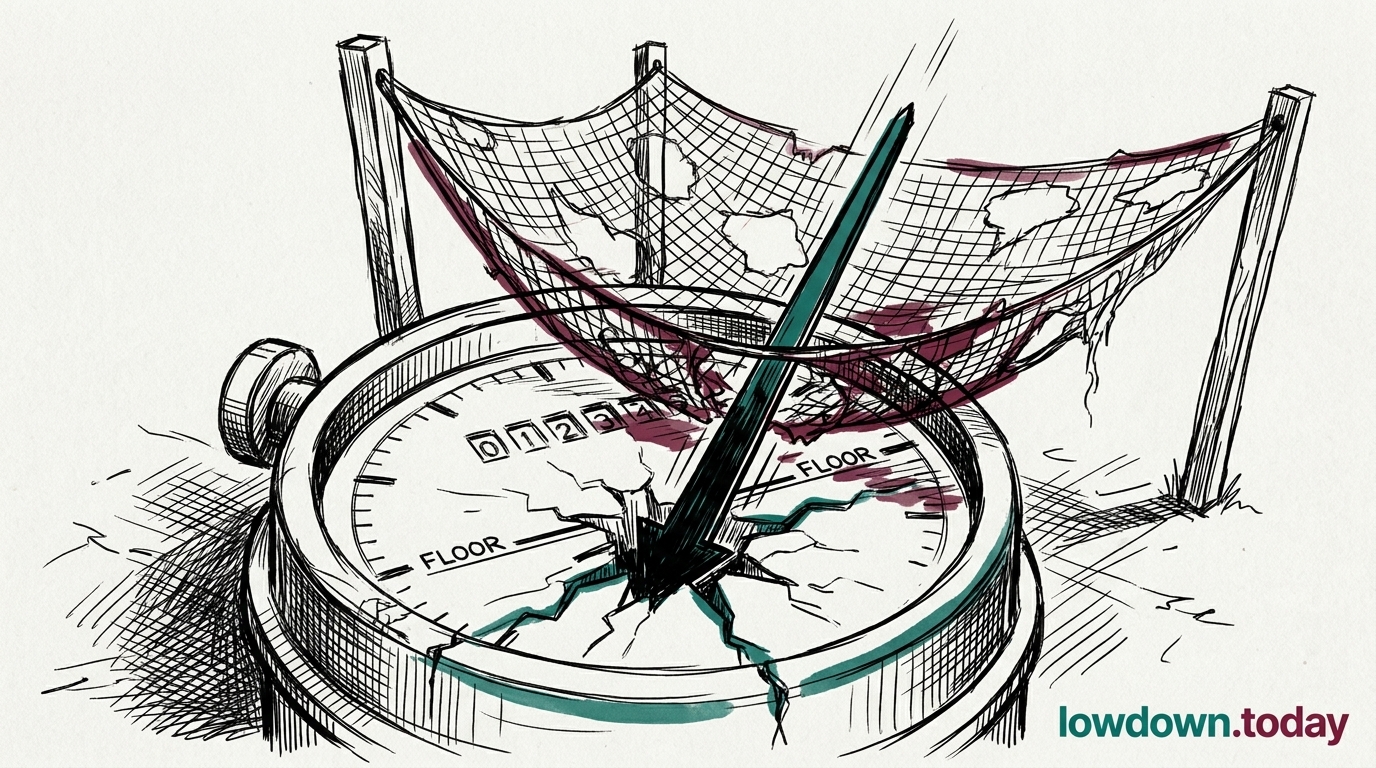
Oman's Maritime Security Center warned on Saturday 30 May of a suspected floating mine inside Omani territorial waters in the Strait of Hormuz, the first such alert in the waters of the state brokering the deal.

EconomicDeveloping
Key takeaway

A suspected mine reached the mediator's home waters; its origin remains unverified.

Oman's Maritime Security Center and Ministry of Defence issued an alert on Saturday 30 May warning of an object "suspected to be a floating mine" inside Omani territorial waters in the Strait of Hormuz, advising vessels to keep a safe distance 1. The centre is the Omani government body that coordinates maritime safety in and around the country's waters.

Oman gave no attribution for the object and reported recovery as unconfirmed at the time of the alert. This account does not assert who placed it. Omani waters sit outside Iran's declared blockade zone, which makes the location itself the established fact rather than the source.

Earlier mine and projectile incidents sat in or near that Iranian zone, including the tanker Olympic Life struck off Muscat on Tuesday 26 May . A suspected mine drifting into the waters of the state mediating between Washington and Tehran is a different fact, and it compounds the pressure on Oman as broker. It lands the same weekend Washington threatened that same mediator with sanctions over Hormuz tolls , squeezing Muscat from the kinetic and diplomatic tracks at once.


Deep Analysis

In plain English

Oman is the country that has been acting as the go-between for the US and Iran: it hosts talks, passes messages, and keeps communication channels open. On 30 May, its own maritime authority reported a floating mine inside Oman's territorial waters, the sea that Oman controls under international law. Nobody knows who placed it there. It could have drifted from Iranian mine-laying operations, been placed deliberately as a signal, or be unrelated to the conflict. But the timing matters: it appeared the same weekend that the US threatened to sanction Oman for allegedly cooperating with Iran on shipping fees. A mine in the mediator's own waters, on the same weekend its mediating role came under US pressure, changes the risk picture for the entire peace process.

Deep Analysis
Root Causes

Floating mines in a conflict zone drift with currents and are inherently difficult to attribute. The Strait of Hormuz has strong tidal flows that push surface objects toward Omani waters from Iranian mine-laying zones north of the strait. An unattributed mine does not require intentional placement in Omani waters to reach them.

The political sensitivity arises from the simultaneous US sanctions threat against Oman on 28 May over Hormuz toll coordination. If the mine is Iranian, Tehran is simultaneously conducting mine-laying while Muscat mediates on its behalf. If it drifted, the incident still demonstrates that Oman's territorial waters are no longer insulated from the conflict's physical effects.

What could happen next?
  • Risk

    If the mine is publicly attributed to Iran, Oman faces domestic pressure to suspend the mediation channel; if unattributed, the precedent of mines in sovereign Omani waters sets no deterrent.

  • Consequence

    Commercial vessels using the Port of Muscat, Oman's main trade gateway, face elevated war-risk premiums regardless of attribution, as underwriters price territorial exposure not causal responsibility.

First Reported In

Update #113 · Trump signs nothing as a Hellfire hits a hull

ABC News· 31 May 2026
Read original
Different Perspectives
Spain's LNG terminal operators
Spain's 9,145 GWh terminal inventory is the largest single stock in the EU LNG network, an option value that can reroute cargoes wherever the winter strip pays best rather than a cavern gas obligation tied to a fixed date. That flexibility matters more as Germany's cavern shortfall pushes more of the winter security question onto import infrastructure.
European Commission
European Commission
Brussels holds the bloc to 90% on a flexible window while Germany, holding roughly a quarter of EU storage capacity, tracks toward missing its own lower 80% figure by 21 points. A national shortfall this size in the anchor market matters more to bloc security than the flexible timetable alone can absorb.
French power exporters and CRE
French day-ahead rose in step with Germany but by less, reopening a EUR 7-17 premium that makes northward export flows commercially attractive again after the EUR 43.09 discount evaporated in days. CRE separately authorised RTE and Enedis to buy flexibility locally, betting the coming winter's binding constraint is grid congestion rather than a shortage of firm capacity.
TTF trading desk
TTF trading desk
A visible national shortfall like Germany's 21-point gap is a directional signal, not noise, for a desk holding the summer-winter spread. TTF's flat EUR 58-60 range through this week's German price swings says the market has not yet chosen to reprice refill risk into the front of the curve.
German cavern and CCGT operators
German caverns kept buying prompt gas at TTF near EUR 58-60 through the inversion; the wind collapse to 2.4 GW then flipped the spark spread to plus EUR 29 and put turbines back in the same queue. Every day turbines win that bid, injection at a third of the 877 GWh/day pace needed falls further behind.
Slovakia
Slovakia
Slovakia says it dropped its hold-out on the 21st sanctions package only after Ursula von der Leyen personally signed written gas-price and supply guarantees. The Council of the European Union's own 17,238-character release on the package names neither Slovakia nor any guarantee, leaving Bratislava's account unconfirmed by the institutional record.



