Skip to content
You can now search across every topic, entity and event.What's new
European Energy Markets
15JUN

Hormuz tolls paid in yuan, $2m a ship

4 min read
12:23UTC

Lloyd's List confirmed vessels have paid up to $2 million per ship in Chinese yuan to obtain Persian Gulf Strait Authority transit clearance, the first confirmed payments routing outside the dollar correspondent-banking system OFAC's enforcement architecture relies on.

EconomicDeveloping
Key takeaway

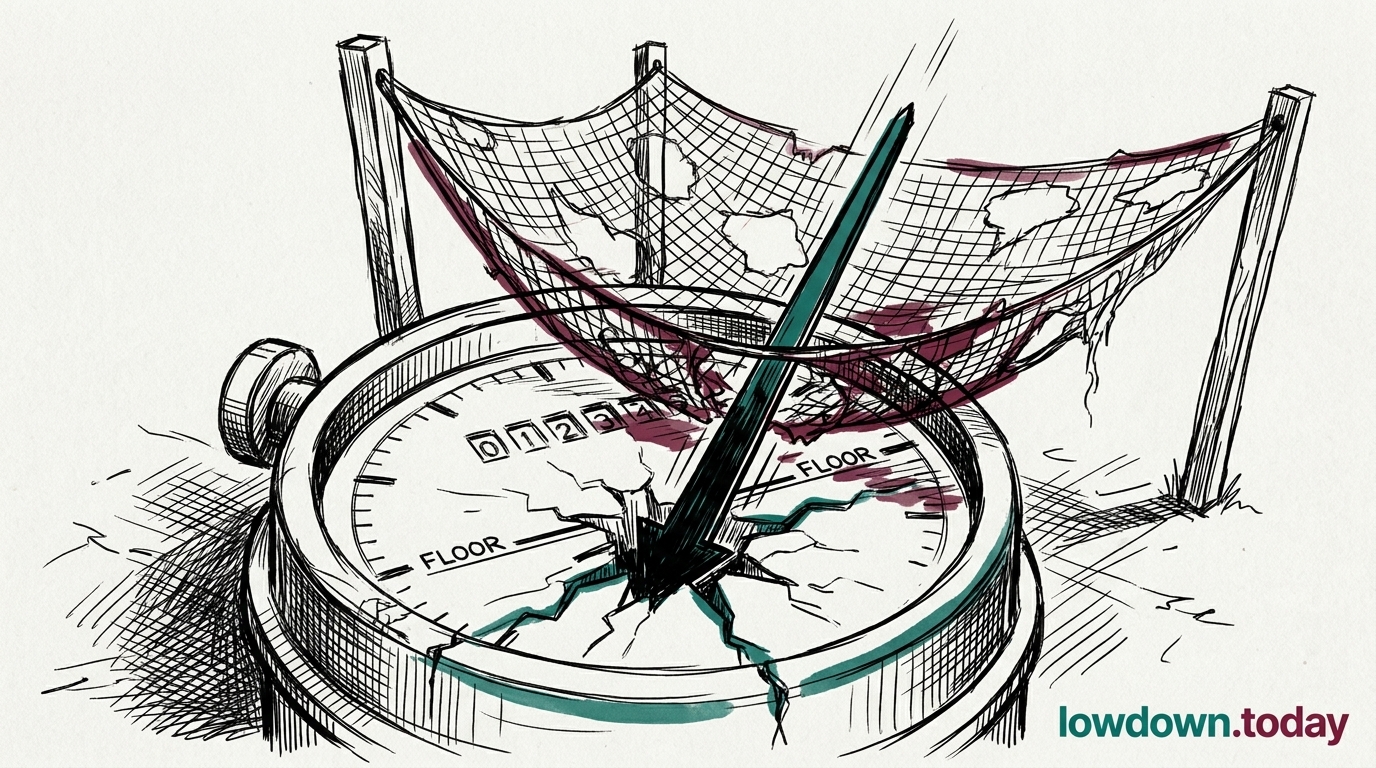
A yuan toll booth at Hormuz collects revenue in a currency OFAC's screening architecture cannot automatically catch.

Lloyd's List confirmed on 7 May that vessels have paid up to $2 million per ship to obtain Persian Gulf Strait Authority (PGSA) transit clearance, with payments settled in Chinese yuan 1. Iran has not published a tariff schedule, and the PGSA registration channel that opened on 6 May still shows zero formal sign-ups from the 2,000-vessel stranded fleet. The toll route is operating in parallel without a public registry: vessels pay quietly, then transit.

The architecture matters more than the figure. OFAC, the US sanctions enforcement office, runs almost entirely on the dollar. A SWIFT message routed through a US correspondent bank trips a screening obligation under executive orders 13902 and 13224, the legal spine of the 1 May Sanctions Bulletin (SB0483) issued alongside General Licence W . The screening fires automatically; the bank has to act or face penalties. A yuan-denominated payment routes around all of it, with no SWIFT trail through New York, no US correspondent bank on the chain, and no automatic OFAC tripwire.

The legal foundation Iran is invoking is the Majlis Hormuz sovereignty law ratified on 2 May and the PGSA structure created on 5 May. Together they convert a maritime chokepoint into a domestic-law toll booth, and the yuan denomination is the architectural choice that lets Iran's PGSA collect outside the dollar system.

The template is a 2022 import. Russian crude buyers settled in yuan through Chinese correspondent banks after the 2022 SWIFT exclusions, exactly to escape the dollar-clearing leg that OFAC sanctions hook into. Iran has now extended that template from commodity sales to maritime access fees, the first known instance of a sanctioned state using yuan-denominated transit revenue at scale. SB0483 was a warning framing rather than a new prohibition; the vessels paying in yuan face secondary-sanctions risk under existing executive orders, but enforcement against a yuan transaction with no US nexus requires OFAC to designate the specific vessel or shipper rather than rely on the automatic correspondent-bank step. That is a measurably slower, more political enforcement path.

A signed MOU would unwind the PGSA collection inside a month. That ties the precedent's durability to the 9 May reply window: every day the toll collects in yuan is a day the dollar enforcement architecture falls one notch shorter, and a day the yuan-routing template hardens into a usable model for the next sanctioned state to copy.


Deep Analysis

In plain English

Ships passing through the Strait of Hormuz are being charged up to $2 million each to get through, paid in Chinese yuan rather than US dollars. That currency choice is deliberate: the US sanctions enforcement system works by monitoring dollar payments through American banks. Pay in yuan through Chinese banks, and that monitoring system cannot automatically catch it. Iran has essentially found a payment route that the US cannot block the way it normally would. A signed peace deal would end the toll system; until then, the toll keeps collecting.

Deep Analysis
Root Causes

OFAC's Iran sanctions architecture was designed for a dollar-centric global financial system in which every significant cross-border payment eventually routes through a US correspondent bank. The 2022 Russian SWIFT exclusion was the proof-of-concept that demonstrated dollar-clearing avoidance at scale.

The IRGC's finance operation observed the Russian crude routing model for three years before the 2026 conflict opened. Iran chose yuan to exploit the same structural gap: sanctions enforcement requires a US-nexus transaction in the payment chain, and a yuan toll settled through Chinese correspondent banks provides none.

What could happen next?
  • Precedent

    The yuan-denominated PGSA toll is the first confirmed instance of a sanctioned state using yuan-denominated transit revenue at scale; if it persists, it becomes the model for any future sanctioned chokepoint controller.

    Long term · 0.8
  • Risk

    OFAC's only available response, individually designating each vessel or operator, is measurably slower than the automatic correspondent-bank tripwire, creating a window in which the toll collects with near-impunity.

    Immediate · 0.85
  • Opportunity

    A signed MOU would unwind the PGSA collection within the 30-day Hormuz reopening timeline, extinguishing the yuan-routing precedent before it fully hardens into a copyable model.

    Short term · 0.65
First Reported In

Update #91 · MOU in Tehran, missiles in the strait

AGBI· 8 May 2026
Read original
Different Perspectives
Spain's LNG terminal operators
Spain's 9,145 GWh terminal inventory is the largest single stock in the EU LNG network, an option value that can reroute cargoes wherever the winter strip pays best rather than a cavern gas obligation tied to a fixed date. That flexibility matters more as Germany's cavern shortfall pushes more of the winter security question onto import infrastructure.
European Commission
European Commission
Brussels holds the bloc to 90% on a flexible window while Germany, holding roughly a quarter of EU storage capacity, tracks toward missing its own lower 80% figure by 21 points. A national shortfall this size in the anchor market matters more to bloc security than the flexible timetable alone can absorb.
French power exporters and CRE
French day-ahead rose in step with Germany but by less, reopening a EUR 7-17 premium that makes northward export flows commercially attractive again after the EUR 43.09 discount evaporated in days. CRE separately authorised RTE and Enedis to buy flexibility locally, betting the coming winter's binding constraint is grid congestion rather than a shortage of firm capacity.
TTF trading desk
TTF trading desk
A visible national shortfall like Germany's 21-point gap is a directional signal, not noise, for a desk holding the summer-winter spread. TTF's flat EUR 58-60 range through this week's German price swings says the market has not yet chosen to reprice refill risk into the front of the curve.
German cavern and CCGT operators
German caverns kept buying prompt gas at TTF near EUR 58-60 through the inversion; the wind collapse to 2.4 GW then flipped the spark spread to plus EUR 29 and put turbines back in the same queue. Every day turbines win that bid, injection at a third of the 877 GWh/day pace needed falls further behind.
Slovakia
Slovakia
Slovakia says it dropped its hold-out on the 21st sanctions package only after Ursula von der Leyen personally signed written gas-price and supply guarantees. The Council of the European Union's own 17,238-character release on the package names neither Slovakia nor any guarantee, leaving Bratislava's account unconfirmed by the institutional record.



