Skip to content
You can now search across every topic, entity and event.What's new
European Energy Markets
15JUN

First double-digit toll of the truce

2 min read
12:23UTC

Fourteen people were killed and 78 wounded across Iran over two nights of strikes, Iranian reporting relayed by Al Jazeera said, the first double-digit toll since the 16 June memorandum.

EconomicDeveloping
Key takeaway

Renewed strikes have crossed a casualty threshold the post-memorandum fighting had, until now, stayed below.

Fourteen people were killed and 78 wounded across Iran over the two nights of strikes on 8 and 9 July, according to Iranian reporting relayed by Al Jazeera, with a further three killed near Ahvaz and a firefighter killed in Iranshahr 1. That is the first double-digit Iranian death toll since the Islamabad memorandum of understanding was signed on 16 June.

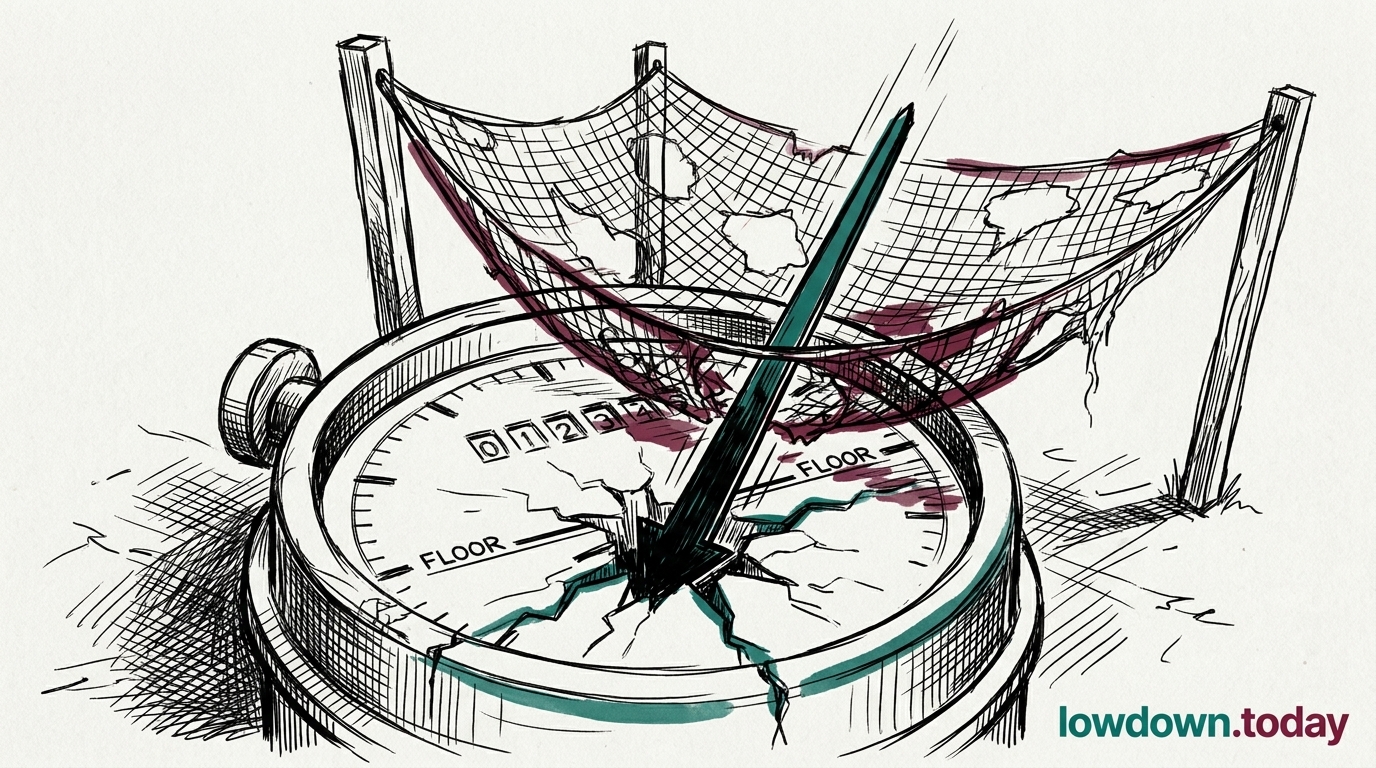
The strikes that followed the memorandum had stayed below that line. CENTCOM's 27 June raid on Qeshm Island and Sirik was framed as targeted and produced no confirmed fatalities. The two-night toll crosses a threshold the earlier raids did not, which is what makes the count, not the fighting itself, the development here.

The figures run through a single Iranian sourcing chain and cannot be independently verified while the IAEA, the International Atomic Energy Agency, and foreign monitors stay locked out 2. Washington has published no casualty assessment of its own. Iran framed the US response as 'hasty', tying the timing to popular turnout at Ali Khamenei's funeral processions in Iraq.


Deep Analysis

In plain English

Since the war began in February, Iran has reported thousands of deaths, but this is the first time since a mid-June truce agreement (the Islamabad memorandum) that a single round of strikes has killed more than nine people. Fourteen people died and 78 were wounded on 8 and 9 July, with three more deaths near the oil city of Ahvaz and a firefighter killed in Iranshahr. Because Iran restricts what journalists and international monitors can verify inside the country, outside groups cannot independently confirm the figures; they rely on Iran's own Red Crescent and government reporting.

Deep Analysis
Root Causes

Iran's internet and reporting restrictions mean casualty figures pass through the Iranian Red Crescent and Foundation of Martyrs before reaching outlets like Al Jazeera, a chain that has historically undercounted early and revised upward, so the true toll from the 8-9 July exchange will not be known for days.

The IAEA's exclusion from all Iranian nuclear sites since the Majlis's 221-0 vote on 11 April extends to the wider verification gap: no international body has access to confirm strike locations or casualty counts independently of Tehran's own reporting chain.

What could happen next?
  • Risk

    A confirmed double-digit civilian toll gives hardliners in the Majlis, already pursuing an Article 77 complaint over the memorandum, a casualty-based argument that domestic law obliges Tehran to escalate rather than negotiate.

First Reported In

Update #150 · Second US strike wave, first heavy toll

Al Jazeera· 9 Jul 2026
Read original
Different Perspectives
Spain's LNG terminal operators
Spain's 9,145 GWh terminal inventory is the largest single stock in the EU LNG network, an option value that can reroute cargoes wherever the winter strip pays best rather than a cavern gas obligation tied to a fixed date. That flexibility matters more as Germany's cavern shortfall pushes more of the winter security question onto import infrastructure.
European Commission
European Commission
Brussels holds the bloc to 90% on a flexible window while Germany, holding roughly a quarter of EU storage capacity, tracks toward missing its own lower 80% figure by 21 points. A national shortfall this size in the anchor market matters more to bloc security than the flexible timetable alone can absorb.
French power exporters and CRE
French day-ahead rose in step with Germany but by less, reopening a EUR 7-17 premium that makes northward export flows commercially attractive again after the EUR 43.09 discount evaporated in days. CRE separately authorised RTE and Enedis to buy flexibility locally, betting the coming winter's binding constraint is grid congestion rather than a shortage of firm capacity.
TTF trading desk
TTF trading desk
A visible national shortfall like Germany's 21-point gap is a directional signal, not noise, for a desk holding the summer-winter spread. TTF's flat EUR 58-60 range through this week's German price swings says the market has not yet chosen to reprice refill risk into the front of the curve.
German cavern and CCGT operators
German caverns kept buying prompt gas at TTF near EUR 58-60 through the inversion; the wind collapse to 2.4 GW then flipped the spark spread to plus EUR 29 and put turbines back in the same queue. Every day turbines win that bid, injection at a third of the 877 GWh/day pace needed falls further behind.
Slovakia
Slovakia
Slovakia says it dropped its hold-out on the 21st sanctions package only after Ursula von der Leyen personally signed written gas-price and supply guarantees. The Council of the European Union's own 17,238-character release on the package names neither Slovakia nor any guarantee, leaving Bratislava's account unconfirmed by the institutional record.



